



- Home
- /
- High Courts
- /
- Allahabad High Court
- /
- Cyber Fraud | Allahabad High Court...
Cyber Fraud | Allahabad High Court Directs Banks To Follow MHA SOP For Frozen Accounts; Says Lien Can't Extend Beyond Disputed Amount
Sparsh Upadhyay
14 Aug 2026 1:14 PM IST
The Allahabad High Court has directed banks and financial institutions to follow the Standard Operating Procedure (SOP) issued by the Ministry of Home Affairs (MHA) for grievance redressal in cases where bank accounts are frozen or seized in connection with cyber fraud. The Court also reiterated that where an investigating agency has identified a specific disputed amount, a lien cannot...
This is a premium content
Available exclusively to
Our subscribers
Subscribe Premium 
INR 1099+GST
Your support helps us to bring you more content at
an affordable subscription scheme !!!
All payment options available
The Allahabad High Court has directed banks and financial institutions to follow the Standard Operating Procedure (SOP) issued by the Ministry of Home Affairs (MHA) for grievance redressal in cases where bank accounts are frozen or seized in connection with cyber fraud.
The Court also reiterated that where an investigating agency has identified a specific disputed amount, a lien cannot extend beyond that amount in the absence of material showing that the remaining funds are also connected with the alleged offence.
In other words, the bench held that a person's entire bank account cannot ordinarily be subjected to a debit freeze when the investigating agency has identified only a specific disputed amount allegedly connected with a cyber-crime.
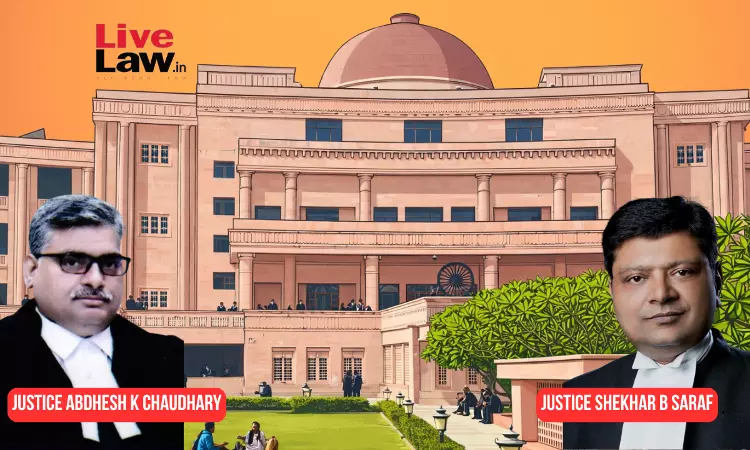
A bench of Justice Shekhar B Saraf and Justice Abdhesh Kumar Chaudhary made the observations while disposing of a petition filed by a businessman whose bank accounts were subjected to a debit freeze after a disputed transaction of ₹36,000.
The Court directed the concerned bank to de-freeze the account and permit its operation after marking a lien of ₹36,000.
Importantly, it also directed all the banks and financial institutions operating within the High Court's territorial jurisdiction to maintain a mechanism for receiving grievances related to frozen accounts and to make the MHA's grievance redressal mechanism visible and accessible to customers.
Case in brief
The petitioner (Ritesh Yadav) claimed to be engaged in construction-related work and the supply of construction material on a commission basis.
He approached the High Court after noticing a "Lien Mark" on his bank account during a routine commercial transaction. He was subsequently informed that a suspicious transaction was the reason for the account being frozen.
The said freezing later extended to accounts maintained with other banks, including Bandhan Bank, ICICI Bank and Axis Bank, which obstructed his business operations.
He was eventually informed that ₹36,000 had been credited to his Bandhan Bank account in connection with a disputed transaction and that a debit freeze had been directed by the Cyber, Economic and Narcotics Crime Police Station, Vijayapura, Karnataka.
The petitioner offered to keep the disputed ₹36,000 under lien but sought release of the remaining funds so that he could continue his business.
High Court's observations
At the outset, the Court dealt with a similar question, which it answered in February this year: whether the entire bank account could be subjected to a debit freeze when the disputed transaction was confined to ₹36,000.
The Bench noted the increasing menace of cyber financial fraud and the need for investigating agencies to act promptly to prevent the dissipation of proceeds of crime.
However, it added that the power to place a restraint on a bank account cannot be understood as an “unfettered power” to bring an individual's entire financial life and legitimate business activity to a standstill.
The Court noted that in the present case, the investigating agency had identified ₹36,000 as the disputed amount, while there was no material indicating that the remaining funds were connected with the alleged offence.
The bench stated that the restraint over the entire accounts would therefore operate “far beyond the object of securing the alleged proceeds of crime.”
The Bench particularly noted that the petitioner was carrying on a commercial business and that the complete freezing prevented him from meeting business obligations, making payments to suppliers, receiving legitimate business receipts, and otherwise carrying on his ordinary commercial activities.
Therefore, the Court stated thus:
"…we find that continuation of a blanket debit freeze over the entire bank accounts of the petitioner, to the extent it operates beyond the amount of ₹36,000/-, cannot be sustained in its present form".
It directed the Bank to immediately unfreeze the account and to mark a lien of ₹36,000 (the disputed amount).
Importantly, the Court referred to its February 2026 Judgment in Khalsa Medical Store Thru. Prop. Yashwant Singh vs Reserve Bank Of India Thru. Governor And 3 Others, which laid down principles governing freezing of bank accounts in suspected cyber-crime cases.
Justice Saraf-led bench reiterated that a notice under Section 106 BNSS may require a lien on a specific amount, but the police cannot ask a bank or payment system operator to block or suspend the entire financial account.
The investigating officer must specify the amount for which the lien is sought. The Court held that a “blanket notice without indicating the amount” would be illegal and arbitrary and that relevant FIR/case details must also be furnished to the bank and the jurisdictional Magistrate informed.
The Court also noted that it had been 'flooded' with writ petitions seeking de-freezing of bank accounts in cyber-fraud and similar cases. It therefore examined the MHA's SOP concerning the National Cybercrime Reporting Portal (NCRP) and the Citizen Financial Cyber Fraud Reporting and Management System (CFCFRMS) grievance redressal mechanism.
The bench noted that under the SOP, an affected account holder can approach the concerned bank. After conducting Customer Due Diligence and Enhanced Due Diligence, the bank is required, where appropriate, to submit the grievance through the NCRP-CFCFRMS Grievance Redressal Module within seven calendar days of the complaint.
The mechanism further provides for consideration by the Investigating Officer, review by the District Grievance Officer and an appeal before the State Grievance Officer. “An undisclosed remedy is, for all practical purposes, incapable of being effectively availed of”, the bench added.
It therefore directed banks and financial institutions within its jurisdiction to maintain appropriate grievance mechanisms, process complaints within the prescribed timelines and prominently display information about the MHA mechanism at branches and on their websites.
The Court clarified that its directions do not dilute the investigating agency's statutory powers. Rather, such powers must be exercised in a manner that is transparent, proportionate, traceable and consistent with the procedure established by law.
It further remarked thus:
"An innocent account holder ought not to be subjected indefinitely to a complete deprivation of access to his legitimate funds merely because a disputed transaction of a specified amount has passed through his account".
The Court directed that its order be forwarded to the RBI for circulation to banks and financial institutions, which were directed to educate their officers and staff about the grievance redressal mechanism.
The writ petition was accordingly disposed of.
Case title - Ritesh Yadav vs. Reserve Bank Of India New Delhi Thru. Its Governor And 6 Others 2026 LiveLaw (AB) 578
Case citation: 2026 LiveLaw (AB) 578
Tags

Sparsh Upadhyay
Sparsh Upadhyay is an Associate Editor with LiveLaw.

