



- Home
- /
- High Courts
- /
- Allahabad High Court
- /
- Even Genuine Parental Concern...
Even Genuine Parental Concern Cannot Override Major Individual's Right To Choose Life Partner: Allahabad High Court
Sparsh Upadhyay
8 Sept 2026 5:17 PM IST
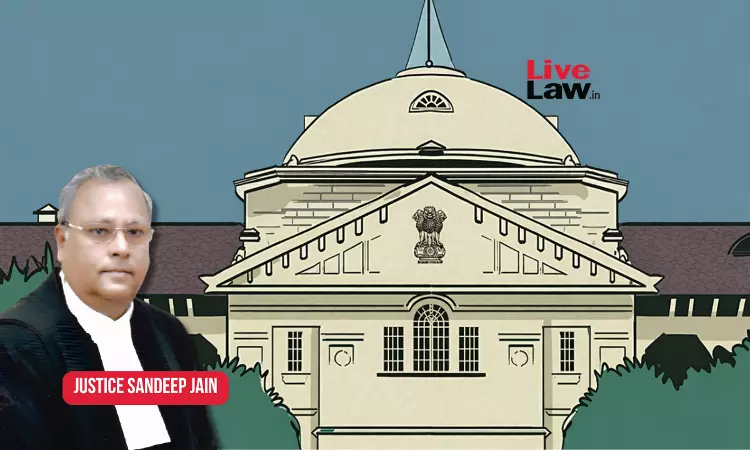
The Allahabad High Court has held that even genuine parental concern cannot override the constitutionally protected autonomy of a major individual to choose a life partner.The Court added that the right to choose one's partner is a facet of personal liberty and dignity guaranteed under Article 21 of the Constitution.A bench of Justice Sandeep Jain made the observation while allowing a...
This is a premium content
Available exclusively to
Our subscribers
Subscribe Premium 
INR 1099+GST
Your support helps us to bring you more content at
an affordable subscription scheme !!!
All payment options available
The Allahabad High Court has held that even genuine parental concern cannot override the constitutionally protected autonomy of a major individual to choose a life partner.
The Court added that the right to choose one's partner is a facet of personal liberty and dignity guaranteed under Article 21 of the Constitution.
A bench of Justice Sandeep Jain made the observation while allowing a habeas corpus petition filed concerning a major woman who claimed to have voluntarily married the person of her choice and wished to reside with him as his wife.
Case in brief
Briefly put, her husband's counsel had submitted that the girl was his legally wedded wife and that their marriage had been solemnized against the wishes of her parents.
It was alleged that after the marriage, the girl was kept in illegal detention by her father and his relatives. Counsel further submitted that, when no FIR was registered, she herself filed a complaint under Section 173(4) of the BNSS before the competent court at Budaun on July 20, 2026, seeking action against her father and relatives.
The father, on the other hand, denied that the girl had married Mohit and submitted that she was voluntarily residing with her parents at her parental home and was not in illegal detention.
The State submitted that the father had lodged a missing-person report, pursuant to which the girl was recovered and her custody was handed over to him.
Earlier, on August 31, the High Court had noted from the documents that the girl had attained majority and was therefore entitled to choose her life partner and reside at a place of her choice. To ascertain whether she was voluntarily residing with her parents or was in illegal detention, the Court directed that she be produced before it.
On September 7, when the Girl was produced before the Court, Justice Sandeep Jain interacted with her to ascertain her age, voluntariness and the circumstances in which she had been residing.
She stated that her date of birth was June 8, 2008 and that she had attained majority. She further disclosed that she had voluntarily solemnized her marriage with Mohit on July 18, 2026.
She categorically stated that the marriage was solemnized "of her own free will and without any coercion, undue influence or pressure from any quarter". She also unequivocally expressed her desire to reside with the husband as his wife in their matrimonial home.
The boy also admitted the marriage and stated that he was willing to reside with her as her husband. The girl's father also admitted before the Court that his daughter had attained the age of majority.
High Court's observations
After personally interacting with the girl, the Court found her statement to be "clear, categorical and consistent". It found nothing on record or in her demeanor indicating that her decision to marry or reside with the boy resulted from coercion, threat, undue influence or unlawful inducement
In view of this, the Court observed thus:
"The autonomy of an individual in matters relating to personal liberty, dignity and choice of a life partner forms an integral facet of the right to life and personal liberty guaranteed under Article 21 of the Constitution of India".
It was further observed that once a person attains majority, he or she is ordinarily entitled to make an independent choice regarding how they wish to lead their life, including the choice of a spouse.
Such a choice cannot be dictated or substituted by the wishes of parents or relatives merely because they consider it undesirable or unacceptable, it said.
The Court specifically remarked thus:
"The parental concern, however genuine, cannot override the constitutionally protected autonomy of a major individual...The right to choose one's partner is a facet of personal liberty and dignity, and the State and its instrumentalities are required to respect such autonomy, subject of course to the requirements of law".
The Court noted that the Girl had not expressed any apprehension of illegal confinement or coercion at the boy's hands.
It consequently held that she cannot, therefore, be compelled to return to or remain in the custody of her parents against her wishes.
The court set the girl at liberty to go with her husband and reside with him at the place of her choice.
It further directed that no person, including her parents or relatives, should interfere with her lawful exercise of choice or subject her to "any threat, coercion, intimidation or harassment" on account of her decision to marry and reside with Mohit.
The State authorities were directed to ensure the safety and security of the couple and provide necessary protection if any threat or apprehension to their life or liberty was brought to their notice. The police were also directed to escort the couple safely from the Court premises to their preferred destination.
The habeas corpus petition was accordingly allowed.
Case Title - Moni Corpus vs. State Of U.P. And 3 Others 2026 LiveLaw (AB) 675
Case Citation: 2026 LiveLaw (AB) 675
Tags

Sparsh Upadhyay
Sparsh Upadhyay is an Associate Editor with LiveLaw.

