



- Home
- /
- High Courts
- /
- Allahabad High Court
- /
- Lucknow Fire Tragedy | Allahabad...
Lucknow Fire Tragedy | Allahabad High Court Rejects Building Owner's Writ Petition Against Demolition Order
Sparsh Upadhyay
28 Aug 2026 11:32 AM IST
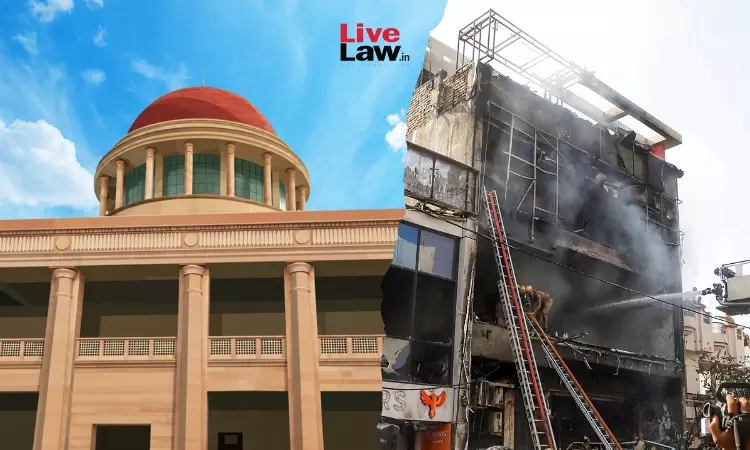
The Allahabad High Court on Monday refused to entertain a writ petition filed by the owner of a building in Lucknow's Aliganj area where a devastating fire claimed 15 lives in June this year, challenging the Lucknow Development Authority (LDA)'s demolition order as well as the subsequent demolition action.The Court, however, permitted the petitioner, Birendra Prasad Shukla (62), the co-owner...
This is a premium content
Available exclusively to
Our subscribers
Subscribe Premium 
INR 1099+GST
Your support helps us to bring you more content at
an affordable subscription scheme !!!
All payment options available
The Allahabad High Court on Monday refused to entertain a writ petition filed by the owner of a building in Lucknow's Aliganj area where a devastating fire claimed 15 lives in June this year, challenging the Lucknow Development Authority (LDA)'s demolition order as well as the subsequent demolition action.
The Court, however, permitted the petitioner, Birendra Prasad Shukla (62), the co-owner of the building, to avail the statutory remedy of appeal available under the law.
Shukla had challenged the LDA's demolition order dated July 10, 2026, the subsequent demolition of the building on July 25, 2026, and the consequential demand of ₹26,14,210 towards demolition costs.
A Bench of Justice Rajan Roy and Justice Manjive Shukla declined to entertain the writ petition, considering that the petitioner had an alternative statutory remedy under Section 27(2) of the Uttar Pradesh Urban Planning and Development Act, 1973.
The Court permitted the petitioner to file an appeal against the demolition order and seek such reliefs as permissible under law, within one week.
Case In Brief
The proceedings arose in the aftermath of the fire incident in which 15 young people died.
The Court noted that the building had a sanctioned map for residential purposes, while the LDA's case was that a commercial building had subsequently been constructed and commercial activity was being undertaken from the premises.
The petitioner's counsel argued that the demolition order violated Section 27 of the 1973 Act.
It was submitted that after a demolition order, 15 days are required to be granted to the owner to demolish the building himself, calculated from the date of service of the demolition notice.
According to the petitioner, the order was dated July 10 and served on July 13, but the building was demolished on July 25, before the expiry of the 15-day period.
The petitioner further contended that his statutory right of appeal had been frustrated because a certified copy of the demolition order was not initially served. He submitted that although a true copy of the notice was provided, an attempt to file an appeal before the Commissioner was unsuccessful after the LDA clerk informed him that a certified copy was required.
The certified copy was allegedly provided only after the petitioner approached the High Court in an earlier writ petition, while the demolition was carried out in the meantime on July 25.
The petitioner also relied upon the Supreme Court's directions concerning the demolition of structures and contended that the demolition had taken place before the expiry of the prescribed 15-day period.
The LDA, on the other hand, submitted that notices had been issued to the petitioner before the demolition order was passed.
According to the authority, notice under Section 27(1) was issued on June 23, objections were filed on July 8 and the demolition order was thereafter passed on July 10. The order was pasted on the premises and a true copy was served upon the petitioner on July 13.
The LDA stated that it waited for 15 days from the date of pasting the order before demolishing the building on July 25.
The LDA also relied on a representation made by the petitioner himself, pursuant to the demolition notice; he had started demolishing the premises himself but was stopped by the police/SIT.
High Court's observations
Without expressing an opinion on the competing contentions raised by both parties, the Court left all the issues for consideration in statutory appeal proceedings, if filed.
A significant aspect of the order was the Court's consideration of the fact that the building had already been demolished.
The Court said that although it would have been better if the appeal had been preferred before demolition, whether the petitioner was prevented from doing so due to any lapse by the LDA or due to his own fault involved disputed questions of fact which could not be determined in summary proceedings under Article 226.
The Bench, however, clarified that despite the demolition of the building, the validity of the demolition order can still be considered in a statutory appeal, if filed.
It further observed that if the demolition order is found illegal, "it can be set aside or declared to be illegal with consequential direwas ctions/orders, if any". The petitioner could thereafter seek further relief before the appropriate court or forum against the LDA or any other person, if required, the bench added.
The Court specifically kept open the questions of whether the demolition order was served in accordance with law and whether the prescribed formalities were complied with.
The High Court accordingly permitted Shukla to file an appeal against the demolition order and seek “such reliefs as permissible under law” within one week.
"If such appeal is filed within one week, it shall not be dismissed on the ground of limitation or delay, the same shall be decided expeditiously and all the pleas raised by the petitioner would be considered by the appellate authority", the bench ordered.
The Court consequently declined to exercise its extraordinary discretionary jurisdiction and dismissed the writ petition.
It clarified that its observations would “not operate to the prejudice of the petitioner” in the statutory appeal.
Case title - Birendra Prasad Shukla ,Thru. Power Of Attorney Holder Rajendra Prasad Shukla vs. State Of U.P. Thru. Prin. Secy. Deptt. Of Housing And Urban Planning, Lko And 4 Others 2026 LiveLaw (AB) 630
Case Citation: 2026 LiveLaw (AB) 630
Tags

Sparsh Upadhyay
Sparsh Upadhyay is an Associate Editor with LiveLaw.

