



- Home
- /
- High Courts
- /
- Allahabad High Court
- /
- State's Duty Doesn't End With...
State's Duty Doesn't End With Prosecuting Offender: Allahabad HC Summons UP Officials Over Lack Of Acid Attack Survivor Rehab Policy
Sparsh Upadhyay
19 May 2026 4:57 PM IST
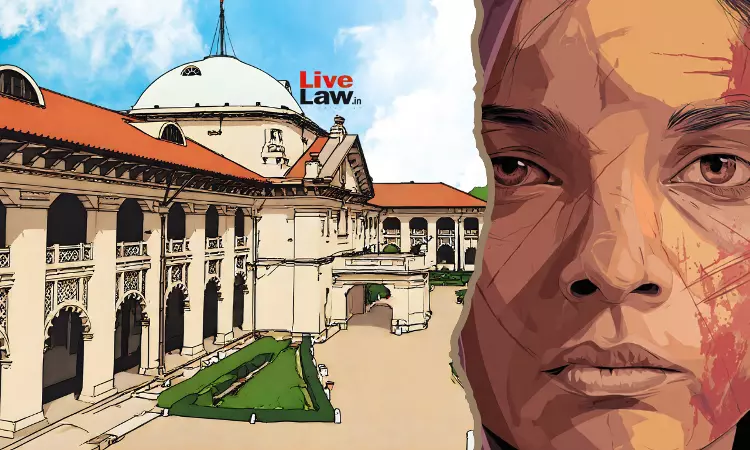
The Allahabad High Court recently expressed its strong displeasure over the State authorities treating acid attack matters "lightly and casually" and for not framing a comprehensive policy for the compensation, rehabilitation and long-term support of acid attack survivors. A bench of Justice Saral Srivastava and Justice Garima Prashad took strong exception to the UP Government's...
This is a premium content
Available exclusively to
Our subscribers
Subscribe Premium 
INR 1099+GST
Your support helps us to bring you more content at
an affordable subscription scheme !!!
All payment options available
The Allahabad High Court recently expressed its strong displeasure over the State authorities treating acid attack matters "lightly and casually" and for not framing a comprehensive policy for the compensation, rehabilitation and long-term support of acid attack survivors.
A bench of Justice Saral Srivastava and Justice Garima Prashad took strong exception to the UP Government's failure to make any "concrete endeavour at the highest administrative level" to address the issue in a time-bound and effective manner.
In view of this, the bench summoned the Principal Secretary (Home) and the Principal Secretary (Department of Women and Child Welfare) of the Uttar Pradesh government on May 25, along with complete instructions indicating:
- the concrete policy framework proposed by the State for compensation, rehabilitation and long-term support of acid attack survivors;
- the mechanism proposed for medical treatment, reconstructive surgeries, counselling, education and employment assistance;
- the manner in which compensation amounts are proposed to be rationalised keeping in view the nature and extent of injuries and lifelong consequences suffered by victims.
The bench passed the order while hearing a writ petition filed by Faraha, a survivor, who sought enhanced compensation from the Government as well as employment in a government establishment.
She submitted that she was merely 24-year-old when she became victim of acid attack and except for meagre Rs.6 lakhs compensation, nothing more had been done by the State Government for her rehabilitation.
Appearing for the petitioner, Advocates Ali Qambar Zaidi, Madiah, Mohammad Danish and Mohammad Iliyas submitted that though a representation was made by the petitioner in July 2025 to the Secretary of U.P. State Legal Services Authority, no decision has been taken to date.
Taking into account her submissions, the High Court had earlier sought a response from the UP Government to file an affidavit specifying any policy/guidelines framed for such cases and the action taken to rehabilitate the petitioner.
Pursuant to the Court's order, an affidavit was filed by the Additional Chief Secretary (Home), which was perused by the bench on May 14.
The bench was, however, not impressed with the same, as it noted that the affidavit merely indicated broad discussions between departments without disclosing any identifiable policy structure, proposed measures, timelines, rehabilitation mechanism, or financial framework intended for acid attack survivors.
Therefore, the Court remarked that the approach reflected in the affidavit and deliberations lacked the degree of seriousness which the issue demands.
The Court said that despite the Top Court's judgment in Parivartan Kendra vs UOI, emphasising the inadequacy of compensation in such cases, the affidavit did not indicate any substantial policy response undertaken by the State Government in furtherance thereof.
The bench further pointed out that acid attack survivors suffer irreversible physical, psychological, social and economic consequences throughout their lives, and the issue cannot be treated merely as one of ex gratia payment of a fixed amount under an existing compensation scheme.
"The obligation of the State extends far beyond disbursement of meagre compensation amounts and necessarily includes rehabilitation, medical support, reconstructive treatment, psychological counselling, educational assistance, employment support and measures enabling such survivors to reintegrate into society with dignity", the bench remarked.
The Court added that acid attack survivors are often deprived not merely of physical well-being, but also of prospects of livelihood, social acceptance, marriage, emotional security and dignified participation in society.
Furthermore, the bench highlighted the constitutional obligation of the State under List II of the Seventh Schedule to the Constitution of India and noted that maintaining law and order and protecting bodily integrity are state duties.
The Court unequivocally stated that where such horrific offences occur, resulting in the permanent devastation of a citizen's life, the constitutional obligation of the State does not end with the prosecution of the offender alone.
"The State is equally obliged to ensure meaningful rehabilitation and adequate restorative support so that victims of such crimes are able to live with dignity guaranteed under Article 21 of the Constitution of India", the bench underscored.
In view of this, the Court directed that the matter be deliberated directly among the senior-most authorities of the concerned departments and an effective policy and appropriate measures be evolved without any further delay.
Summoning the top State Officials, the bench has now posted the matter for a further hearing on May 25.
Petitioner was assisted by NGO Brave Souls Foundation and Shaheen Malik.
Case title - Faraha vs. State Of U.P. And 2 Others
Tags

Sparsh Upadhyay
Sparsh Upadhyay is an Associate Editor with LiveLaw.

