State Human Rights Commission Can Recommend Additional Compensation: Allahabad High Court Upholds ₹10 Lakh Relief For Electrocution Victim
Sparsh Upadhyay
3 Nov 2026 3:28 PM IST
Rejecting the limitation objection, the HC said that non-payment of compensation can constitute a continuing human rights violation.
The Allahabad High Court on Monday held that a State Human Rights Commission can recommend additional compensation in a case of human rights violation even if the victim has already received damages under other provisions covering the same subject matter.
The Court thus upheld the Uttar Pradesh Human Rights Commission's direction to the Madhyanchal Vidyut Vitran Nigam Limited to pay an additional ₹10 lakh to a man who suffered electrocution in 2011.
The bench clarified that the earlier payment to the victim did not fetter the Commission's power to recommend further compensation.
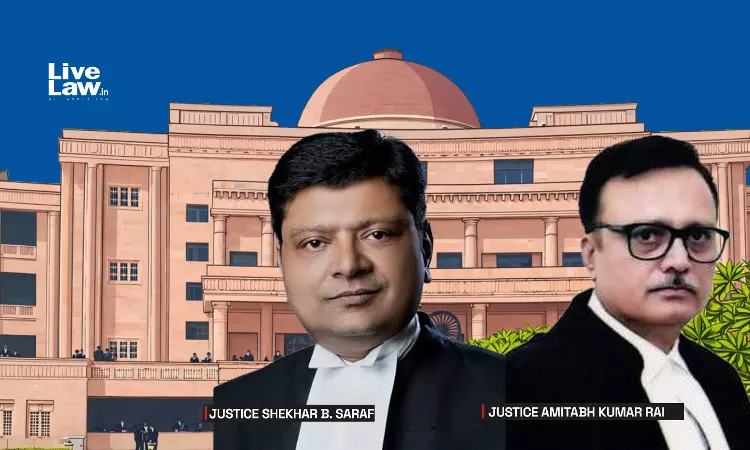
A Bench of Justice Shekhar B Saraf and Justice Amitabh Kumar Rai thus dismissed a writ petition filed by the Chief Engineer (Electrical) and Madhyanchal Vidyut Vitran Nigam Limited challenging the Commission's order passed on July 27, 2026.
Case in brief
Briefly put, the incident of electrocution took place in the year 2011 and an application seeking compensation was also made in the same year.


The Power Corporation had paid ₹65,000 to the victim's father in 2017 and another ₹1 lakh directly to the victim/respondent no. 4 on February 13, 2025.
The victim, however, had approached the Human Rights Commission in 2024, before the latter payment was made.
In July 2026, the Commission directed the Power Corporation to pay an additional ₹10 lakh as compensation.
Challenging this direction, the petitioners moved the High Court arguing that the complaint by the victim was barred by limitation under Section 36(2) of the Protection of Human Rights Act, 1993, since the alleged violation had occurred in 2011, whereas the complaint was filed in 2024.
High Court's observations
At the outset, the Court rejected the objection regarding the limitation and it said that the violation of human rights was continuing because the petitioners had not paid the compensation as required by law.
The Court also noted that the payment of ₹1 lakh after the filing of the complaint before the Commission amounted to an acknowledgement under Section 20 of the Limitation Act, 1963. It further referred to Section 22 of the Limitation Act, which deals with continuing breaches and torts.
The Bench observed that the Power Corporation had a statutory duty to maintain transmission lines in such a manner that people's lives were not exposed to dangers or threats.
"Where the officials of the Power Corporation act negligently, the human rights of citizens stand violated. Hence, the second writ petition is also a case of violation of human rights, and no error has been committed by the Commission in proceeding under the 1993 Act", the Court said.
The High Court also examined the scope of the Commission's powers under Section 18(a) of the Protection of Human Rights Act.
The provision gives the Commission the power to recommend that the concerned Government or authority pay compensation or damages to the complainant, the victim, or members of their family, if an inquiry discloses a violation of human rights or negligence by a public servant in preventing such a violation.
The Court held that the power of the Commission under section 18 is not inhibited by any other provisions or any State Legislature or subordinate legislation. It observed that the provision operates in addition to other provisions and not in derogation of them.
"Entitlement of a person whose human rights have been violated in accordance with the relevant statutory provisions governing payment of compensation, does not in any manner create a fetter in the right of Commission to find out the magnitude of violation of human rights and award a compensation," the Court
Against this backdrop, the Court rejected the petitioners' contention that compensation had already been paid. It said that the earlier payment of ₹1.65 lakh did not fetter the Commission's right to assess the magnitude of the human rights violation and recommend further compensation.
Accordingly, the Court found no infirmity in the Commission's direction to pay an additional ₹10 lakh to the victim.
While dismissing the writ petition, the High Court observed that the additional compensation of ₹10 lakh "ought to have been paid immediately".
The Court thus refused to interfere with the Commission order and dismissed the writ petition.