



- Home
- /
- High Courts
- /
- Andhra Pradesh High Court
- /
- Employees Can't Suffer For...
Employees Can't Suffer For Employer's Record-Keeping Lapses: AP High Court Directs EPFO To Reconsider Retirees' Plea For Higher Pension
Ritika Verma
7 Aug 2026 10:15 AM IST
Granting relief to retired employees seeking higher pension, the Andhra Pradesh High Court held that the Employees' Provident Fund Organisation (EPFO) cannot reject claims under the Employees' Pension Scheme, 1995 solely for non-production of Form 6A, challans or other employer records, particularly in respect of periods prior to 2010. [2026 LiveLaw (AP) 180]The Court observed that...
This is a premium content
Available exclusively to
Our subscribers
Subscribe Premium 
INR 1099+GST
Your support helps us to bring you more content at
an affordable subscription scheme !!!
All payment options available
Granting relief to retired employees seeking higher pension, the Andhra Pradesh High Court held that the Employees' Provident Fund Organisation (EPFO) cannot reject claims under the Employees' Pension Scheme, 1995 solely for non-production of Form 6A, challans or other employer records, particularly in respect of periods prior to 2010. [2026 LiveLaw (AP) 180]
The Court observed that employees cannot be made to suffer for lapses in employer record-keeping or deficiencies in the EPFO's own records.
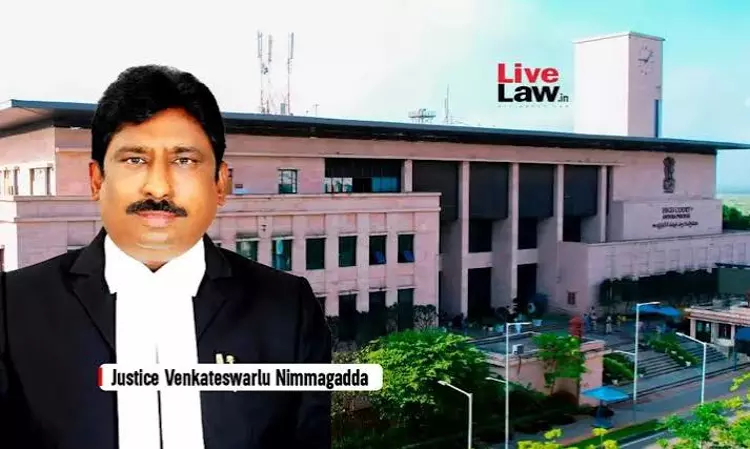
Disposing of the writ petition, Justice Venkateswarlu Nimmagadda remanded the petitioners' applications to the EPFO for fresh consideration and directed the authorities to verify all available records instead of rejecting the claims on technical grounds.
The Court observed:
"The submissions advanced on behalf of the petitioners are merit submissions and acceptable. It is well admitted fact that employees do not have custody or control over statutory returns required to be maintained and submitted by the employer. Documents such as Form 6A, challans, and related records form part of the employer's statutory obligations. Being an employee, he neither prepares nor preserves such documents. Therefore, any deficiency in the production or maintenance of such records cannot be attributed to the employee. To hold otherwise would impose an unreasonable burden upon a person who has neither access to nor control over such documents.
It must also be remembered that the Employees' Pension Scheme is a beneficial social welfare legislation intended to secure pensionary benefits to employees who have contributed during their service. The Scheme is not intended to create procedural barriers that defeat legitimate claims. A rigid and overly technical approach may result in denial of benefits to persons who have otherwise eligible and fulfilled their obligations under the Scheme. Such an interpretation would be contrary to its underlying purpose and object of the scheme."
The dispute arose after the Central Government amended the Employees' Pension Scheme, 1995 by notification dated August 22, 2014, with effect from September 1, 2014, permitting eligible employees and employers to contribute towards pension on salaries exceeding the statutory wage ceiling of ₹15,000 per month by exercising a joint option, with 8.33% of such salary to be remitted to the pension fund.
The petitioners, retired employees of Sangam Dairy, claimed that although provident fund contributions had been made on their actual salaries, they were unaware of the 2014 amendment and the Joint Option.
They later submitted Joint Option applications through the Employees' Provident Fund Organisation's (EPFO) online mechanism, but the applications were not processed despite the employer having already furnished the relevant statutory records. They contended that employees could not be penalised for the employer's inability to reproduce historical records.
The EPFO argued that the employer had failed to furnish mandatory documents, including Forms 3A and 6A, challans and proof of Joint Option, preventing verification of the petitioners' eligibility. The employer, however, maintained that the records had already been submitted over the years and were available with the EPFO, the statutory custodian of those records.
The principal issue before the Court was whether an otherwise eligible employee could be denied higher pension solely because the employer failed to produce every document sought by the EPFO despite the existence of other material indicating eligibility.
Answering the issue in the negative, the High Court held that statutory records such as Form 6A and challans remain in the employer's custody and employees cannot be burdened with producing them. It observed that Form 3A, EPF account statements, Joint Option Forms and contribution records constitute relevant evidence and that the absence of a particular document cannot by itself defeat a claim, especially where there is no allegation of default in provident fund contributions.
While reiterating that a valid Joint Option and remittance of contributions on higher wages must be verified, the Court held that the EPFO must examine all available electronic and physical records instead of insisting on a single document. It found that the petitioners' claims had been rejected mechanically without examining the available material.
The Court issued the following directions:
- Declared the rejection of the petitioners' Joint Option applications arbitrary and violative of Articles 14 and 21.
- Remanded the matter to the EPFO for fresh consideration.
- Directed the EPFO not to reject claims merely for non-production of Form 6A, challans or similar employer records, particularly for periods prior to 2010 and to verify all available records.
- Directed the EPFO to verify its own records, along with the employer's communications and the petitioners' documents.
- Directed the EPFO to grant consequential pensionary benefits if eligibility is established, subject to payment of differential contribution and applicable interest.
- Permitted the petitioners to file additional material and directed the EPFO to pass a reasoned & speaking order within twelve weeks.
- Directed the EPFO to complete the reconsideration within twelve weeks.
- Directed the EPFO to pass a reasoned and speaking order dealing with all relevant material and contentions.
- Ordered that there shall be no order as to costs.
Case Title: Siddineni Venkateswara Rao & Ors. v. Union of India & Ors.
Case No.: W.P. No. 25295 of 2023
Citation: 2026 LiveLaw (AP) 180
Counsel for the Petitioners: Mr. Prabhunath Vasireddy
Counsel for Respondents: Mr. T. Balaji (Standing Counsel for EPFO) and Mr. Bodduluri Srinivasa Rao


