



- Home
- /
- High Courts
- /
- Andhra Pradesh High Court
- /
- AP High Court Refuses To Interfere...
AP High Court Refuses To Interfere With Proposed Construction Of Public Toilet On Municipal Land, Directs Maintenance Of Hygiene
Ritika Verma
9 Jun 2026 9:00 AM IST
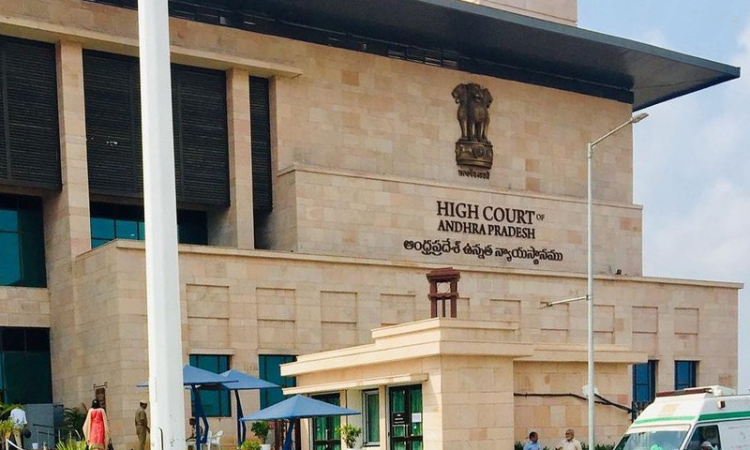
The Andhra Pradesh High Court declined to interfere with the proposed construction of a public toilet on Greater Visakhapatnam Municipal Corporation's land (GVMC) located adjacent to the petitioners residential property who had objected on the ground of apprehended loss of hygiene and utility. The court however asked the agency managing the toilets and the authorities to ensure that toilets...
This is a premium content
Available exclusively to
Our subscribers
Subscribe Premium 
INR 1099+GST
Your support helps us to bring you more content at
an affordable subscription scheme !!!
All payment options available
The Andhra Pradesh High Court declined to interfere with the proposed construction of a public toilet on Greater Visakhapatnam Municipal Corporation's land (GVMC) located adjacent to the petitioners residential property who had objected on the ground of apprehended loss of hygiene and utility.
The court however asked the agency managing the toilets and the authorities to ensure that toilets are maintained absolutely clean and shall also ensure that foul smell shall not emanate from the toilets that may cause inconvenience to the residents.
Justice Gannamaneni Ramakrishna Prasad said:
“Having considered the facts and submissions, this Court is of the view that the proposed construction of toilets in the site belonging to GVMC, although the land is near the compound wall of the house of the Petitioner on one side, the Petitioner is not entitled to resist the same. As a matter of fact, this Court has noticed that the Petitioner's house has a gate which opens into the by-lane and, therefore, the ingress and egress of the Writ Petitioner is not at all disturbed and that the Writ Petitioner does not have direct access to the main road...
In any case, one apprehension expressed by the Writ Petitioner cannot be ignored, inasmuch as the construction of toilets in the proposed location may cause inconvenience to the residents in the vicinity in terms of hygiene by emitting foul smell if the toilets are not kept clean.
Therefore, the burden lies on Lotus International as well as the Official Respondents to ensure that the toilets are maintained absolutely clean and shall also ensure that foul smell shall not emanate from the toilets that may cause inconvenience to the residents of the house belonging to the Writ Petitioner.”
At the same time, the Court directed GVMC and the implementing agency, Lotus International, to ensure that the toilets are maintained in a hygienic condition and that foul smell does not emanate from the facility, causing inconvenience to nearby residents. The Court also left it open to the petitioners to approach the competent authority if any such inconvenience arises in future.
The case arose from a writ petition filed by three members of a family owning a residential property in Pithapuram Colony, Visakhapatnam. They challenged GVMC's decision to construct a public toilet on an adjacent open plot owned by the corporation, contending that the facility would affect hygiene and utility and that their objections had not been considered.
According to the petitioners, the proposed public toilet was being constructed directly in front of their residence and would adversely affect their enjoyment of the property. They also argued that future road widening under the master plan could render the construction unnecessary.
GVMC opposed the petition, stating that the toilet was part of a city-wide sanitation initiative undertaken through a public-private partnership with Lotus International. The corporation explained that the site was located near the Maddilapalem bus stop and opposite the APSRTC bus depot, making it a busy public area where sanitation facilities were urgently required.
The municipal authorities further contended that the petitioners' property was not a corner plot and that an open space and drainage channel separated their compound wall from the proposed site. They also pointed out that the petitioners' access was through a by-lane and not from the main road.
After examining the photographs and material placed on record, the High Court found that the petitioners' ingress and egress would not be affected and that they had no direct access to the main road from the side where the public toilet was proposed. The Court concluded that public convenience and sanitation requirements outweighed the petitioners' objections.
Under Article 21 of the Constitution, the right to life includes the right to a healthy and hygienic life. The Supreme Court in Rajeeb Kalita v. Union of India, 2025 SCC OnLine SC 81, has recognised access to public toilets and sanitation facilities as an essential component of public health, dignity and welfare, imposing a duty on governments and local authorities to provide and maintain such facilities.
Accordingly, the High Court disposed of the writ petition, permitting the construction to proceed while directing the authorities to maintain the facility in a clean and hygienic condition.
Case Title: Kapuganti China Swamy Setty & Ors. v. State of Andhra Pradesh & Ors.
Case Number: W.P. No. 13064 of 2026
Counsel for Petitioners: K. Sakthi Niranjan Guptha
Counsel for Respondents: Sri S. Vijay Kumar and Sri Mortha Srinu Babu.
Tags


