



- Home
- /
- High Courts
- /
- Andhra Pradesh High Court
- /
- Mere Presence Of Husband's...
Mere Presence Of Husband's Relatives At Marriage Ceremony Does Not By Itself Prove Instigation, Abetment To Commit Bigamy: AP High Court
Ritika Verma
30 May 2026 11:00 AM IST
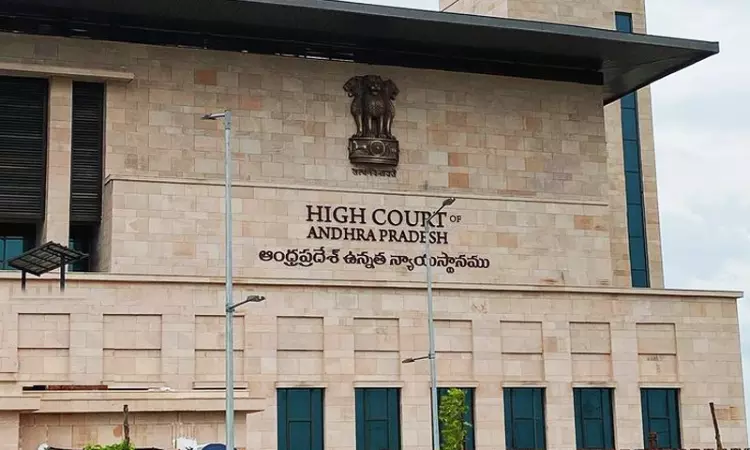
The Andhra Pradesh High Court dismissed a woman's plea challenging acquittal of certain relatives in a bigamy case, holding that mere presence of family elders at a second marriage, or their failure to prevent it, does not by itself establish abetment or instigation to commit bigamy.Section 494 IPC penalises bigamy, i.e., marrying again during the subsistence of a valid first marriage,...
This is a premium content
Available exclusively to
Our subscribers
Subscribe Premium 
INR 1099+GST
Your support helps us to bring you more content at
an affordable subscription scheme !!!
All payment options available
The Andhra Pradesh High Court dismissed a woman's plea challenging acquittal of certain relatives in a bigamy case, holding that mere presence of family elders at a second marriage, or their failure to prevent it, does not by itself establish abetment or instigation to commit bigamy.
Section 494 IPC penalises bigamy, i.e., marrying again during the subsistence of a valid first marriage, while Section 34 IPC attributes criminal liability for acts done in furtherance of common intention. To fasten liability on relatives under these provisions, the prosecution must establish intentional participation, instigation or common intention in the commission of the offence.
Justice Subhendu Samanta observed that, although the conviction of the husband and the alleged second wife for offences under Sections 498-A and 494 IPC had attained finality, the surviving issue in the revision cases was whether the relatives and family elders had instigated or shared common intention in relation to the second marriage.
Referring to S. Nitheen and others v. State of Kerala, (2024) 8 SCC 706, the Court noted that the prosecution must prima facie establish not only the presence of the accused, but also their overt act or omission in relation to the second marriage and their knowledge of the subsisting first marriage. The Court observed:
“Moreover, to bring home the charge against elders of A1 to connect them with an offence punishable under Section 494 read with 34 IPC, prosecution has to prove that unless and until elders of the family of A1 and A2 instigated the bigamous marriage between A1 and A2 could not have been happened; furthermore it was not proved that A4, A5 and A9 had such influence over A1 and A2 that this could dominant the will of A1 and A2, merely consenting and appearing at marriage ceremony is not itself proved that they instigated bigamous marriage to A1 and A2, on the opposite way, if we consider the entire fact that PWs 1 and 2 had requested elders of the family to prevent bigamous marriage but they denied to do so and could not paid heed the request of PWs.1 and 2, if the fact is taken to be true, then also inability of A4, A5 and A9 to prevent the marriage of A1 and A2 itself does not prove any common intention of A4, A5 and A9 for the offence punishable under Section 494 IPC. To prove any common intention of a person to a particular fact, the prosecution has to prove that not only instant knowledge but also, they have to examine as to whether accused person had complete control and authority to prevent A1 and A2 to commence their bigamous marriage but instead of that they willfully abated such offence.”
The case arose out of the appellate court's decision acquitting certain relatives who had been proceeded against for offences under Sections 498-A and 494 read with Section 34 IPC, on the ground that the prosecution had failed to prove instigation, common intention or active participation in the second marriage.
Challenging the acquittal the petitioner contended that the accused relatives, being close family members, had knowledge of and actively instigated the second marriage, and that their presence at the ceremony and refusal to prevent it established their complicity.
According to the prosecution case, the complainant married A1 (her husband) in 1975 and a daughter was born from the marriage. It was alleged that A1 subsequently developed an illicit relationship with A2 (the alleged second wife) and, during the subsistence of the first marriage, contracted a second marriage with. The complainant further alleged that certain relatives either encouraged the marriage or failed to prevent it and later pressured her to accept A2 into the matrimonial home.
The respondents, on the other hand, argued that mere presence at the ceremony or failure to object did not establish instigation, abetment or common intention on the part of the relatives.
Examining the rival contentions, the High Court held that A1 and A2, being majors, had entered into the second marriage of their own volition, and that mere attendance at the ceremony, consent to it, or failure to prevent it did not, absent proof of influence, control or wilful encouragement, establish mens rea, abetment or common intention on the part of the relatives under Section 494 IPC.
Finding the appellate court's reasoning justified, the High Court held that there was no evidence of instigation or common intention by the relatives, and that mere presence at the ceremony or failure to prevent the second marriage was insufficient to attract liability under Section 494 read with Section 34 IPC, and upheld the acquittal, dismissing the revision cases.
Case Title: Chintherla Padmavathi v. State of A.P. & Ors.
Case Numbers: Criminal Revision Case Nos. 386 and 387 of 2007
Counsel for Petitioner: Namineni Pavan Kumar
Counsel for Respondents: B.V. Aparna Lakshmi, Public Prosecutor


