



- Home
- /
- High Courts
- /
- Andhra Pradesh High Court
- /
- Acquisition Of Property Culminates...
Acquisition Of Property Culminates In Actual Possession, Not With Payment Of Compensation: Andhra Pradesh High Court
Saahas Arora
9 Oct 2025 6:10 PM IST
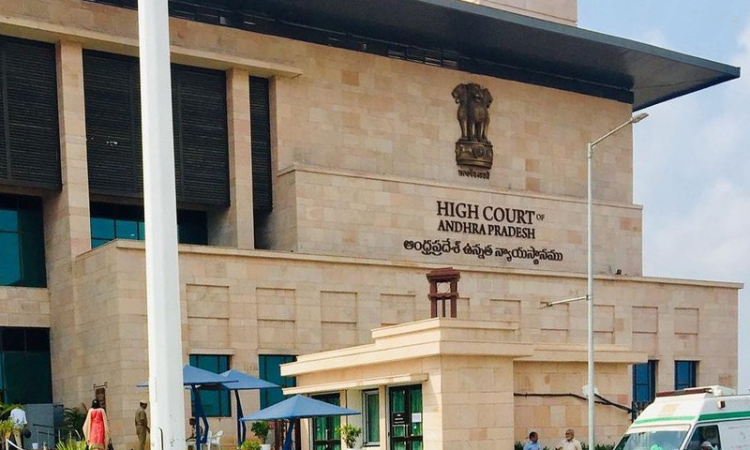
The Andhra Pradesh High Court has emphasised that the culmination of acquisition of a private property lies not in the payment of compensation, but in actual physical possession of land, and further that the State authorities must adhere to due process while acquiring such private land.While dealing with an issue where land acquisition was being conducted by State authorities in...
This is a premium content
Available exclusively to
Our subscribers
Subscribe Premium 
INR 1099+GST
Your support helps us to bring you more content at
an affordable subscription scheme !!!
All payment options available
The Andhra Pradesh High Court has emphasised that the culmination of acquisition of a private property lies not in the payment of compensation, but in actual physical possession of land, and further that the State authorities must adhere to due process while acquiring such private land.
While dealing with an issue where land acquisition was being conducted by State authorities in Vizianagaram District without proper notification— the Court referred to the Supreme Court's decision in Kolkata Municipal Corporation vs Bimal Kumar Shah [(2024) 10 SCC 533], where the Court enlisted the seven basic rights of private citizens which constitute the “real content of the right to property under Article 300A”, which the State is expected to respect before depriving citizens of their private property. These principles include— (i) right to notice, (ii) right to be heard, (iii) right to a reasoned decision, (iv) duty to acquire only for public purpose, (v) right of restitution or fair compensation, (vi) right to efficient and expeditious process, and (vii) right to conclusion.
Reiterating that the above rights are foundational components of a law that is tune with Article 300A, and the absence of one of these or some of them would render the law susceptible to challenge, Justice Tarlada Rajasekhar Rao explained,
“The seven principles which have been discussed are integral to the authority of law enabling compulsory acquisition of private property. Union and State statutes have adopted these principles and incorporated them in different forms in the statutes provisioning compulsory acquisition of immovable property. The importance of these principles, independent of the statutory prescription have been recognised by our Constitutional Courts and they have become part of our administrative law jurisprudence. The culmination of an acquisition process is not in the payment of compensation, but also in taking over the actual physical possession of the land. If possession is not taken, acquisition is not complete”
In 2022, the Ministry of Road Transport and Highways (Respondent 2) issued a Gazette notification under Section 3A of National Highways Act, 1956 (power to acquire land), where several lands across Vizianagaram District were notified. However, the notification did not include all the properties of petitioners. Subsequently, proceedings under Section 3G(3) of the 1956 Act, were issued by the competent authority (Respondent 5).
For reference– Section 3G(3) requires the competent authority to give a public notice published in two local newspapers, one of which will be in a vernacular language inviting claims from all persons interested in the land to be acquired.
Through the writ petitions, the petitioners prayed that the respondent authorities were not following due process while acquiring the lands as interfering with their possession of properties without proper notification and acquisition, as contemplated under the 1956 Act, infringes Article 300-A of the Constitution.
Disposing of the petitions, the Court held, “… the writ petitions are disposed of with a direction to the respondents to follow due process of law before acquiring the writ petitioners' land.”
Case Details:
Case Number: WRIT PETITION Nos. 26412 and batch
Citation: 2025 LiveLaw (AP) 156
Tags


