



- Home
- /
- High Courts
- /
- Andhra Pradesh High Court
- /
- APVAT Act | Mere Passing Of Refund...
APVAT Act | Mere Passing Of Refund Order Within 90 Days Without Actual Disbursement Does Not Save State From Interest Liability: AP High Court
Saahas Arora
16 Dec 2025 1:45 PM IST
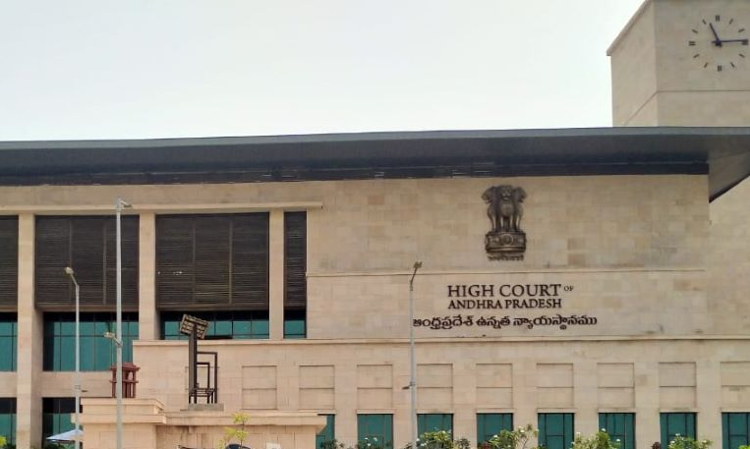
The Andhra Pradesh High Court has observed that mere passing of an order for refund within the statutory period of 90 days, without actual disbursement of the amount within the said period, does not suffice to avoid liability to pay interest as prescribed under the Andhra Pradesh Value Added Tax (APVAT) Act, 2005 and the A.P. VAT Rules, 2005, as the law mandates that refund must actually...
This is a premium content
Available exclusively to
Our subscribers
Subscribe Premium 
INR 1099+GST
Your support helps us to bring you more content at
an affordable subscription scheme !!!
All payment options available
The Andhra Pradesh High Court has observed that mere passing of an order for refund within the statutory period of 90 days, without actual disbursement of the amount within the said period, does not suffice to avoid liability to pay interest as prescribed under the Andhra Pradesh Value Added Tax (APVAT) Act, 2005 and the A.P. VAT Rules, 2005, as the law mandates that refund must actually be effected within the statutory period to avoid liability of interest.
For reference– as per Section 38 of the APVAT Act r/w Rule 35(8) of the APVAT Rules, 2005– where the VAT dealer has produced accounts within the prescribed time limit, interest shall be payable at the rate of 1.25% per month from the date after the expiry of the ninety days on a claim made on VAT return, till the date of actual refund. The liability for payment of interest arises from the date after the expiry of 90 days till the date of actual refund.
A Division Bench comprising Justice Ravi Nath Tilhari and Justice Subhendu Samata was dealing with writ petition seeking payment of interest on a belated refund amounting to Rs.1,27,34,194/-. While the refund claim pertained to the tax period between April, 2013 and March, 2016 and was approved by the Joint Commissioner CT Audit and Refunds (Respondent 3) in June, 2020, the actual refund was credited in March 2022– which was well beyond the prescribed time limit of 90 days.
Against this backdrop, the Division Bench held,
“We are of the view that mere passing of the order within the period of 90 days would not be sufficient to avoid liability for payment of interest under Section 38 of the APVAT Act and Rule 35(8) of the APVAT Rules, 2005.The amount if not refunded actually within 90 days period from the date of claim made in a case covered by clause(c), there would be liability for payment of interest. So, the amount if not refunded actually within 90 days period, there would be liability for payment of interest.”
Background
The primary reason behind rejection of the claim of interest was that there was no delay from the Departmental Authorities as regards the refund claim and owing to some problems with the Comprehensive Financial Management System (CFMS), the bill was kept pending before them only, and not with the Department.
Aggrieved, the petitioner filed the writ petition seeking direction to the respondents to pay interest on the belated refund amount, and arguing that mere passing of the order within the statutory period of 90 days is not a sufficient compliance and the liability for payment of interest would still persist, if the amount has not been actually refunded within the statutory period.
In contrast, the respondents reiterated that there was no fault on part of the Department– which had no control for the credit payable. Thus, they submitted that there arose no liability for payment of interest.
At the outset, the Court noticed that the order for refund was not passed within ninety days of the claim for refund, and consequently rejected the claim of the respondents that the refund order was passed within the statutory limit. In this regard, the Court noted,
“Even if the order for refund be in 90 days, the expression used in Rule 35(8)(c) of APVAT Rules, 2005 is till the “date of actual refund‟ and not till the date of passing of order of refund beyond 90 days. It is one of the principles of interpretation that the words used in a statute are primarily to be given their plain meaning.”
With respect to the argument that the claim for interest was rejected on the grounds that there was no delay attributable to the tax authorities as the bill was forwarded to the treasury in time and the delay was caused due to technical issues in the CFMS, the Division Bench observed,
“The submission raised that the Department is not at fault and had no control over the payment for processing the bills and so no liability for interest deserves rejection. The statute does not permit any reason as an excuse, for non-payment, within the statutory period. Such period is also not subject to extension on any ground. Once time has been prescribed by the statute for doing an act, it has to done within the period prescribed and if not so done, the consequences provided under the statute shall necessarily follow.”
As the date of “actual refund” was 31.03.2022, the Court allowed the petition and held that the petitioner would be entitled for the interest and directed the respondents to make the payment of interest on the belated refund amount, for the belated period till the date of actual refund.
Case Details:
Case Number: WP 5898/2024
Case Title: M/s. JBD Educationals Pvt. Ltd. v. State of Andhra Pradesh and Ors.
Citation: 2025 LiveLaw (AP) 180
Tags


