



- Home
- /
- High Courts
- /
- Andhra Pradesh High Court
- /
- 'State Largesse Can't Be...
'State Largesse Can't Be Monopolized': High Court Quashes APSRTC Tender For Allowing Single Person To Corner Multiple Shops
Saahas Arora
27 Jan 2026 1:27 PM IST
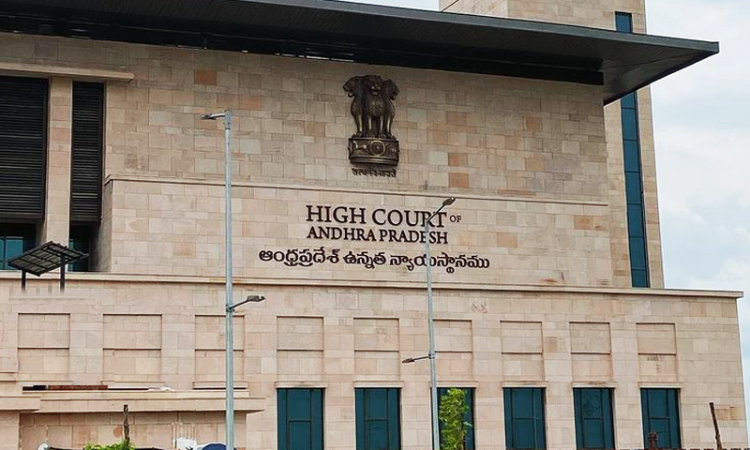
The Andhra Pradesh High Court has held that the allocation of multiple commercial spaces by State instrumentalities to a single individual is a "pernicious practice" that incentivises monopolistic behaviour and fosters vested interests, thereby undermining the public interest and the Directive Principles of State Policy.Justice Gannamaneni Ramakrishna Prasad was dealing with a bunch of...
This is a premium content
Available exclusively to
Our subscribers
Subscribe Premium 
INR 1099+GST
Your support helps us to bring you more content at
an affordable subscription scheme !!!
All payment options available
The Andhra Pradesh High Court has held that the allocation of multiple commercial spaces by State instrumentalities to a single individual is a "pernicious practice" that incentivises monopolistic behaviour and fosters vested interests, thereby undermining the public interest and the Directive Principles of State Policy.
Justice Gannamaneni Ramakrishna Prasad was dealing with a bunch of petitions, whereby the petitioner challenged- (i) the action of the Andhra Pradesh State Road Transport Corporation (APSRTC)- respondents, in terminating his licenses to run businesses across several open spaces at Yerraguntla Bus Station, and (ii) the subsequent action of issuing fresh tender notification for the same spaces.
The petitioner's licenses were terminated due to allegations of non-payment of license fees and subletting the concerned spaces to third parties, in blatant violation of the license conditions.
Deprecating the practice of allotting multiple open spaces to a single person, the Single Judge held,
"… the very practice adopted by the APSRTC by granting several licences in favour of one single person i.e., the Writ Petitioner is a pernicious practice, thereby giving scope to the Writ Petitioner to sub-let the Open Spaces to the third parties unauthorisedly, thereby violating the conditions of the licences. This apart, granting of several licences to a single person has also created a vested interest inasmuch as State largesse ought not to have been granted to a single person, thereby creating monopoly. It is the incumbent duty on the part of the Respondent Authorities to ensure that each Open Space is allocated to a different person, since such State largesse is created with an avowed object of ensuring that the material resources of the community are so distributed as best to sub-serve the common good (Article 39(b)); and that the State shall in particular, strive to minimize the inequalities in income (Article 38(2)) on one hand and to prevent development of vested interest or monopoly on the other hand".
The Court observed that the "pernicious practice" of allotting several open spaces to a single person led to the creation of an "eco-system" that enabled the petitioner to abuse tender conditions.
Noting that State largesse is meant to be distributed amongst persons in real need, the Court stated:
"The facts involved in the present case is a classic example of the Writ Petitioner developing vested interest since he had bidded for several shops, thereby giving scope to the Writ Petitioner to sub-let the Open Spaces to several third parties. This indicates that a laxity on the part of the Official Respondents had enabled the Writ Petitioner to create his own eco-system that made him to blatantly abuse the tender conditions and the conditions of licence".
In its defence, APSRTC submitted that the petitioner had violated the licence conditions by sub-letting allocated spaces to third parties, which was demonstrated by letters given by the sub-tenants revealing that regular rent was being paid to the petitioner.
In response to this allegation, the petitioner offered no rebuttal and only claimed that the third parties had illegally occupied the spaces.
The Court termed this defence as approaching the Court with "unclean hands" and observed:
"…this Court has no other option but to accept the contentions of the Respondent Corporation that the Writ Petitioner has violated the conditions of the licence, inasmuch as the Writ Petitioner has sub-let the Open Spaces to the third parties in violation of the licence conditions. The Writ Petitioner has also violated the terms of the licence inasmuch as the businesses earmarked for the Open Spaces have not been followed by the Writ Petitioner beside the default of non-payment of licence fee/monthly rents. On the contrary, the Writ Petitioner had approached this Court with unclean hands inasmuch as Writ Petitioner had complained of illegal encroachment by third parties which he had illegally sub-let the Open Spaces to the third parties or sub-tenants in violation of the conditions of the licence".
While the Court found the Writ Petition challenging the termination orders devoid of merit, it intervened regarding the fresh tender notification.
The Court observed that the fresh Tender Notification issued on 04.01.2024 still did not prohibit a single person from bidding for more than one open space, thus perpetuating the same "unhealthy practice".
Consequently, the Court dismissed the Writ Petition insofar as it challenged the termination of the Petitioner's licenses.
It also quashed and set aside the Tender Notification and directed the Official Respondents to refund all deposits submitted by bidders, including the Writ Petitioner, within three weeks.
It also directed the Respondent Corporation to prepare a fresh Tender which explicitly ensures that a single person cannot bid for more than one licence for an Open Space.
Case Details:
Case Number: WRIT PETITION Nos: 31871, 32835 of 2022, 30041 of 2023 & 1690 of 2024
Case Title: V.Rabbani Basha v. The State of Andhra Pradesh
Click Here To Read/Download Order
Citation: 2026 LiveLaw (AP) 16
Tags


