



- Home
- /
- High Courts
- /
- Andhra Pradesh High Court
- /
- SC/ST Act | Eyewitness To Caste...
SC/ST Act | Eyewitness To Caste Abuse Must Be Independent And Impartial: AP High Court
Ritika Verma
27 Aug 2026 10:15 AM IST
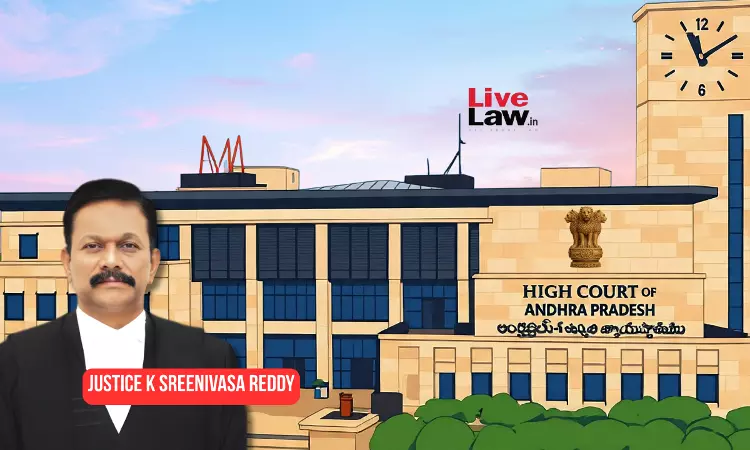
The Andhra Pradesh High Court has held that while examining an allegation of caste-based abuse under the SC/ST Act, the requirement of “public view” must be considered in the context of whether the alleged eyewitnesses were independent and impartial. [2026 LiveLaw (AP) 201]The Court accordingly quashed the criminal proceedings against a Sub-Inspector and a Constable arising from a...
This is a premium content
Available exclusively to
Our subscribers
Subscribe Premium 
INR 1099+GST
Your support helps us to bring you more content at
an affordable subscription scheme !!!
All payment options available
The Andhra Pradesh High Court has held that while examining an allegation of caste-based abuse under the SC/ST Act, the requirement of “public view” must be considered in the context of whether the alleged eyewitnesses were independent and impartial. [2026 LiveLaw (AP) 201]
The Court accordingly quashed the criminal proceedings against a Sub-Inspector and a Constable arising from a Head Constable's complaint alleging caste-based abuse and criminal intimidation.
It held that the complaint could not be examined in isolation and had to be assessed in the context of the disciplinary action that had led to the complainant's suspension, the delay in filing the criminal complaint and the antecedents of the persons cited by him as eyewitnesses.
Section 3(1)(r) and 3(1)(s) of the SC/ST Act, 1989 punish intentional insult or intimidation of a member of a Scheduled Caste or Scheduled Tribe with intent to humiliate, and abuse by caste name, when committed in a place within 'public view'.
A Single Judge Bench of Justice K. Sreenivasa Reddy examined the circumstances surrounding the complaint, including the antecedents of the three persons cited by the complainant as eyewitnesses and the requirement of “public view” under the SC/ST Act. The Court observed:
“The Legislature required 'intention' as an essential ingredient for the offence of insult, intimidation and humiliation of a member of the Scheduled Caste or Scheduled Tribe in any place within 'public view'. Looking at the aims and objects of the Act, the expression 'public view' in Section 3 (1) (x) of the Act has to be interpreted to mean that the public persons present should be independent and impartial and not interested in any of the parties. In other words, persons having any kind of close relationship or association with the complainant, would necessarily get excluded...
In the case on hand, the alleged eyewitnesses, as per the petitioners/A1 and A2, were having chequered history, and admittedly, they are not residents of the place of offence, and they are not strangers to both petitioners/A1 and A2 and respondent No.2/complainant, as they got chequered history and number of crimes were registered against them. In the facts and circumstances of the case, it can be inferred that the present criminal proceeding is manifestly attended against the petitioners/A1 and A2 with a mala fides and is maliciously instituted with an ulterior motive for wrecking vengeance on the petitioners/A1 and A2 and with a view to spite them due to private and personal grudge. After taking into the overall circumstances leading to the initiation of the present criminal proceedings against the petitioners/A.1 and A.2 would lead to an irresistible conclusion that the criminal proceedings are manifestly frivolous, vexatious and malicious.”
The case arose from a complaint filed by a Head Constable against a Sub-Inspector and a Constable, all posted at Dhone Town Police Station. The complainant alleged that the two officers abused him by referring to his caste and threatened him with dire consequences after he questioned them about his suspension.
The petitioners contended that the complaint was a counterblast to disciplinary proceedings initiated against the complainant.
The disciplinary action followed a report submitted by an Inspector of Police, alleging that the complainant was passing advance information about police raids to persons involved in illegal activities, including ganja transportation and matka.
The report relied on Call Detail Records, which showed 46 calls between the complainant and one such person and 466 calls with another during the relevant periods.
Based on the report, the Superintendent of Police suspended the complainant. The petitioners contended that the complainant believed they were responsible for the report leading to his suspension and subsequently filed the caste abuse complaint against them.
The High Court observed that “public view” requires persons who are independent and impartial. Persons having a close relationship, association or vested interest with the complainant would not ordinarily satisfy this requirement.
The Court also considered the delay in setting the criminal law into motion. The alleged incident took place nearly 20 days before the private complaint was filed. The complainant stated that he had earlier sent a written complaint to the higher authorities by registered post.
The Bench, however, observed that, being a police person, the complainant ought to have complained immediately to show his bona fides.
Considering the circumstances together, the High Court found that the complaint was attended with mala fides and had been instituted with an ulterior motive to wreck vengeance against the petitioners.
The Court found that these circumstances, taken together, showed that the proceedings were initiated with mala fides and for the purpose of wrecking vengeance against the petitioners.
The Court held that continuation of the criminal proceedings would amount to an abuse of the process of law.
Accordingly, the Criminal Petition was allowed and the proceedings in the SC/ST Sessions Case against the Sub-Inspector and Constable were quashed.
Case Title: Y. Praveen Kumar & Anr. v. State of Andhra Pradesh & Anr.
Case No.: Criminal Petition No. 3174 of 2023
Citation: 2026 LiveLaw (AP) 201
Counsel for the Petitioners/Accused: Sri S. Dushyanth Reddy for Sri Gudi Madhusudhan Reddy
Counsel for the Respondents/Complainant: Public Prosecutor (AP); Chalasani Ajay Kumar
Tags


