



- Home
- /
- High Courts
- /
- Andhra Pradesh High Court
- /
- Andhra Pradesh High Court Issues...
Andhra Pradesh High Court Issues Notice On YSR Congress Party's Plea Against Blocking Of Facebook Page In India
Malavika Prasad
20 Jun 2026 3:12 PM IST
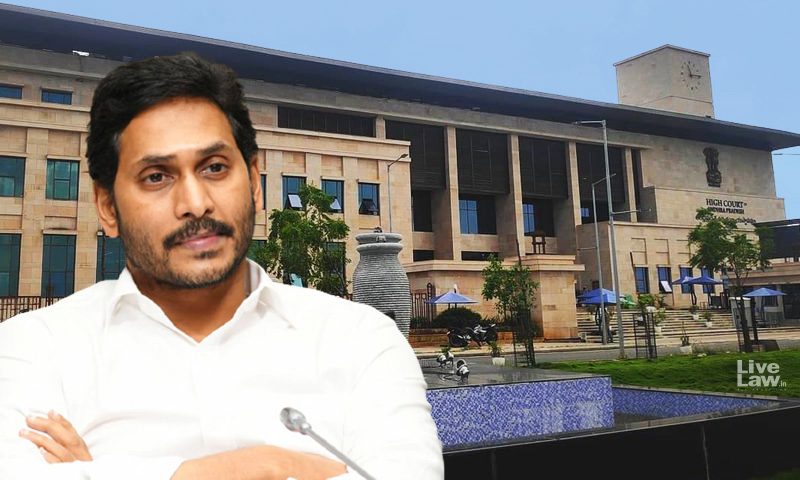
The Andhra Pradesh High Court issued notice on YSR Congress Party's plea against blocking of its Facebook page in India, allegedly after a notice was sent by the Central Government to the social media intermediary seeking restriction of access to the page in the country. The plea seeks a direction to Facebook to forthwith furnish to the Petitioner copies of notices, orders, or...
This is a premium content
Available exclusively to
Our subscribers
Subscribe Premium 
INR 1099+GST
Your support helps us to bring you more content at
an affordable subscription scheme !!!
All payment options available
The Andhra Pradesh High Court issued notice on YSR Congress Party's plea against blocking of its Facebook page in India, allegedly after a notice was sent by the Central Government to the social media intermediary seeking restriction of access to the page in the country.
The plea seeks a direction to Facebook to forthwith furnish to the Petitioner copies of notices, orders, or communications received from Government authority.
A division bench of Chief Justice Lisa Gill and Justice R Raghunandan Rao in its order said.
"Mr Jupudi VK Yagna Dutt, learned Central Government Counsel, and Mrs. S. Pranathi, learned Special Government Pleader attached to Office of learned Advocate General, accept notices on behalf of respondent Nos.1 (Centre) & 2 (Designated officer, MeitY)and 4 (State of AP) respectively. Notice be issued to respondent No.3 (Meta), for 13.08.2026. Personal service on respondent No.3 is also permitted. Counter(s) by respondent Nos.1 ,2 & 4 be filed well before next date of hearing".
The plea states that the Page contains exclusively lawful political content including commentary on governance, party activities, and outreach to voters, which not only engages its followers within India, but also resonates with its global audience, thereby providing both its local and international followers with latest updates on the state governance. None of this content falls within any ground for restriction under Article 19(2) of the Constitution, it is contended.
On 09.06.2026, the Petitioners received a communication/notification from Meta stating that its entire Facebook Page had been made unavailable to all users in''India.
The notification stated as follows:
"We have restricted access to your content in India pursuant to a notice from The Government of India/Law Enforcement under Section 79(3)(b) of the Information Technology Act, 2000. You may contact The Government of India /Law Enforcement to find out more information about this notice and take appropriate legal action has you may deem fit)."
The plea claims that the following disclosures are entirely absent from the communication/notification:
(a) The communication/notification identifies no specific post, video, image, or item of content alleged to be unlawful.
(b) The communication/notification does not name the specific authority within "The Government of India / Law Enforcement" that issued the notice',
(c) The communication/notiifcation does not identify any provision of law alleged to have been violated, beyond a bare citation', of Section 79(3)(b) of the IT Act.
(d) The Petitioner received no prior notice and was not afforded, any opportunity to be heard before the blocking was effected.
(e) The blocking encompasses the entire YSRCP Facebook Page. None of the content thereon has been individually identified as unlawful.
It is submitted that Facebook's impugned communication directed the Petitioner to "contact The Government of India / Law Enforcement" but provided no name, department, address, or reference number.
Further, the party states, the blocking has severed the Petitioners' communication with lakhs of followers in India, prevented lawful political expression during active political mobilisation, and created a chilling effect on democratic participation and the all of the same has been done in total secrecy.
The matter is listed on August 13.
Case title: Yuvajana Sramika Rythu Congress Party (YSRCP) and another v/s The Union of India and others
WRIT PETITION NO: 15682 of 2026

Malavika Prasad
Malavika Prasad is a Desk Editor with LiveLaw

