



Exhaust BNSS Remedies Before Approaching HC Under Article 226 For FIR Registration, Unless Urgency Warrants: AP High Court
Ritika Verma
15 Oct 2026 10:15 AM IST
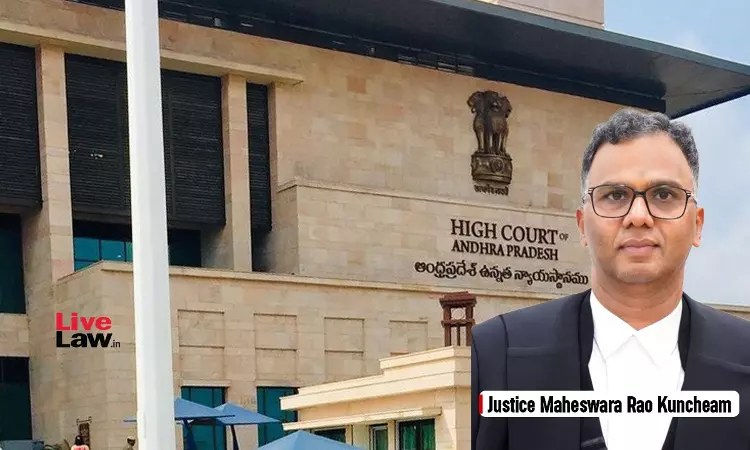
The Andhra Pradesh High Court has held that a person aggrieved by the police's failure to register a FIR must ordinarily pursue the remedies available under the BNSS, before approaching the High Court under Article 226 of the Constitution unless urgent intervention is warranted.
The case arose from a petition filed by a 65-year-old man alleging police inaction on his complaint about the alleged fraudulent registration of a document. He sought an FIR against the private individual allegedly involved and others, including officials of the Sub-Registrar's Office, Anantapur Rural.
The central issue was the alleged failure of the police to initiate criminal proceedings despite receiving the petitioner's complaint.
A Single Judge bench of Justice Maheswara Rao Kuncheam observed:
“In this juncture, it is appropriate to note the relevant provisions enunciated in the Bharatiya Nagarik Suraksha Sanhita, 2023 (for short “BNSS”) to perceive the overall picture. Relevant provisions of BNSS, are Sections 173 and 210 read with Section 223.


As seen from above statutory realm discloses that BNSS, 2023 contemplates a structured sequential scheme to initiate criminal proceedings. The codified structured formula is provided in BNSS, 2023 so far as registration of the complaint and, if not, what are the other steps to follow.
It can be seen from the above dictum that a party, whoever approaches the High Court under Article 226 of the Constitution of India has a legal remedy available in another statutory scheme in a structured formula; as such, exercising the extraordinary jurisdiction of the High Court under Article 226 of the Constitution of India may not warrant grant of relief in usual course.”
The petitioner approached the High Court seeking a direction to the police authorities to register an FIR against the private individual and all other persons allegedly involved, and to conduct a fair, impartial and time-bound investigation.
Opposing the petition, the State submitted that a preliminary enquiry had revealed that the complaint did not disclose a cognizable offence.
The Court noted that under Section 173(4) of the BNSS, a person may approach the Superintendent of Police if the police refuse to record information about a cognizable offence. If the grievance remains unresolved, the person may seek an investigation order from the Magistrate under Section 175(3). Sections 210 and 223 govern the Magistrate's cognizance of offences and complaints, respectively.
Holding that these remedies should ordinarily be exhausted before invoking Article 226, unless urgent intervention is warranted, the Court disposed of the petition, granting the petitioner liberty to approach the jurisdictional Magistrate under Sections 175(3), 210 and 223.
It clarified that it had expressed no opinion on the merits of the complaint or whether it disclosed a criminal offence.
Counsel for the Petitioner: G. Ramana
Counsel for the Respondents: Government Pleader for Home


