



- Home
- /
- High Courts
- /
- Andhra Pradesh High Court
- /
- Disputed Claim Of Victim's...
Disputed Claim Of Victim's Conversion To Christianity No Ground To Quash SC/ST Act Charge At Investigation Stage: AP High Court
Ritika Verma
17 Nov 2026 6:15 PM IST
The Andhra Pradesh High Court has declined to quash the SC/ST Act charge against a man accused in a murder case, holding that the question of whether the deceased had converted to Christianity and ceased to belong to a Scheduled Caste must be considered at the appropriate stage of the proceedings.The Court observed that since the investigation was still underway and the charge sheet had not...
This is a premium content
Available exclusively to
Our subscribers
Subscribe Premium 
INR 1099+GST
Your support helps us to bring you more content at
an affordable subscription scheme !!!
All payment options available
The Andhra Pradesh High Court has declined to quash the SC/ST Act charge against a man accused in a murder case, holding that the question of whether the deceased had converted to Christianity and ceased to belong to a Scheduled Caste must be considered at the appropriate stage of the proceedings.
The Court observed that since the investigation was still underway and the charge sheet had not been filed, it would be premature to decide the applicability of the SC/ST (Prevention of Atrocities) Act.
Section 3(2)(v) of the SC/ST (Prevention of Atrocities) Act provides for enhanced punishment where an offence punishable with imprisonment of ten years or more is committed against a person belonging to a Scheduled Caste or Scheduled Tribe, knowing that the victim belongs to such community.
The petitioner-accused contended that the deceased had converted to Christianity and ceased to be a member of the Scheduled Caste community. He relied on photographs, a news article and a certificate purportedly issued by the Secretary of a local Church. The certificate stated that the deceased and his family had been baptised decades earlier, were Church members, regularly attended Sunday prayers and that the deceased had been cremated according to Christian rites at the Church burial ground.
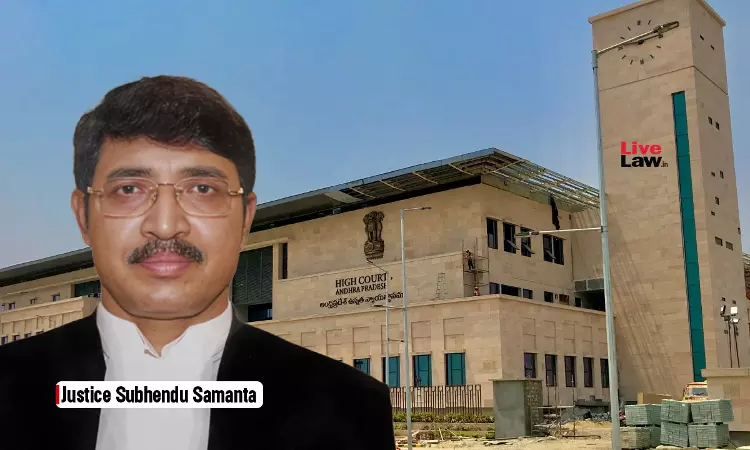
A Single Judge Bench of Justice Subhendu Samanta observed:
“A coordinate Bench of this Court, while dealing with a similar issue, quashed a crime registered under Sections 3(1)(r), 3(1)(s), and 3(2)(va) of SC/ST (POA) Act on the ground that, as victim has embraced Christianity, he could not come under the purview of SC/ST (POA) Act.
In this particular case, investigation of police is still in progress and charge sheet of the case is yet to be submitted. Though the petitioner has raised the issue regarding issuance of certificate by the concerned church, the prosecution has placed the statement of the Secretary of the Church denying the issuance of such certificate. Whether the said statement of Secretary of the church would be made part of charge sheet, or not, we cannot presume at this stage. Moreover, the investigation is going on. At this juncture, it would be too early to predict regarding the materials which may be collected and produced by prosecution in this case with the final report.”
The case arose from a complaint lodged by the father of the deceased, an advocate practising at Hindupur. According to the complaint, the deceased had supported a friend who was involved in a land dispute with the petitioner and his family members over property at Melapuram Cross, Hindupur. The complainant alleged that the petitioner had lodged false complaints against his son and his friend, while other accused persons had threatened his son over the phone.
The deceased informed his father that he was going to Court. The following morning, his friends informed the complainant that his son had been found dead on a road. The complainant reached the spot and found the body lying in thorny bushes near an irrigation tank, with hacking injuries on the face, neck and both hands.
Suspecting the petitioner, his family members and others of murdering his son and dumping the body at the spot, the complainant approached the police. Based on his complaint, the police registered a case under Sections 302, 201 and 120-B read with Section 149 IPC, along with Section 3(2)(v) of the SC/ST Act.
During the investigation, the petitioner, who was arrayed as an accused, approached the High Court seeking to quash the FIR only insofar as the offence under Section 3(2)(v) of the SC/ST Act was concerned.
The State, however, produced the Church Secretary's police statement, in which he denied issuing the certificate, disputed the signature and stated that the deceased was not a Church member. He also stated that he did not know whether the deceased had been baptised or converted to Christianity.
The petitioner alleged that the police had pressured the Secretary into making the statement.
Opposing the petition, the State submitted that the deceased belonged to a Scheduled Caste community, that the petitioner knew his caste and that the SC/ST Act was therefore applicable.
Examining the rival submissions, the Bench noted that a person belonging to a Scheduled Caste ceases to be recognised as such upon conversion to Christianity, unless the person subsequently reconverts to the original religion and is accepted by the community.
It further noted that three requirements must be established to prove Scheduled Caste status: proof that the person belonged to a caste recognised under the Constitution (Scheduled Castes) Order, 1950; reconversion to the original religion followed by the person's parents and earlier generations; and acceptance by the community.
The Bench distinguished cases where charge sheets had already been filed, noting that the investigation here was still underway. The prosecution had disputed the Church certificate's authenticity through the Secretary's statement. The Court could not presume whether the statement would form part of the charge sheet or what further material might be collected.
It therefore held that determining whether the deceased had converted to Christianity and whether Section 3(2)(v) of the SC/ST Act applied would be premature, leaving the issue open for consideration at the appropriate stage.
Accordingly, the High Court disposed of the criminal petition without quashing the FIR or interfering with the ongoing investigation.
Counsel for the Petitioner: Sri Kambhampati Ramesh Babu
Counsel for the Respondents: Sri Panini Somayaji, Assistant Public Prosecutor (State); Sri Abdus Saleem (for the complainant)
Tags


