



- Home
- /
- High Courts
- /
- Andhra Pradesh High Court
- /
- Courts Can't Resort To Coercive...
Courts Can't Resort To Coercive Process Mechanically: AP High Court Recalls NBW Against Senior Citizen In Cheque Dishonour Case
Ritika Verma
4 Oct 2026 5:00 PM IST
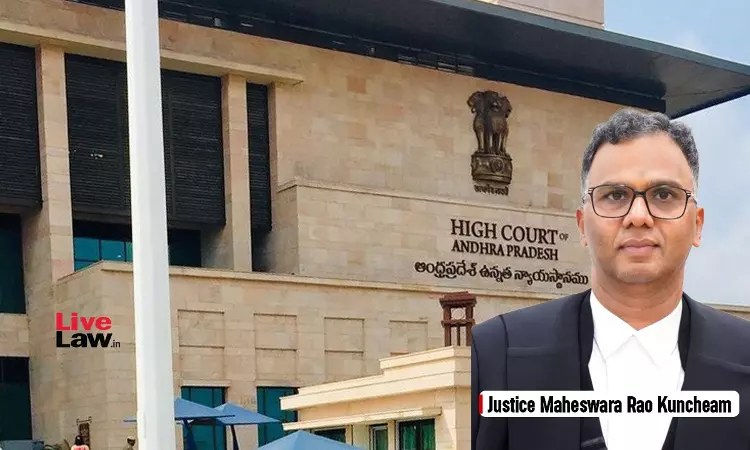
The Andhra Pradesh High Court has held that issuance of a Non-Bailable Warrant (NBW), being a coercive and preventive process, requires due consideration and cannot be resorted to routinely or mechanically. [2026 LiveLaw (AP) 230]The Court made the observation while dealing with a case arising from proceedings under Section 138 of the Negotiable Instruments Act, 1881.It stressed that the...
This is a premium content
Available exclusively to
Our subscribers
Subscribe Premium 
INR 1099+GST
Your support helps us to bring you more content at
an affordable subscription scheme !!!
All payment options available
The Andhra Pradesh High Court has held that issuance of a Non-Bailable Warrant (NBW), being a coercive and preventive process, requires due consideration and cannot be resorted to routinely or mechanically. [2026 LiveLaw (AP) 230]
The Court made the observation while dealing with a case arising from proceedings under Section 138 of the Negotiable Instruments Act, 1881.It stressed that the Court must consider the facts and circumstances and record reasons before resorting to such coercive process.
In doing so, the Court recalled an order issuing an NBW against a 70-year-old accused in a cheque dishonour case under Section 138 of the NI Act, 1881.
The Court reached this conclusion after examining the scope of Section 90 BNSS, which permits a Court to issue a warrant in lieu of or in addition to summons only after recording reasons in writing, including where the person is believed to have absconded or will not obey the summons, or fails to appear despite due service without reasonable excuse.
A Single Judge Bench of Justice Maheswara Rao Kuncheam found that the order issuing the NBW did not disclose any specific reasons for resorting to such coercive process at the first instance. The Court observed:
"It is apparent from the postal cover that the notice was addressed to Andhra Pradesh address and the said endorsement stands as “unclaimed”, whereas the address shown in the cause title in the complaint filed by the respondent No.2 as well as the cause title before this Court clearly indicate the address of the petitioner as Karnataka. Further, impugned order does not disclose any specific reasons for issuing Non-Bailable Warrants against the petitioner/accused at the first instance".
Stressing that NBWs cannot be issued routinely or mechanically the court said:
“In view of the aforesaid statutory provisions and the object and purport underlying the same, there can be no manner of doubt that the statutory scheme confers upon the Courts or other judicial forums the power and jurisdiction to issue both bailable and non-bailable warrants. However, mere conferment of such power does not permit to exercise it in a routine or mechanical manner. The Courts are required to consider the totality of the facts and circumstances of each case and satisfy itself as to the necessity of resorting to such coercive process. Discretion vested in the Court must, therefore, be exercised judiciously, cautiously and for reasons to be recorded.
It is well settled that the issuance of a Non-Bailable Warrant must be preceded by due consideration of the facts and circumstances warranting such coercive process. The order issuing an NBW must contain reasons indicating why such process has become necessary, as the recording of reasons is an essential safeguard against the arbitrary or mechanical exercise of judicial discretion. Mere issuance of an NBW without disclosing the reasons for resorting to such coercive measure cannot be sustained in law.”
The petitioner was facing proceedings before the trial court for an offence under Section 138 of the Negotiable Instruments Act, which deals with dishonour of a cheque for insufficiency of funds or where the amount exceeds the arrangement made with the bank.
The dispute arose after the trial court issued a Non-Bailable Warrant against the petitioner. His principal grievance before the High Court was that the NBW had been issued straightaway without adhering to the procedural pre-requisites and without recording specific reasons.
The petitioner, aged about 70 years, submitted that he was a permanent resident of Karnataka. He contended that despite his permanent address being in Karnataka, the notice had been issued to an Andhra Pradesh address where he did not reside. He argued that issuance of the NBW without considering these circumstances and without recording reasons infringed his right to life.
The respondent-complainant, on the other hand, contended that the petitioner had approached the High Court only with a view to protract the litigation and had not filed a recall petition. It was argued that the trial court had the statutory power to issue an NBW and that there was no illegality in issuing it straightaway.
Considering the rival submissions, the Court found that the postal cover showed the notice addressed to the Andhra Pradesh address as “unclaimed”. It further noted that the address mentioned in the complaint as well as in the cause title before the High Court clearly showed the petitioner's address as being in Karnataka.
The High Court also noted that the impugned order did not disclose any specific reasons for issuing the NBW against the petitioner at the first instance.
The Court examined Sections 90 and 91 of the BNSS and held that the statutory scheme is intended to secure the appearance of a person before the Court and “is not meant to be invoked mechanically.” It further noted that an NBW is primarily intended to ensure the appearance of an accused and “is not meant to punish the accused.”
The High Court stressed that the issuance of an NBW is essentially a coercive and preventive process and the Court must consider the totality of the facts and circumstances and satisfy itself as to the necessity of resorting to such coercive process. Such discretion must be exercised “judiciously, cautiously and upon due application of mind.”
The High Court accordingly held that an NBW is a coercive and preventive process, which can be resorted to only after the Court satisfies itself about its necessity in the circumstances of the case. As the impugned order disclosed no reasons for issuing the warrant, the Court held that it could not be sustained.
Accordingly, the High Court recalled the order issuing the NBW and disposed of the Criminal Petition.
The petitioner was consequently directed to appear before the trial court within two weeks of receiving the order and continue appearing unless his personal appearance was specifically dispensed with by due process of law.
Counsel for the Petitioner: N. Ranga Reddy
Counsel for Respondents: Seshadri Goalla and Public Prosecutor
Tags


