



- Home
- /
- High Courts
- /
- Andhra Pradesh High Court
- /
- Injured Witness' Testimony Can't Be...
Injured Witness' Testimony Can't Be Treated As Wholly Reliable When It Contains Exaggerations: AP High Court
Ritika Verma
20 Nov 2026 2:20 PM IST
The Andhra Pradesh High Court has observed that an injured witness' testimony cannot be treated as wholly reliable when it contains exaggerations and contradictions, particularly where parts of the account are not supported by the medical evidence.Applying this principle, the Court held that although the prosecution had established that a man assaulted his father-in-law with an iron rod, it...
This is a premium content
Available exclusively to
Our subscribers
Subscribe Premium 
INR 1099+GST
Your support helps us to bring you more content at
an affordable subscription scheme !!!
All payment options available
The Andhra Pradesh High Court has observed that an injured witness' testimony cannot be treated as wholly reliable when it contains exaggerations and contradictions, particularly where parts of the account are not supported by the medical evidence.
Applying this principle, the Court held that although the prosecution had established that a man assaulted his father-in-law with an iron rod, it had not proved that he caused the grievous injury recorded in the medical report. It accordingly altered his conviction from Section 324 IPC to Section 323 IPC and reduced his sentence to the period already undergone.
Section 323 IPC prescribes punishment for voluntarily causing hurt, while Section 324 IPC deals with voluntarily causing hurt by dangerous weapons or means.
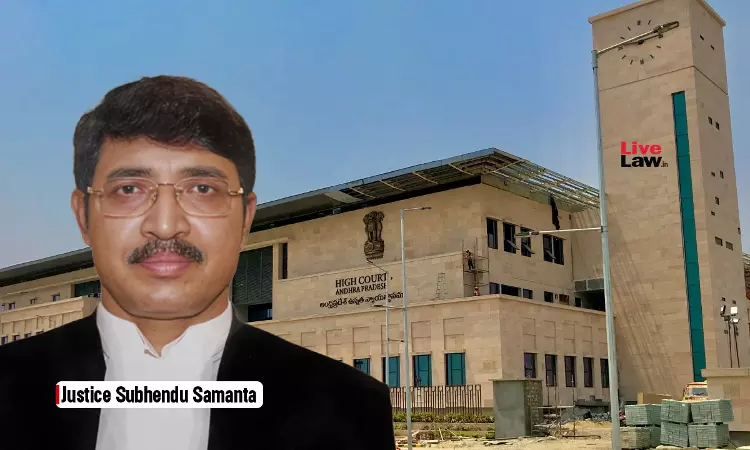
Against this backdrop, a Single Judge Bench of Justice Subhendu Samanta observed:
“Considering the entire aspect it appears to me that the evidence of PW.1 being injured witness cannot be said to be wholly reliable but may come under the category of neither wholly reliable nor wholly unreliable.
In scrutinizing the entire evidences on record and circumstances of the entire case, it appears that petitioner has attacked PW.1 at about 9.30 a.m., soon after the incident he was shifted to the Hospital at about 9.40 a.m. Police registered the case on the same day within two hours after receiving the Hospital intimation and accused was arrested at about 6 p.m. on the same day. The exaggeration and contradiction in the evidences may happened due to grudge of PW.1 against petitioner that he wanted petitioner to be punished; but after thorough scanning it appears that the injuries sustained by PW.1 by attack of petitioner through iron rod can be possible that are located as injury Nos.1 to 4. Injury Nos.1 to 4 are simple in nature. There is no connection of injury No.5 in the alleged assault by petitioner to PW.1. Thereby, the appellate Court has erroneously convicted the petitioner for the offence under Section 324 IPC, since petitioner not inflicted any grievous injury to the person of PW.1. On that particular score, the evidence of PW.1 is only reliable.”
The case arose from an assault on the complainant, the accused's father-in-law, who was a Government employee at S.V. Polytechnic College, Tirupati.
The accused was married to the complainant's younger daughter. Following marital disputes, his wife lodged a complaint under Section 498-A IPC against him and also initiated maintenance proceedings. According to the prosecution, the accused developed a grudge against his father-in-law over these proceedings.
The prosecution alleged that when the complainant came out of the college to have tiffin, the accused approached him from behind with an iron rod and assaulted him on the head.
Three persons intervened, following which the accused allegedly fled after throwing away the iron rod. Only two of them were examined as eyewitnesses during the trial.
The complainant was taken to the hospital, where he was examined by a medical officer. Based on the hospital intimation and the complainant's statement, the police registered a case under Section 307 IPC. The accused was arrested the same day. The police recovered a knife from his possession and seized an iron rod allegedly shown by him during the investigation. A charge sheet was subsequently filed under Section 307 IPC.
The trial court convicted the accused under Section 307 IPC and sentenced him to five years of rigorous imprisonment and a fine of Rs.500. In appeal, the conviction was modified to Section 324 IPC and the sentence was reduced to two years of rigorous imprisonment, while the fine was maintained.
Challenging the appellate court's decision, the accused approached the High Court, contending that the prosecution had failed to establish the charge and that its witnesses' testimonies were unreliable. He pointed out that neither the complainant's colleague who took him to the hospital, nor the auto-rickshaw driver was examined.
He also questioned the doctor's failure to state the age of the injuries or connect the seized knife to any injury, and the police's failure to collect bloodstains or controlled earth from the scene. Describing the witnesses as the complainant's friends or police stock witnesses, he further disputed the motive and contended that the appellate court had not properly appreciated the eyewitnesses' evidence.
The prosecution, however, submitted that its case was supported by the injured complainant (PW.1), two eyewitnesses (PWs.2 and 3), and the doctor (PW.6). It relied on the testimony of PW.4, the complainant's daughter and the petitioner's wife, to establish the motive. It also cited PW.5, the witness to the seizure, who supported the recovery of the iron rod (M.O.4) following the petitioner's statement, as well as the forensic laboratory's report on the weapon. It argued that discrepancies in the prosecution's case did not justify rejecting the entire evidence.
On examining the evidence, the High Court noted that the doctor had recorded five injuries. The first four were lacerations on different parts of the head and were classified as simple. The fifth, involving swelling and tenderness of the right index finger, was grievous.
The Court noted that the complainant had exaggerated his account by claiming that the accused chased and assaulted him near the college gate and that students rescued him, although these details were absent from his original complaint. While the eyewitnesses also referred to other students being present, none was examined.
Neither the complainant nor the two eyewitnesses explained the fifth injury. The doctor opined that the four simple head injuries could have been caused by the 15-inch iron rod (M.O.4). However, the prosecution neither explained the seizure of the eight-inch-blade knife (M.O.3) nor linked it to any injury.
The Court rejected the contention that non-examination of those who took the complainant to the hospital weakened the prosecution's case. It held that the two eyewitnesses' accounts could not be discarded merely because another witness was not examined, particularly as they had witnessed the incident in broad daylight. It also reiterated that the law does not require a particular number of witnesses to prove an occurrence.
The Court found the assault with the iron rod established but held that the grievous injury could not be attributed to the accused. It accordingly altered the conviction to Section 323 IPC. Considering that nearly two decades had elapsed and the accused had undergone custody during the proceedings, it reduced the substantive sentence to the period already undergone, leaving undisturbed the fine amount already paid.
The Criminal Revision Case was accordingly disposed of.
Counsel for the Petitioner: Harinadh Nidamanuri
Counsel for the Respondent-State: Panini Somayaji, Assistant Public Prosecutor
Tags


