



State Can't Permit Unilateral Cancellation Of Registered Gift Deed By Donor Contrary To Transfer Of Property Act: AP High Court
Ritika Verma
9 Oct 2026 4:20 PM IST
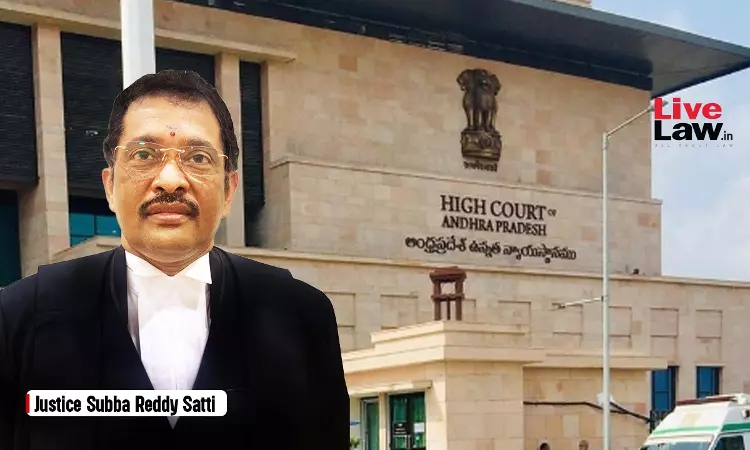
The Andhra Pradesh High Court has held that that a donor cannot cancel a registered gift/settlement deed at will once the property has been transferred to the donee. Such unilateral cancellation cannot be registered without the bilateral consent of the parties or a decree from a competent Civil Court.
Rejecting the registering authority's defence that Rule 26(i)(k)(i) of the A.P. Registration Rules applied only to sale deeds, the High Court held that departmental memos permitting unilateral cancellation of gift deeds were contrary to the statutory rules and substantive property law.
The ruling came in a challenge to the unilateral cancellation of a gift deed by the petitioner's mother, following which the Municipal Corporation proposed to remove his name from the municipal records on the basis of the cancellation.
Section 123 of the Transfer of Property Act, 1882 requires a gift of immovable property to be made through a registered instrument, while Section 126 permits revocation only in specified circumstances and not at the donor's mere will.


Exercising its powers under Article 226 of the Constitution, the Court accordingly set aside the memos along with the impugned revocation deed.
Against this backdrop, a Single Judge Bench of Justice Subba Reddy Satti observed:
“Therefore, a reading of Sections 123 and 126 of the TP Act in juxtaposition, it is abundantly clear that once a donor divests themselves of the title to the property via a registered gift deed, such donor enjoys no residual right to unilaterally revoke it at their mere will. If the donor alleges that the gift was obtained by fraud, coercion, or violation of a condition precedent, his/her sole remedy is to institute a suit under Section 31 of the Specific Relief Act, 1963, before a jurisdictional Civil Court.
It is a trite law that administrative circulars, memos, or executive instructions cannot override, supplant, or run contrary to substantive law or statutory rules. A registered deed of settlement or gift, once accepted and acted upon, results in an absolute transfer of title under the Transfer of Property Act, 1882. The donor is completely divested of his right, title, and interest in the property. Such a vested right cannot be extinguished at the whims and fancies of the donor through a unilateral deed of cancellation, nor can an administrative memo revive such a void document”.
The petitioner's mother had executed a registered settlement deed in his favour, covering a 288-square-yard property in Nellore. He accepted the settlement and, after obtaining municipal permission, constructed a building on the property.
The mother later executed a deed unilaterally cancelling the settlement, which was registered by the Sub-Registrar.
The petitioner learnt of the cancellation when the Municipal Corporation issued a show-cause notice as to why his name should not be removed from the municipal records on the basis of the cancellation. He thereafter approached the High Court challenging the registration of the cancellation deed.
Before the High Court, the petitioner contended that the unilateral revocation was impermissible under Rule 26(i)(k)(i) of the Andhra Pradesh Registration Rules and violated his right to property under Article 300-A of the Constitution.
The registration authorities, however, contended that the Rule applied only to cancellation of sale deeds and not gift deeds. They relied on departmental memos stating that there was no bar on registering a gift revocation deed executed unilaterally by the donor.
Rejecting the defence, the High Court held that once a gift is accepted by the donee and registered, the transfer is complete and absolute. The donor retains no residual right to revoke it at will. If the donor alleges fraud, coercion or violation of a condition, the remedy is to approach the Civil Court.
The Court further held that Rule 26(i)(k)(i) was not confined to sale deeds. The expression “conveyance” has a wide connotation and encompasses gift and settlement deeds.
It also held that administrative memos cannot override statutory rules or substantive law. Permitting unilateral cancellation would result in arbitrary deprivation of property rights without notice or an opportunity of hearing to the titleholder.
Accordingly, the High Court allowed the writ petition and set aside the revocation settlement deed as well as the departmental memos.
Counsel for Petitioner: Sri Sai Gangadhar Chamarty
Counsel for Respondents: GP for Stamps & Registration; GP for Municipal Administration & Urban Development; Sri A.S.C. Bose; Smt. Kalla Tulasi Durgamba


