



- Home
- /
- High Courts
- /
- Andhra Pradesh High Court
- /
- AP High Court Sets Aside Gift Deed...
AP High Court Sets Aside Gift Deed Restoration Order As Subsequent Transferees Were Not Heard
Ritika Verma
18 Aug 2026 9:45 AM IST
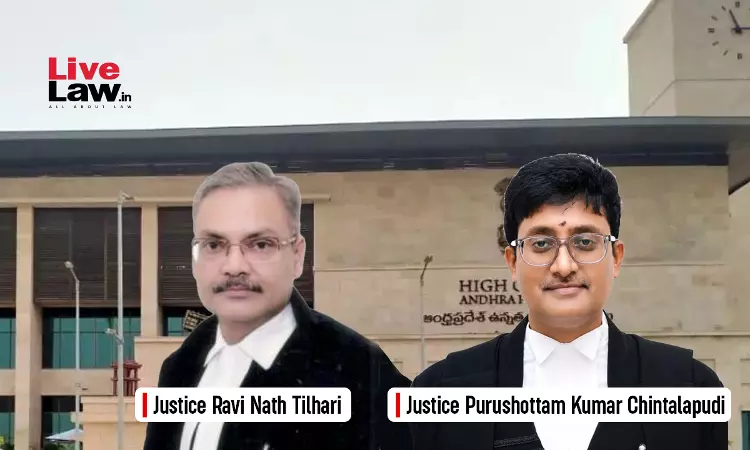
The Andhra Pradesh High Court has set aside a Single Judge order that had restored a registered gift deed, ruling that writ proceedings cannot adversely affect the rights of third-party purchasers without impleading them and giving them an opportunity of hearing. [2026 LiveLaw (AP) 190]The Division Bench comprising Justice Ravi Nath Tilhari and Justice Purushottam Kumar...
This is a premium content
Available exclusively to
Our subscribers
Subscribe Premium 
INR 1099+GST
Your support helps us to bring you more content at
an affordable subscription scheme !!!
All payment options available
The Andhra Pradesh High Court has set aside a Single Judge order that had restored a registered gift deed, ruling that writ proceedings cannot adversely affect the rights of third-party purchasers without impleading them and giving them an opportunity of hearing. [2026 LiveLaw (AP) 190]
The Division Bench comprising Justice Ravi Nath Tilhari and Justice Purushottam Kumar Chintalapudi observed,
“We are of the considered view that, in view of the pendency of the suit between the parties i.e., the writ petitioner(daughter)(plaintiff) and the writ appellant (mother)(defendant No.1), along with subsequent transferees (defendant Nos.2 to 5) from the mother (defendant No.1) and the said material aspect not having been disclosed in the writ petition, and those defendant Nos. 2 to 5 in the suit having no opportunity of hearing in the writ petition, as they were not impleaded, but are being adversely affected behind their back, the impugned judgment cannot be maintained.”
The dispute arose between a mother and her daughter over a property gifted by the mother to the daughter. The mother had executed a registered gift deed in the daughter's favour but later cancelled the gift through a separate registered cancellation deed.
The daughter challenged the cancellation of the gift deed by filing a writ petition before the High Court. The Single Judge allowed the petition, holding that the unilateral cancellation of the registered gift deed violated Rule 26(i)(k) of the Andhra Pradesh Registration Rules, 1960. The Single Judge consequently directed the Joint Sub-Registrar to cancel the cancellation deed and restore the original gift deed.
The mother then filed the present writ appeal before the Division Bench, challenging the Single Judge's order. She contended that there were genuine grounds for cancelling the gift deed.
The daughter defended the Single Judge's order, contending that a completed gift could not be unilaterally cancelled, as there was no revocation clause in the gift deed and none of the circumstances under Section 126 of the Transfer of Property Act, 1882 existed.
The Division Bench, however, did not examine these rival claims on merits. Instead, it found that the Single Judge's order had been passed without hearing persons whose rights could be directly affected by it.
The Court noted that after cancelling the gift deed, the mother had executed subsequent title deeds in favour of third parties. Since these subsequent purchasers were not made parties to the writ petition, they had no opportunity to present their case before the Single Judge.
The Court noted that after cancelling the gift deed, the mother had executed subsequent title deeds in favour of third parties. The Bench also found that the daughter had filed a civil suit against the mother and the subsequent purchasers concerning the same property. The suit was pending before the Civil Court, but its pendency had not been brought to the notice of the Single Judge.
The High Court observed that restoring the original gift deed would enable the daughter to assert title against the subsequent purchasers. The Bench noted that, prima facie, such an order could have the effect of automatically deciding the pending civil suit against those purchasers.
The Bench held that such a course could not be permitted, observing:
“We cannot allow any party to abuse the process of this Court by suppression of material facts and use the order of this Court against a person obtained behind his back.”
Accordingly, the High Court allowed the appeal and set aside the Single Judge's order. It restored the writ petition for fresh consideration and directed impleadment of the subsequent purchasers.
Case Title: Savari Eswaramma v. Parigala Anjinamma & Others
Citation: 2026 LiveLaw (AP) 190
Case No.: W.A. No. 734 of 2026Counsel for the Appellant: Sri Sudheer KumarCounsel for Respondent(s): Sri Vivekananda Virupaksha and Sri K. Dilip Naik
Tags


