



- Home
- /
- High Courts
- /
- Andhra Pradesh High Court
- /
- Debtor's Property Transfers...
Debtor's Property Transfers Intended To Defeat Or Delay Creditors Amounted To Act Of Insolvency: Andhra Pradesh High Court
Ritika Verma
6 Oct 2026 2:54 PM IST
The Andhra Pradesh High Court has held that a debtor committed an act of insolvency under the Provincial Insolvency Act, 1920, by transferring properties to his relatives through three sale deeds with an intention to defeat or delay his creditors. [2026 LiveLaw (AP) 235]"Thus, the findings recorded by the learned Judge are contrary to law. A plain reading of the unrebutted averments and...
This is a premium content
Available exclusively to
Our subscribers
Subscribe Premium 
INR 1099+GST
Your support helps us to bring you more content at
an affordable subscription scheme !!!
All payment options available
The Andhra Pradesh High Court has held that a debtor committed an act of insolvency under the Provincial Insolvency Act, 1920, by transferring properties to his relatives through three sale deeds with an intention to defeat or delay his creditors. [2026 LiveLaw (AP) 235]
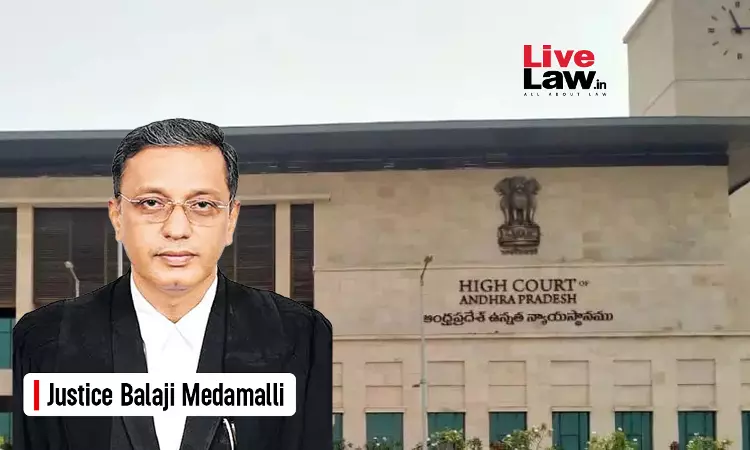
"Thus, the findings recorded by the learned Judge are contrary to law. A plain reading of the unrebutted averments and the material placed on record would clearly establish that the 1st respondent committed the act of insolvency, as such, the Order dated 17.09.2012 passed in I.P.No.6 of 2011 on the file of learned I Additional District Judge, East Godavari District at Rajahmundry is hereby set aside.", a single-judge bench of Justice Balaji Medamalli ruled.
The debtor had transferred the properties through three sale deeds, with the debts owed to the petitioner-creditors subsequently established through decrees passed by competent civil courts.. The Court found that the transfers showed an intention to defeat or delay the creditors under Section 6(1)(b) of the Provincial Insolvency Act, 1920.
In doing so, the Court set aside the trial court's order dismissing the insolvency petition, adjudged the first respondent insolvent and directed the District Court to take all consequential steps, including appointment of an official receiver and further action under the Provincial Insolvency Act, 1920.
The Court noted that Section 6(1)(b) of the Provincial Insolvency Act provides that a debtor commits an act of insolvency if “he makes a transfer of his property or of any part thereof with intent to defeat or delay his creditors.”
The judgment was delivered by a Single Judge Bench of
The Court said:
“Having considered the facts and circumstances of the case and the judgments relied upon by the learned counsel appearing for the parties, it is evident that the liability of respondent No.1 under the promissory notes referred to supra stands established and was duly adjudicated by the competent Civil Courts in the decrees passed in favour of the respective appellants/petitioners. On the basis of the said decrees, the Trial Court held that the debts stood proved, and the said finding has attained finality, no appeal having been preferred by respondent No.1. Respondent No.1 neither entered the witness box nor adduced any evidence in rebuttal and remained ex parte. Respondent Nos.2 to 4, being transferees of the properties, cannot step into the shoes of respondent No.1 and seek to establish, on his behalf, that the properties retained by him were sufficient to discharge the debts due to the appellants/petitioners. Their adjudication is confined to the question as to whether they are bona fide purchasers of the properties in question. As held in Y. Malludore v. P. Seethrathnam, referred to supra, transferees cannot substitute themselves for the debtor and raise a plea on his behalf regarding his capacity to discharge the debt. In view of the aforesaid settled principle, respondent Nos.2 to 4 cannot agitate that the act of insolvency committed by respondent No.1 has not been proved merely because respondent No.1 remained ex parte before the Court.”
The dispute arose from an insolvency petition filed before the District Court by the petitioners, who were the creditors, seeking to adjudge the first respondent, the debtor, as insolvent.
The petitioners claimed that the first respondent had borrowed Rs. 6.50 lakh, Rs. 6 lakh and Rs. 6.50 lakh from them on different occasions and had executed promissory notes towards the said amounts.
The debts remained unpaid, following which the petitioner-creditors obtained decrees against the first respondent from competent Civil Courts.
Since Section 9 of the Provincial Insolvency Act, 1920 requires the debt to be adjudicated by a competent Civil Court or admitted by the proposed insolvent, the decrees established the debts for the purposes of the insolvency petition.
They alleged that, despite the subsisting debts, the first respondent executed three registered sale deeds in favour of respondents 2 to 4, who were the purchasers and transferees of the properties. According to the petitioners, the sale deeds were nominal and were executed with an intention to avoid the debts and keep the properties out of the reach of the creditors.
The first respondent, the debtor, denied the allegations and claimed to have other valuable properties. However, he did not enter the witness box or adduce any evidence in rebuttal and remained ex parte. Respondents 2 to 4, the purchasers under the three sale deeds, contested the petition as transferees and claimed to be bona fide purchasers for valuable consideration.
The District Court accepted that the debts were proved on the basis of the decrees passed by the competent Civil Courts. However, it held that the creditors had failed to establish that the first respondent had transferred the properties with an intention to defeat or delay them.
The District Court's reasoning was that the sale deed recitals indicated that the amounts had been paid earlier towards the debtor's sundry debts, medical and family expenses, rather than showing that the properties were transferred to defeat the creditors. It also relied on the fact that the debtor retained Ac.1.34 cents of land and did not make any further transfers.
Aggrieved by the dismissal of their insolvency petition, the petitioners approached the High Court.
The petitioner-creditors contended that the first respondent had not rebutted their specific allegation that the sale deeds were nominal and executed to defeat the creditors. They further submitted that buyers, being transferees, could not step into the shoes of the debtor to disprove the alleged act of insolvency.
The High Court found merit in the contention.
The Court noted that the first respondent filed a counter but did not appear in the witness box or face cross-examination, leaving the petitioner-creditors' case unrebutted. They had established the decreed debts and transfers without any real exchange of money.
The Court further observed:
“With regard to the alienation of the property by the 1st respondent in favour of respondent Nos.2 to 4, who are the son, son's wife and father of the son's wife of the 1st respondent under three sale deeds executed on the same day and containing identical recitals, it is evident that the said sale deeds were effected without any real exchange of money at the time of execution of the sale deeds. The recitals only disclose that certain amounts were allegedly paid on different occasions prior to the execution of the sale deeds and that the said amounts were towards discharge of sundry debts, medical expenses and family expenses of the 1st respondent. However, no particulars whatsoever were furnished by respondent Nos. 2 to 4 to substantiate the said alleged payments or the circumstances under which such payments were made.
As such, the plea that the amounts were paid much prior to the execution of the sale deeds and towards discharge of sundry debts, apart from meeting medical expenses, cannot be believed, as such, the intention of the 1st respondent can be gathered from the above evidence that it was only done for the purpose to defeat or delay the dues to the creditors - petitioners herein. Thus, the finding recorded by the learned Trial Judge that the intention was not established cannot be sustained.”
It was accordingly held that the first respondent had committed an act of insolvency and that the District Court's contrary finding could not be sustained.
The High Court therefore allowed the appeal, set aside the District Court's order and adjudged the first respondent insolvent.
It directed the District Court to take all consequential steps, including appointment of an official receiver and further action under the Provincial Insolvency Act, 1920.
Counsel for the Petitioners: D Krishna MurthyCounsel for the Respondents: M V Suresh


