



- Home
- /
- High Courts
- /
- Andhra Pradesh High Court
- /
- AP High Court Upholds Attempt To...
AP High Court Upholds Attempt To Murder Conviction, Says Simple Injuries By Itself Does Not Negate Offence If Intention Proved
Ritika Verma
27 Aug 2026 3:00 PM IST
The Andhra Pradesh High Court has held that the nature of injuries sustained by a victim cannot, by itself, determine whether an offence of attempt to murder under Section 307 IPC is made out, particularly when the manner of assault and the weapon used establishes the requisite intention or knowledge that death was likely to be caused. [2026 LiveLaw (AP) 202]The Court accordingly upheld...
This is a premium content
Available exclusively to
Our subscribers
Subscribe Premium 
INR 1099+GST
Your support helps us to bring you more content at
an affordable subscription scheme !!!
All payment options available
The Andhra Pradesh High Court has held that the nature of injuries sustained by a victim cannot, by itself, determine whether an offence of attempt to murder under Section 307 IPC is made out, particularly when the manner of assault and the weapon used establishes the requisite intention or knowledge that death was likely to be caused. [2026 LiveLaw (AP) 202]
The Court accordingly upheld the conviction of a man under Section 307 IPC for attacking the victim with a knife and inflicting eleven blows on his neck, observing that the fact that the injuries were simple in nature would not, by itself, negate the offence.
Under Section 307 IPC, the prosecution must prove that the accused had the intention or knowledge that his act was likely to cause death. Section 324 IPC, in contrast, concerns voluntarily causing hurt with a dangerous weapon or means, without the requirement of proving an intention to cause death.
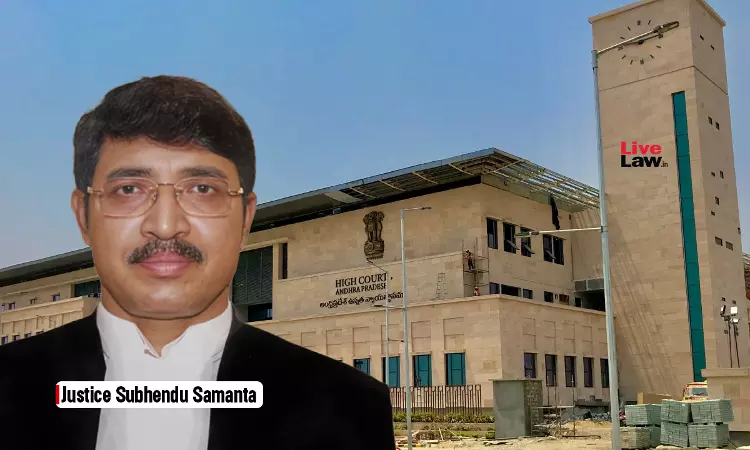
A Single Judge Bench of Justice Subhendu Samanta dismissed the criminal revision petition filed by the accused and confirmed the concurrent findings of the trial Court and the appellate Court.
The Court observed:
“Let me understand whether the petitioner had no intention to cause death of P.W.2. The fact suggests that the petitioner attacked P.W.2 with knife and inflicted eleven blows on his neck, which is undoubtedly a vital part of the human body. Causing one or two blows at the neck of a person itself is sufficient to cause death of that person.
In this particular case, at the time of causing blow, the victim has managed to save himself from the blow and petitioner, which resulted the petitioner to cause further more blow; by that way, eleven blows are there. There is no explanation from the defence side, why eleven numbers of blow of knife was caused on the neck of P.W.2 in an sudden provocation. Thus, the argument lack of intention of petitioner to kill P.W.2 is not justified.”
The case arose from an incident in which the accused, who was residing near the victim, allegedly attacked him with a knife and inflicted eleven blows on his neck.
According to the prosecution, the accused had developed a grudge against the victim after an earlier case between them ended in the accused's conviction and imposition of a fine.
On the day of the incident, the accused allegedly attacked the victim, pushed him and inflicted eleven knife blows on his neck. The victim raised an alarm, following which other witnesses and villagers rushed to the spot, prompting the accused to escape.
A police report was lodged, following which a case under Section 307 IPC was registered and a charge sheet was filed. Following the trial, the trial Court convicted the accused, sentencing him to five years' rigorous imprisonment and a fine of Rs. 1,000. The appellate Court upheld the conviction, but reduced the sentence to three years' imprisonment. The accused thereafter approached the High Court in revision.
Before the High Court, the accused contended that the injuries were simple in nature and that there was no intention to kill. He argued that the assault was the result of sudden provocation and that the prosecution had failed to establish the ingredients of Section 307 IPC. He also questioned the testimony of the victim's relatives, the hostility of the independent witnesses and the recovery of the knife, contending that the conviction could, at best, be altered to Section 324 IPC.
Rejecting the plea of absence of intention to cause death, the High Court noted that the accused had inflicted eleven blows with a knife on the victim's neck, which is a vital part of the human body. It found that there was no explanation from the defence as to why eleven knife blows were inflicted on the neck in an alleged situation of sudden provocation.
On the medical evidence, the Court noted that “even if the injuries are opined to be simple in nature, that by itself does not render the medical evidence inconsistent with the prosecution case or negate the offence under Section 307 IPC.”
The High Court also rejected the challenge to the testimony of the victim's relatives, observing that their evidence could not be brushed aside merely because of their relationship with the victim.
As regards the recovery of the knife, the Court noted that the mediators had turned hostile during trial. However, the trial Court had relied upon the admissible evidence concerning the recovery, which the High Court found was neither illegal nor improper.
Finding that the prosecution had proved the charge under Section 307 IPC beyond reasonable doubt, the High Court refused to convert the conviction to Section 324 IPC.
The criminal revision was accordingly dismissed.
The order suspending the sentence during the pendency of the revision was vacated, and the accused was directed to appear before the trial Court or jail authorities within six weeks to serve the remaining portion of his sentence.
Case Title: Setty Bhaskara Rao v. State of Andhra Pradesh
Case No.: Criminal Revision Case No. 793 of 2009
Citation: 2026 LiveLaw (AP) 202
Counsel for the Petitioner: K. Jyothi Prasad
Counsel for the Respondent: Public Prosecutor
Tags


