



- Home
- /
- High Courts
- /
- Andhra Pradesh High Court
- /
- Mere Participation In Protest Not...
Mere Participation In Protest Not Offence: AP High Court Quashes Assault FIR Against YSR Congress Leaders During Political Rally
Ritika Verma
9 Sept 2026 4:30 PM IST
The Andhra Pradesh High Court has quashed FIR against political leaders Yuvajana Sramika Rythu (YSR) Congress Party leaders Devineni Avinash, former MLA Monditoka Jagan Mohana Rao and MLC Monditoka Aruna Kumar over allegations of assault, organizing unlawful assembly, obstructing public servants during “Annadata Poru” rally.[2026 LiveLaw (AP) 211]Reportedly, the state-wide protest rally...
This is a premium content
Available exclusively to
Our subscribers
Subscribe Premium 
INR 1099+GST
Your support helps us to bring you more content at
an affordable subscription scheme !!!
All payment options available
The Andhra Pradesh High Court has quashed FIR against political leaders Yuvajana Sramika Rythu (YSR) Congress Party leaders Devineni Avinash, former MLA Monditoka Jagan Mohana Rao and MLC Monditoka Aruna Kumar over allegations of assault, organizing unlawful assembly, obstructing public servants during “Annadata Poru” rally.
[2026 LiveLaw (AP) 211]
Reportedly, the state-wide protest rally took place in September last year, which was called by the party over alleged acute urea shortage and purported black-marketing of fertilizers.
The proceedings stemmed from an FIR alleging that the petitioners participated in an unlawful assembly, rioted, assaulted and obstructed police personnel, and blocked a public road.
In doing so, the Court underpinned that the mere mention of penal sections without corresponding factual assertions cannot sustain a criminal prosecution and therefore "mere participation in a political rally, without any allegation of assault or criminal force against a public servant, cannot ipso facto attract the rigours of Sections 132, 195(1), 189(3), 223, 285, 292 and 293 read with Section 190 BNS.
The Court found that the FIR did not contain specific allegations to substantiate the offences invoked. Instead, the allegations were “inherently vague, omnibus and lacking in specific particulars”, with no specific overt act attributed to any of the petitioners.
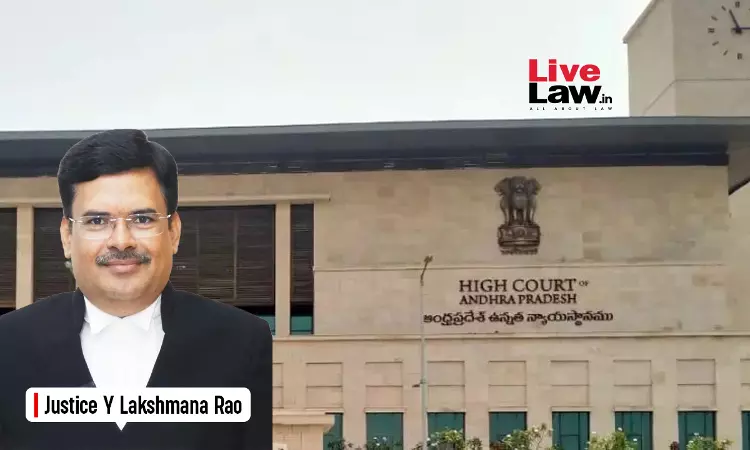
A Single Judge Bench of Justice Y. Lakshmana Rao was dealing with pleas seeking quashing of criminal proceedings arising from the “Annadata Poru” rally. The Court observed:
“In the case on hand, the allegations are conspicuously silent as to any specific act of assault committed by the Petitioners against the de-facto complainant or any other police official. Mere participation in a protest or refusal to disperse upon being warned cannot, by itself, amount to assault or criminal force within the meaning of the provision. In the absence of foundational facts disclosing the essential ingredients of the offence, invocation of Section 132 of 'the BNS.,' appears wholly unsustainable.
The complaint does not disclose that the Petitioners had assembled with an intention to commit any offence, to enforce any unlawful demand, to commit mischief, criminal trespass, or to resist execution of law by use of force. The recital in the FIR reveals only that the Petitioners and others participated in a protest programme concerning public issues. A political demonstration, by itself, does not become an unlawful assembly unless the common object falls within the parameters prescribed by law. In the absence of any allegation demonstrating such unlawful common object, the ingredients of Section 189(3) of 'the BNS.,' are not satisfied.”
The proceedings arose from a political rally and dharna conducted under the banner “Annadata Poru” at C.M. Road, Nandigama Town, in which the petitioners were arrayed as Accused Nos. 1, 2 and 3.
According to the prosecution, the accused, who were YSRCP leaders and workers, had unlawfully assembled and conducted the rally without obtaining permission despite the enforcement of Section 30 of the Police Act, 1861, which empowers police authorities to regulate public assemblies and processions in specified circumstances.
The prosecution alleged that the accused ignored the warning issued by Assistant Sub-Inspector, pushed police personnel, obstructed them in the discharge of their duties and manhandled the complainant while he was in uniform, thereby disturbing public peace and order. The FIR consequently invoked offences relating to unlawful assembly, rioting, assault on a public servant and obstruction of lawful duty.
The petitioners, however, contended that the allegations did not specify which petitioner had committed any particular act. They argued that mere participation in a political rally, without any specific allegation of assault or use of criminal force, could not attract the offences invoked under the BNS.
Considering the FIR, the Court noted that the allegation of pushing police personnel and obstructing them in the discharge of their duties was itself general and did not identify any specific conduct attributable to the petitioners.
On Section 195(1) of the BNS, which concerns obstruction of a public servant in the discharge of official functions, the Court found that its ingredients were not made out. No material showed that any official act had been prevented or interrupted on account of any specific conduct of the petitioners.
The Court similarly found the allegation under Section 285 of the BNS, relating to obstruction or injury to a person in a public way, unsupported by specific facts. The FIR was based entirely on the version of police officials, with no material demonstrating actual obstruction or public inconvenience.
The Court then considered Section 223 of the BNS, which deals with disobedience to an order duly promulgated by a public servant. It noted that prosecution for the offence is subject to Section 215 of the BNSS, which requires a written complaint by the concerned public servant or another competent authority before a court can take cognizance.
In the present case, there was no such written complaint. The Court held that a police report could not substitute the complaint contemplated under Section 215 BNSS. Therefore, the Magistrate would not be competent to take cognizance of the offence under Section 223 BNS in the absence of the statutory complaint.
Having examined the material as a whole, the Court held that it failed to establish the necessary nexus between the acts alleged and the statutory ingredients of the offences invoked. It observed that continuing the investigation and further proceedings on such deficient allegations would amount to permitting a “roving and fishing enquiry”.
In these circumstances, the Court held that allowing the prosecution to continue would result in unnecessary harassment to the petitioners and constitute an abuse of the process of law.
Accordingly, the High Court allowed the petitions and quashed the proceedings against Accused Nos. 1, 2 and 3.
Case Title: Devineni Avinash & Ors. v. State of Andhra Pradesh & Anr
.Case Nos.: Criminal Petition Nos. 3423 & 3409 of 2026
Counsel for Petitioners: Veladi Sai Sri HarshaCounsel for Respondents: Public Prosecutor
Tags


