



- Home
- /
- High Courts
- /
- Bombay High Court
- /
- 'Dua' For Election Success During...
'Dua' For Election Success During Political Congregation Doesn't Constitute Soliciting Votes On Religious Grounds: Bombay High Court
Narsi Benwal
21 July 2026 10:10 PM IST
A candidate performing Dua (prayers/worship) during a political congregation for his victory in elections and the audience responding with an 'Amen' does not amount to a 'corrupt practice' of soliciting votes in the name of religion, the Bombay High Court held recently while upholding the election of All India Majlis-e-Ittehadul Muslimeen (AIMIM) candidate's victory in the Maharashtra...
This is a premium content
Available exclusively to
Our subscribers
Subscribe Premium 
INR 1099+GST
Your support helps us to bring you more content at
an affordable subscription scheme !!!
All payment options available
A candidate performing Dua (prayers/worship) during a political congregation for his victory in elections and the audience responding with an 'Amen' does not amount to a 'corrupt practice' of soliciting votes in the name of religion, the Bombay High Court held recently while upholding the election of All India Majlis-e-Ittehadul Muslimeen (AIMIM) candidate's victory in the Maharashtra Legislative Assembly elections.
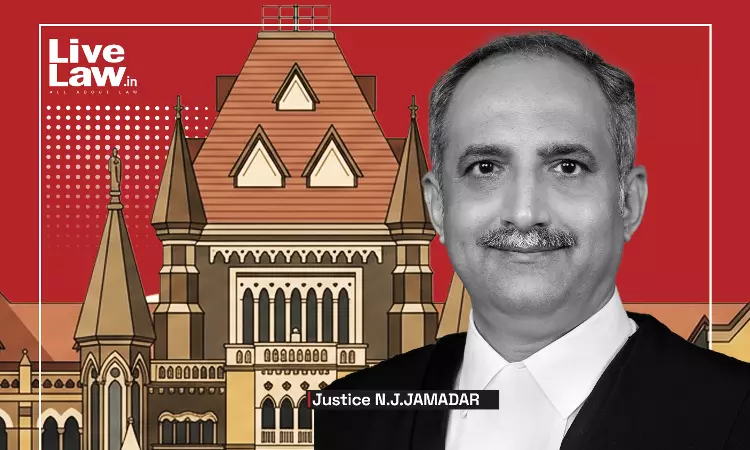
Single-judge Justice Nijamoodin Jamadar rejected the election petition filed by Shaikh Asif Shaikh Rashid, who lost by a margin of 162 votes from the Malegaon legislative constituency in 2024. Shaikh, a candidate from Indian Secular Largest Assembly of Maharashtra (ISLAM) accused AIMIM candidate, now MLA - Mufti Mohammad Ismail Abdul Khalique, of resorting to corrupt practices by various means, majorly by performing Dua during political meetings and congregational prayers for his electoral success. The audience too responded with 'Amen', which the losing candidate argued amounted to a pledge to vote for Mufti, who is also the Imam (person who leads prayers) of the Jame Masjid in Malegaon.
Justice Jamadar noted that the argument put forth by Rashid that praying Dua at a political campaign was 'corrupt' practice as it 'materially' influenced the voters and therefore barred under the Representation of the People Act. The judge, however, said it was difficult to agree with the election petitioner that the act of saying 'Amen' amounts to extracting a pledge to vote.
The judge while referring to various definitions of Dua and Amen, pointed out that in plain terms, a 'Dua' is an act of invoking blessings, help or mercy of the God and it refers to calling out the Almighty and also is an act of supplicating the Alimighty for any matter in life.
"In Islam, Dua (prayer) is considered an essence of worship. When one says Amen in response to the Dua, it amounts to imploring the God to grant one or other's prayer. The person who said Amen, can be said to express agreement with what has been prayed. It, thus, becomes explicitly clear that, by saying Amen, the person can be said to have agreed with or seconded the prayer for the electoral success of Mufti. However, saying Amen is materially distinct from making the pledge, which is in the nature of a formal promise or undertaking," Justice Jamadar held.
The prayer for success in the electoral fray, or invocation of the blessings of the God or Deity has neither the trappings of soliciting the votes on the ground of religion of the candidate, nor does it amount to marring the prospect of the rival candidate with reference to his religion, the judge said, while adding that Shaikh's contentions lacked material facts.
"Even otherwise, it defies comprehension that the invocation of the blessings by praying for electoral success would amount to a corrupt practice. The act of saying Dua (prayer) and the response thereto by 'Amen' does not amount to pledge. As the Dua is essentially a form of the communication by the believer with the God, saying prayer for success in the election neither amounts to exercise of undue influence nor soliciting votes in the name of the religion," the judge held.
Use Of Religion/Religious Organisations In Politics Not Barred
Justice Jamadar while rejecting Shaikh's claims that religion was invoked and religious feelings of voters was stoked by Mufti and his party leaders on several occasions, referred to various decisions of the constitution benches of the Supreme Court on this very point. Shaikh had also objected to religious organisations like Jamiyat-e-Ulma and Jamaat-e-Islami Hind, openly supporting Mufti's candidature.
The judge said, "It is to be mentioned that the reference to religion in the political discourse itself is not completely prohibited. Nor the religious organisations absolutely debarred from participating in the electoral process. If the appeals made by the religious organisations, are considered in the light of the position in law (as laid by the SC), the support extended by the religious organisations to Mufti's candidature would not amount to corrupt practice."
Aggressive/Hate Speeches
In his plea, Shaikh raised a second ground that Mufti and his campaigners / campaign managers / activists stoked religious feelings of Muslims at Malegaon and that such speeches were made in his (Mufti's) presence. He argued that by the said speeches, Mufti's party sought votes in name of religion and even used offensive language against him (Shaikh) and other candidates in the fray.
Presence of the returned candidate in a meeting in which the offending speeches were made is undoubtedly relevant, the judge said.
"If the offending speech was not made in the presence of the returned candidate, the latter can very well feign ignorance. However, the mere fact that the offending speech was made in the presence of the returned candidate may not be the sole determinative factor," the judge said.
With regards, to a speech wherein one of the AIMIM party workers said it is shameful to seek votes from Muslims when the candidate is an Imam. the judge said, "Sufi Anees Quadri exhorted the audience to accept Mufti as their Imam by his deeds and not in the air. Quadri was, thus, appealing to the emotions of the gathering. However, the said appeal did not amount to soliciting votes on the ground of religion of Mufti and his suitability to be elected was sought to be highlighted, albeit with reference to the fact that he was Imam (who leads the prayers)."
As regards to another speech by AIMIM Chief Asaduddin Owaisi speaking about some women candidates and allegedly comparing Shaikh to Yazid (enemy of Islam) etc. the judge said such accusations and counter-accusations are often seen in political speeches.
"It would be contextually relevant to note that the speeches delivered, during the course of the surcharged election campaign, are neither in serene atmosphere nor after careful deliberation. It would, therefore, be impermissible to read into the words used in the speech, something which is not apparent. Ultimately it is the impact on the persons to whom the speeches were addressed that has to be gauged. Reference to Abrohamic, mythological or historical characters to highlight the human vices and frailties is required to be appreciated in the context of accusations and counter-accusations in the political campaign. The use of metaphors to highlight the suitability or unsuitability of the candidates is required to be seen through the said prism. I, therefore, find it rather difficult to accede to the submission made by Shaikh that the said reference constitutes the corrupt practice," Justice Jamadar held.
Misogynistic Post
Further the bench took note of some pamphlets circulated by Mufti's sister Rafea Khalique, who allegedly asked people not to vote for women candidates in the fray and also specified how a 'Muslim Woman' must behave and dress etc. The judge said that such beliefs held by Rafea should be 'criticised.'
"Religious belief and tenets which Rafea followed and attempted to propagate could be legitimately criticised. In a constitutional democracy based on rule of law, such misogynistic views may not have any place. However, the pamphlet does not make reference to a candidate in particular. It is in the nature of a general statement, which refers to the perceived role of women, according to the religious tenets. Though, liable to be denounced, the statements in the pamphlet do not amount to corrupt practice, as it would not fall within the ambit of either sub-section (3) or sub- section (4) of Section 123. To put it in other words, the statements in the pamphlet do not indicate that they were in relation to the personal character or conduct of any woman candidate," Justice Jamadar ruled.
With these findings, the judge rejected the election petition.
Appearance:
Advocates SS Patwardhan, Bhooshan Mandlik, Mrinal Shelar, AV Hardas, Anurag Patwardhan and Aaroh Kulkarni appeared for Shaikh.
Senior Advocate Shadan Farasat along with Advocates Suyash Khose, Siddharth Sutaria and Abhijit Aher represented Mufti.
Case Title: Shaikh Asif Shaikh Rashid @ Asif Shaikh Rasheed vs Mufti Mohammad Ismail Abdul Khalique (Election Petition 7 of 2025)
Citation: 2026 LiveLaw (Bom) 338

Narsi Benwal
Narsi Benwal is a Special Correspondent with Live Law covering Bombay High Court and also the Trial Courts across Maharashtra

