



- Home
- /
- High Courts
- /
- Bombay High Court
- /
- Bombay High Court Criticises Maha...
Bombay High Court Criticises Maha Govt Over 'Systemic' Failure In Dealing With Land Acquisition Cases, Asks State To Be In 'Mission Mode'
Narsi Benwal
18 Feb 2026 6:55 PM IST
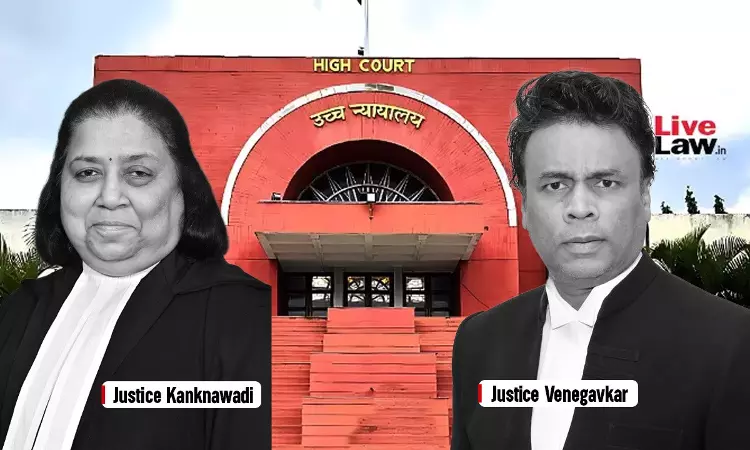
Criticising the Maharashtra Government for its 'systemic' failure to pay proper compensations in land acquisition cases, which reflect a 'disturbing and sorry state of affairs' the Bombay High Court on February 17, directed the State to be on a 'mission mode' and identify pending cases of land acquisition across the State and then conclude the same by passing awards etc. Sitting at the...
This is a premium content
Available exclusively to
Our subscribers
Subscribe Premium 
INR 1099+GST
Your support helps us to bring you more content at
an affordable subscription scheme !!!
All payment options available
Criticising the Maharashtra Government for its 'systemic' failure to pay proper compensations in land acquisition cases, which reflect a 'disturbing and sorry state of affairs' the Bombay High Court on February 17, directed the State to be on a 'mission mode' and identify pending cases of land acquisition across the State and then conclude the same by passing awards etc.
Sitting at the Aurangabad seat, the division bench of Justice Vibha Kankanwadi and Justice Hiten Venegavkar noted the most disturbing state of affairs in a petition wherein compensation was not paid for three decades now, despite acquiring the land for constructing a village well, which the bench said reflects a continuing failure on the part of the respondent authorities to discharge their statutory and constitutional obligations in matters of land acquisition.
"The issues which repeatedly come before this Court in matters of land acquisition, disclose a deeply disturbing and systemic failure on the part of the State administration. In a large number of cases, lands belonging to citizens many of whom are agriculturists, illiterate or rustic persons have been taken into possession by the acquiring authorities several years, and in some cases several decades, ago. Public projects have been completed and are in full operation. Yet, despite possession having been taken and the land having vested in the State, the acquisition proceedings have not been taken to their logical and lawful conclusion," the judges observed in the order.
Either awards have not been passed at all, or though awards have been passed, compensation has neither been paid to the landowners nor deposited with the competent authority in accordance with law. The result is that landowners are compelled to approach this Court repeatedly seeking writs of mandamus for enforcement of what is, in truth, a basic statutory and constitutional obligation of the State, the bench noted.
The judges said that such inaction results into various consequences: Firstly, it causes manifest hardship, harassment and injustice to landowners, who are deprived of both their property and the compensation guaranteed by law. Secondly, it results in enormous and avoidable financial burden on the State exchequer. Where no award is passed for long periods after possession is taken, the compensation is ultimately required to be determined under the prevailing statutory regime, often at current market rates under the Right to Fair Compensation and Transparency in Land Acquisition, Rehabilitation and Resettlement Act, 2013, thereby multiplying the compensation manifold.
"In cases where compensation was determined years earlier but not paid or deposited, statutory interest often not less than 15% per annum accrues for decades. Thus, a modest compensation amount, which could have been discharged in time, swells into two or three times, and in some cases far more, solely due to administrative negligence. This additional financial burden is ultimately borne by the public exchequer and paid from funds meant for welfare, development and basic necessities of citizens," the bench pointed out.
The judges expressed displeasure over the attitude of the State and its officials and observed the it cannot permit the State to plead its own inaction, inefficiency or inter-departmental delays as a defence.
"Once land is taken from a citizen, the obligation to determine and pay compensation is absolute. Article 300A of the Constitution mandates that no person shall be deprived of his property save by authority of law. Authority of law does not end with taking possession; it necessarily includes lawful determination of compensation and payment or deposit thereof," the bench observed.
There is no concept in constitutional or statutory law of "acquisition without compensation due to administrative lapse" the judges made clear, while adding that the continued failure to complete acquisition proceedings, even after possession and completion of projects, amounts to a continuing wrong and a continuing breach of constitutional duty.
"The Court is equally mindful that many affected landowners, particularly agriculturists and illiterate persons, may not even be aware that formal acquisition proceedings have been initiated or concluded, or that they are entitled to compensation and statutory interest. Others may be aware but lack the knowledge, resources or access required to approach courts. The State, which claims to be a welfare State, cannot be permitted to take advantage of such ignorance or helplessness. Property rights under Article 300A are not illusory rights available only to those who can litigate; they are constitutional guarantees enforceable against the State itself," the bench said.
The bench while reminding itself about its 'limited role' in policy matters, stated that where statutory duties are repeatedly breached on a large scale, resulting in continuing illegality, injustice to citizens and massive loss to the public exchequer, Court will be failing in its constitutional obligation if the court confines itself to deciding individual writ petitions in isolation.
"In such circumstances, issuance of structured, time-bound directions to ensure performance of existing statutory duties falls squarely within the jurisdiction of this Court under Article 226 of the Constitution. The problem before the Court is not an absence of law, but persistent non-implementation of law. What is required is a focused, mission-mode administrative response to identify all pending land acquisition cases, categorise them, and take them to their lawful conclusion by passing awards, paying compensation, or depositing the same with the competent authority wherever direct payment is not possible," the bench held.
This exercise, the judges clarified, if undertaken in a time-bound and accountable manner, will simultaneously protect the rights of landowners and arrest further avoidable loss to the State exchequer. The court, therefore deemed it fit to direct the State to adopt a comprehensive, State-wide mechanism to address all pending land acquisition cases in which (i) possession has been taken but no award has been passed, and (ii) awards have been passed but compensation has not been paid or deposited.
"A dedicated, mission-mode administrative structure shall be constituted under the supervision of the Chief Secretary or a senior officer of equivalent rank nominated by him," the bench ordered.
At the State level, the bench said a steering committee shall be formed comprising senior officers from the Revenue Department, Finance Department, Law and Judiciary Department and major acquiring bodies, with a designated State Nodal Officer responsible for coordination, monitoring and compliance. At the district level, committees headed by the District Collectors shall be constituted, involving the concerned Land Acquisition Officers, representatives of acquiring authorities and treasury or accounts officials.
Further, the bench suggested the State to keep amounts invested in banks so that it earns interests and the same can be used whenever a land is acquired.
"Special attention shall be paid to cases involving agriculturists, illiterate and rural landowners. Adequate public notices shall be issued, and outreach measures undertaken at the village and taluka levels, so that such persons are informed of the acquisition, their entitlement to compensation, and the steps required to receive the same. Assistance through legal services authorities and para-legal volunteers shall be extended wherever necessary, so that ignorance or lack of resources does not result in forfeiture of lawful compensation," the bench underscored.
Fix Accountability
The bench said the question involved in this matter is of accountability and thus made it clear that it cannot remain a silent spectator to repeated instances where public funds are squandered due to negligence, apathy or indifference of officials entrusted with statutory duties.
"While this Court does not propose to itself conduct disciplinary proceedings or determine individual culpability, it is entirely within the constitutional domain of this Court to direct the State to examine such cases, fix responsibility and take action in accordance with law. Where substantial financial loss to the exchequer has occurred due to unexplained and unjustifiable delay in passing awards or paying compensation, the State Government must undertake an internal audit to identify the causes and the officers responsible," the bench ordered.
For effective implementation, the Court deemed it appropriate to retain supervisory jurisdiction for a limited period by adopting the mechanism of continuing mandamus and directed the Chief Secretary to file periodic reports indicating the number of cases identified, resolved, pending, the amounts paid or deposited, and the steps taken towards fixing accountability.
"The object of such monitoring is not to micro-manage the administration, but to ensure that the constitutional and statutory obligations, long neglected, are finally discharged," the bench clarified.
Appearance:
Advocates Tushar Shinde and CH Shinde appeared for the Petitioners.
Assistant Government Pleader SB Narwade represented the State.
Case Title: Shahadeo Dagadu Mete vs State of Maharashtra (Writ Petition 13381 of 2025)
Citation: 2026 LiveLaw (Bom) 70
Tags

Narsi Benwal
Narsi Benwal is a Special Correspondent with Live Law covering Bombay High Court and also the Trial Courts across Maharashtra

