



- Home
- /
- High Courts
- /
- Bombay High Court
- /
- Video Recording Of Judicial...
Video Recording Of Judicial Proceedings Can't Be Used As Evidence In Other Courts: Bombay High Court Dismisses PIL To Record MERC Hearings
Narsi Benwal
11 Nov 2025 2:00 PM IST
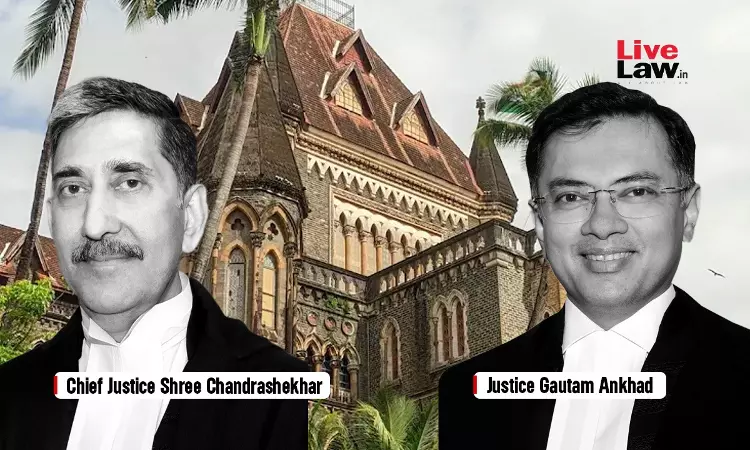
The Bombay High Court on Tuesday, while dismissing a Public Interest Litigation (PIL) seeking mandatory audio video recording of the proceedings before the Maharashtra Electricity Regulatory Commission (MERC), held that such recordings of the proceedings cannot be used as 'evidence' in any court of law.A division bench of Chief Justice Shree Chandrashekhar and Justice Gautam Ankhad noted...
This is a premium content
Available exclusively to
Our subscribers
Subscribe Premium 
INR 1099+GST
Your support helps us to bring you more content at
an affordable subscription scheme !!!
All payment options available
The Bombay High Court on Tuesday, while dismissing a Public Interest Litigation (PIL) seeking mandatory audio video recording of the proceedings before the Maharashtra Electricity Regulatory Commission (MERC), held that such recordings of the proceedings cannot be used as 'evidence' in any court of law.
A division bench of Chief Justice Shree Chandrashekhar and Justice Gautam Ankhad noted that there is already a prohibition on recording of court proceedings.
The bench further noted that the Supreme Court has already observed that public trial in open courts is essential for healthy and objective administration of justice and that it is necessary to instill public confidence in administration of justice and therefore the judicial tribunals, courts etc must hear cases in open and admit public to the courtroom.
"These observations by the top court seem to have been misconstrued by the petitioner, who takes the position that the impugned resolution shall not be in public interest... A litigant is not permitted to use the true record of the court proceedings and use the same as evidence. There is in fact a prohibition not to record the court proceedings much less to be used as evidence in a court of law," Chief Justice Chandrashekhar dictated in the order.
The judges even dismissed the argument by the petitioner that the audio video recording of the proceedings of the MERC shall expose the serious inconsistencies in such proceedings.
"Certainly it is against the settled principles of law that the video recordings of the proceedings of tribunals or court cannot be used as evidence. This writ petition labelled as PIL seems to be in nature of private interest litigation. Filing of such PILs is an abuse to the process of the law and must be deprecated," the Chief Justice observed.
Further the Chief Justice remarked that the instant PIL petition is clearly out of personal grudge and for seeking publicity.
The judges, therefore, dismissed the PIL petition filed by businessman and activist Kamlakar Shenoy, who challenged a September 4, 2018 resolution of the MERC by which it resolved against recording of audio video of its proceedings.
Shenoy alleged that the proceedings before the MERC were not being conducted properly and there were numerous lacunae and therefore, to expose these inconsistencies in the proceedings, the recording of the same were necessary. He argued that even the recordings could be used as an evidence in any other court of law.
However, all the submissions were turned down by the bench with a clear finding that such recordings of the proceedings cannot be used as evidence in any other court of law.
Case Title: Kamlakar Ratnakar Shenoy vs Maharashtra Electricity Regulatory Commission
Tags

Narsi Benwal
Narsi Benwal is a Special Correspondent with Live Law covering Bombay High Court and also the Trial Courts across Maharashtra

