- Home
- /
- High Courts
- /
- Bombay High Court
- /
- Framing Of Issues Not Mandatory In...
Framing Of Issues Not Mandatory In Execution Of Foreign Decrees U/S 44A CPC: Bombay High Court
Saksham Vaishya
12 Feb 2026 8:05 PM IST
The Bombay High Court has held that while executing a decree passed by a foreign court in a reciprocating territory under Section 44A of the Code of Civil Procedure, 1908, it is not mandatory for the District Court to frame issues and direct the parties to lead evidence while examining whether the decree falls within any of the exceptions under clauses (a) to (f) of Section 13 CPC. The...
This is a premium content
Available exclusively to
Our subscribers
Subscribe Premium 
INR 1099+GST
Your support helps us to bring you more content at
an affordable subscription scheme !!!
All payment options available
The Bombay High Court has held that while executing a decree passed by a foreign court in a reciprocating territory under Section 44A of the Code of Civil Procedure, 1908, it is not mandatory for the District Court to frame issues and direct the parties to lead evidence while examining whether the decree falls within any of the exceptions under clauses (a) to (f) of Section 13 CPC. The Court clarified that the inquiry contemplated under Section 44A(3) read with Section 13 is ordinarily summary in nature and not equivalent to a full-fledged trial as in a suit filed on a foreign judgment from a non-reciprocating territory.
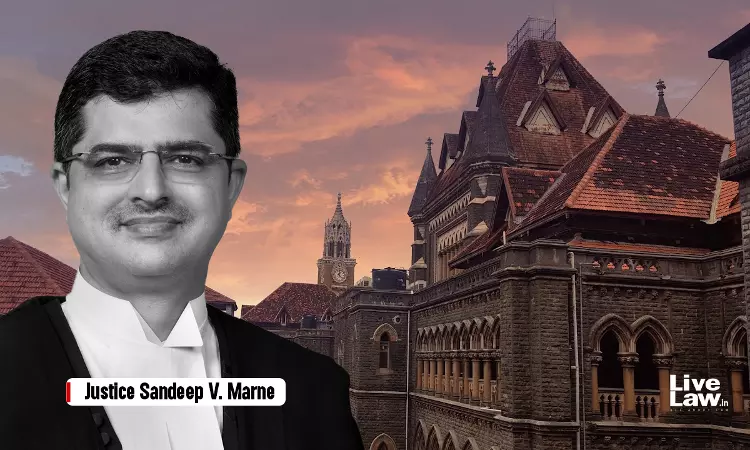
Justice Sandeep V. Marne was hearing a writ petition filed by foreign decree holders challenging the order of the District Judge, who had allowed an application by the judgment debtor for framing issues and granting liberty to lead evidence in execution proceedings arising out of a decree passed by the Fujairah Civil Court, UAE. After the UAE was notified as a reciprocating territory under Section 44A CPC, the decree holders had filed execution proceedings in India. The executing court framed multiple issues concerning fraud, natural justice, suppression of material facts, limitation and maintainability, and permitted evidence to be led on those issues.
The High Court examined the scheme of Sections 13, 14 and 44A CPC and reiterated the fundamental distinction between decrees from reciprocating and non-reciprocating territories. In the former case, the decree is executable as if it were a domestic decree, subject only to the limited exceptions under Section 13. The burden to establish that the decree falls within any of the exceptions under clauses (a) to (f) lies on the judgment debtor.
The Court held that if framing of issues and leading of oral evidence were to be treated as mandatory in every case, the special legislative object behind Section 44A, swift and effective execution, would be defeated. It observed:
“… it is not necessary in every case that issues are framed and evidence is led for conduct of inquiry into circumstances enumerated under clauses (a) to (f) of Section 13 of the Code. This is because the legislative object is to ensure swifter and faster execution of the decree passed by the foreign court in reciprocating territory.”
The Court held that the existence of exceptions under Section 13 must ordinarily be gathered from the pleadings, the foreign judgment, and the proceedings before the foreign court. It is not necessary to conduct a de novo trial. The Court further observed that recording of evidence in execution proceedings should be permitted only in exceptional and rare cases where the factual controversy cannot be resolved through other expeditious methods.
The Court observed that the judgment-debtor created some doubts in the mind of the Executing Court about existence of exceptions, violation of principles of natural justice, and decree being obtained by fraud, on account of which, the Executing Court felt the need to examine the objections more thoroughly. It recorded existence of exceptional circumstances for taking the exceptional measures of framing of issues and leading of evidence. Hence, the decision was held to be prudent.
Consequently, the Writ Petition was dismissed, and the District Judge was directed to render findings on the issue framed in an expeditious manner preferably within a period of 3 months.
Case Title: Elis Jane Quinlan & Ors. v. Naveen Kumar Seth [WRIT PETITION NO. 14283 OF 2023]
Tags