



- Home
- /
- High Courts
- /
- Bombay High Court
- /
- Old Monk, McDowell Rum...
Old Monk, McDowell Rum Manufacturers Moves Bombay High Court Against FSSAI Order Prohibiting Sale
Narsi Benwal
7 Aug 2026 10:08 PM IST
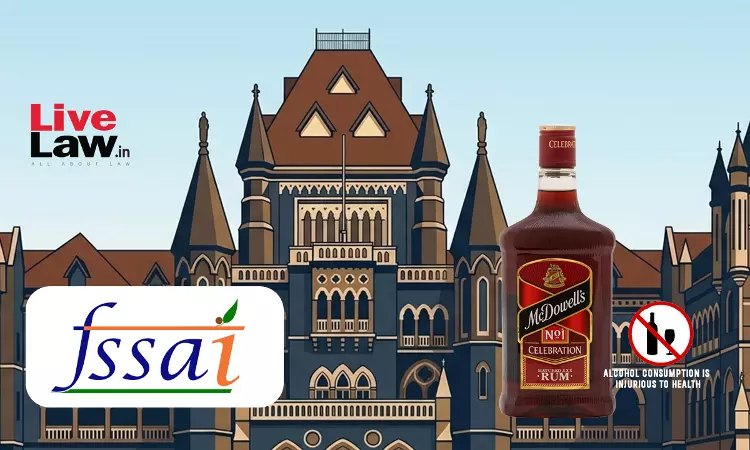
After the Food Safety and Standards Authority of India (FSSAI) prohibited the manufacture and sale of fresh stocks of McDowell's No. 1 Celebration Matured Rum and Old Monk, their manufacturers have approached the Bombay High Court challenging the validity of the prohibition orders.A Division Bench of Acting Chief Justice Ravindra Ghuge and Justice Gautam Ankhad on Friday agreed to hear...
This is a premium content
Available exclusively to
Our subscribers
Subscribe Premium 
INR 1099+GST
Your support helps us to bring you more content at
an affordable subscription scheme !!!
All payment options available
After the Food Safety and Standards Authority of India (FSSAI) prohibited the manufacture and sale of fresh stocks of McDowell's No. 1 Celebration Matured Rum and Old Monk, their manufacturers have approached the Bombay High Court challenging the validity of the prohibition orders.
A Division Bench of Acting Chief Justice Ravindra Ghuge and Justice Gautam Ankhad on Friday agreed to hear petitions filed by United Spirits Limited, manufacturer of McDowell's No. 1 Celebration Matured Rum, and Mohan Meakin Limited, which manufactures Old Monk.
Appearing for United Spirits, Senior Advocate Dr. Birendra Saraf submitted that while the FSSAI had prohibited the manufacture and sale of fresh stocks, it had permitted clearance of existing stocks only after relabelling them as "Rum Flavoured Spirit." He argued that such relabelling could not be undertaken overnight as it would require removal of existing labels and approval of fresh labels from the State Excise Department.
While agreeing to hear the matters on Monday (August 10) the bench opined that 'everything' cannot be shutdown overnight but clarified that it is not an expert to decide anything on this without hearing both the sides and thus, adjourned the hearing for the ASG to appear on behalf of the FSSAI.
The petition of McDowell No 1 has challenged a June 29, 'Prohibition Order' and a July 27 'Conditional Prohibition Order' issued by the Designated Officer, FSSAI, Western Regional Office prohibiting the manufacturing and sale of their product which is manufactured at their licensed unit in Baramati, Pune.
By the Conditional Prohibition Order the FSSAI has permitted the petitioner to clear its identified existing stocks subject to relabelling conditions, however the prohibition continues against sale of fresh stocks of their product.
Notably, the FSSAI had passed the impugned orders after inspecting the petitioner's unit in Baramati and allegedly found misleading labelling, substandard composition, and the unauthorised use of artificial flavouring agents.
"The controversy arises from certain observations recorded by the Food Analyst relating to the Product's label. Significantly, the Food Analyst has not recorded any finding that the Product is unsafe for human consumption, fails to conform to the prescribed compositional standards for rum, or poses any risk to public health. Even otherwise, the Product conforms to the applicable requirements prescribed under the Food Safety and Standards (Alcoholic Beverages) Regulations, 2018, and no contravention of the prescribed compositional standards has been recorded against the Product. Thus, even the underlying basis of the Impugned Orders does not disclose any non-compliance with the applicable product standard warranting prohibition," the petition reads.
The Petitioner has argued if Section 36(3 )(b) of the FSS Act which merely enumerates the functions o f a Designated Officer, can be treated as an independent source of power to prohibit manufacture and sale of a food product. "We contend that the section does not confer such powers. The FSS Act consciously creates two specific statutory mechanisms for issuance of prohibition orders i.e., under Section 33 by the competent Court and under Section 34 by the Commissioner of Food Safety in cases involving a health-risk condition. Neither route has been followed," the plea points out.
While permitting identified existing stocks of the very same Product to be sold upon modification of the nomenclature through affixation of stickers, the Conditional Prohibition Order continues to prohibit manufacture and sale of fresh stocks, without identifying any independent statutory provision authorising such continuing restraint, the petitioner's argued.
"The arbitrariness of the Impugned Orders is further evident from the fact that FSSAI itself convened an industry-wide stakeholder consultation on July 14, 2026 to deliberate upon the very issues forming the basis of the prohibition. The Conditional Prohibition Order thereafter records that 'ample clarity' was conveyed through such stakeholder meeting, without identifying any amendment, notification or applicable regulatory instrument by which the position purportedly conveyed at the consultation was formalised. A regulatory position which was itself placed under industry-wide deliberation could not have been treated as a settled and enforceable requirement for continuing prohibitory action against the Petitioners. The Petitioners respectfully submit that the Impugned Orders are therefore vitiated at their very foundation. In these circumstances, the Petitioners seek interference of this Court for quashing the Prohibition Order and the Conditional Prohibition Order, to the extent that it continues to prohibit manufacture and sale of fresh stocks of the Product, and for consequential reliefs," the petition pleads.
The matter is likely to be heard on August 10.
Case Title: M/s United Spirits Limited vs Union of India (Writ Petition 10196 of 2026)
Tags

Narsi Benwal
Narsi Benwal is a Special Correspondent with Live Law covering Bombay High Court and also the Trial Courts across Maharashtra

