- Home
- /
- High Courts
- /
- Bombay High Court
- /
- 'Cut-Off Date In Welfare Scheme Not...
'Cut-Off Date In Welfare Scheme Not Sacrosanct': Bombay High Court Allows Monetary Benefit Claim By Heirs Of Deceased COVID Frontline Staff
Saksham Vaishya
19 Dec 2025 3:15 PM IST
The Bombay High Court has held that the cut-off date prescribed under a welfare scheme meant for COVID-19 frontline workers cannot be applied in a rigid or technical manner so as to defeat the very object of the scheme. The Court observed that such schemes must receive a liberal and beneficial interpretation, particularly where a frontline worker contracted COVID-19 during the currency of...
This is a premium content
Available exclusively to
Our subscribers
Subscribe Premium 
INR 1099+GST
Your support helps us to bring you more content at
an affordable subscription scheme !!!
All payment options available
The Bombay High Court has held that the cut-off date prescribed under a welfare scheme meant for COVID-19 frontline workers cannot be applied in a rigid or technical manner so as to defeat the very object of the scheme. The Court observed that such schemes must receive a liberal and beneficial interpretation, particularly where a frontline worker contracted COVID-19 during the currency of the scheme while discharging official duties, but succumbed to the illness shortly thereafter. The Court held that in such circumstances, the cut-off date cannot be regarded as sacrosanct.
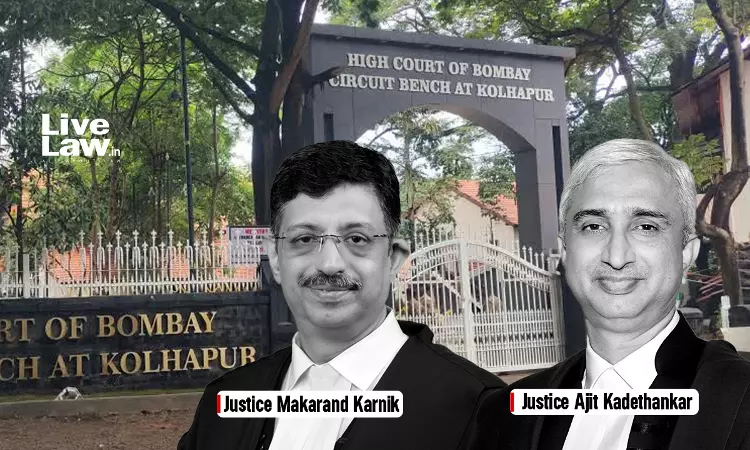
A division bench of Justices M. S. Karnik and Ajit B. Kadethankar was hearing a writ petition filed by the family of an Extension Officer. The deceased was engaged as a frontline worker during the COVID-19 pandemic and was entrusted with duties such as identifying infected persons, conducting anti-COVID measures, and facilitating hospital admissions. He contracted COVID-19 while discharging official duties and was hospitalised from the same date. His condition deteriorated, and he ultimately succumbed to the illness on 11 July 2021. The petitioners' claim for insurance/ex-gratia benefits under the Government Resolution dated 25 April 2022 was rejected on the sole ground that the deceased had died after the cut-off date of 30 June 2021.
The Court noted that there was no dispute that the deceased had contracted COVID-19 while on duty as a frontline worker and that he remained hospitalised continuously from before the cut-off date until his death. The Bench observed that the Government Resolutions providing insurance cover were framed to recognise the extraordinary sacrifice made by frontline workers during the pandemic and to provide meaningful support to their families. The Court emphasised that denying benefits merely because the date of death fell a few days beyond the cut-off date would be contrary to the values of justice, fairness and dignity that underpin such welfare measures.
“… State must act with sensitivity towards those who have suffered and must not allow procedural rigidity to eclipse substantive justice… the cut-off date, i.e. 30th June 2021, as set out in the GR dated 25th April 2022, cannot be regarded as sacrosanct.”
The Court held that a narrow or literal interpretation of the cut-off date would undermine the purpose of the scheme. It observed that where a frontline worker had admittedly contracted COVID-19 prior to the cut-off date and remained under treatment thereafter, the scheme must be construed liberally to extend its benefits to the legal heirs. The Court stressed that procedural rigidity should not eclipse substantive justice, especially in cases involving loss of life during a public health crisis of unprecedented magnitude.
“… this petition deserves to be examined through a humanitarian lens rather than adopting a rigid or technical approach. Denying relief would be to do a disservice to the sacrifice made by the deceased in his fight against COVID-19,” the Court observed
Accordingly, the High Court allowed the writ petition and directed the State authorities to extend the benefit of insurance cover to the petitioners within a period of four weeks.
Case Title: Vijaya Yashwant Jadhav & Ors. v. State of Maharashtra & Ors. [WRIT PETITION NO. 17617 OF 2024]
Tags