- Home
- /
- High Courts
- /
- Bombay High Court
- /
- Bombay High Court Quashes ₹26 Cr...
Bombay High Court Quashes ₹26 Cr Demand On TCL, Imposes ₹25 Lakh Cost On State For Litigating “Indefensible” Order
Saksham Vaishya
10 Dec 2025 11:15 AM IST
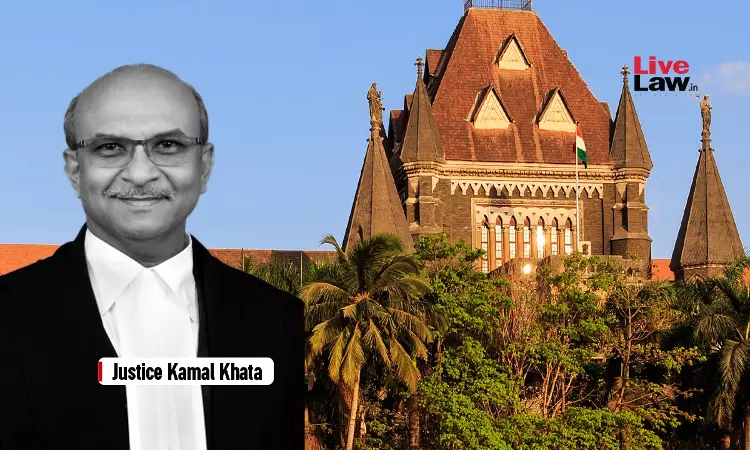
The Bombay High Court has strongly criticised the Maharashtra Government for defending an order that was contrary to settled law, holding that the State had misused public funds by compelling Tata Communications Limited (TCL) to litigate for nearly a decade against a patently unsustainable demand. The Court held that the impugned orders imposing a liability of over ₹26 crores as...
This is a premium content
Available exclusively to
Our subscribers
Subscribe Premium 
INR 1099+GST
Your support helps us to bring you more content at
an affordable subscription scheme !!!
All payment options available
The Bombay High Court has strongly criticised the Maharashtra Government for defending an order that was contrary to settled law, holding that the State had misused public funds by compelling Tata Communications Limited (TCL) to litigate for nearly a decade against a patently unsustainable demand. The Court held that the impugned orders imposing a liability of over ₹26 crores as “unearned income” were fundamentally flawed, legally untenable, and passed in violation of principles of natural justice.
Justice Kamal Khata was hearing a writ petition filed by Tata Communications Limited challenging the orders that had collectively held that the land allotted in 1992 to Overseas Communication Services (OCS) had been “transferred” to TCL without permission of the Government, thereby attracting liability to pay unearned income. The land had been allotted to OCS for the construction of staff quarters; OCS was later merged into Videsh Sanchar Nigam Ltd. (VSNL), whose name was changed to TCL in 2008 following disinvestment. Despite this continuity of ownership and use, the Collector in 2011 issued a show cause notice alleging delay in construction, misuse of land, and unauthorised transfer.
The Court held that all three grounds in the show cause notice were unsustainable. First, the allegation of delayed construction was time-barred, since construction had been completed in 1998 and proceedings were initiated only in 2011. Second, there was no evidence that the land was used for an unauthorised purpose. Third, the reasoning that dilution of shareholding amounted to transfer of property was contrary to well-settled law that a company is distinct from its shareholders, and that transfer of shares does not constitute transfer of the company's assets. It observed:
“… a transfer of shares, by itself, does not constitute a transfer of property, and that shareholders have no proprietary interest in the company's assets. As an inevitable corollary, no interest in the company's immovable property is transferred or effected.”
The Court further held that the show cause notice itself was defective for failing to disclose the materials relied upon.
The Court expressed grave concern that, despite clear and binding precedent, the State had chosen to defend an indefensible order, thereby wasting judicial time and public resources. It emphasised that the State is “no ordinary party” and must function as a model litigant by resolving disputes at the threshold and avoiding technical and frivolous defences. The Court cited multiple Supreme Court judgments reminding the Government of its constitutional obligation to avoid unnecessary litigation and not burden citizens with unjustified claims. It was observed that the continued failure of the State to internalise these principles over four decades justified the imposition of exemplary costs.
“… the imposition of costs upon the State is necessary to ensure accountability and to deter untenable actions or defence of proceedings that are demonstrably well-founded and supported by law,” the Court observed.
Accordingly, the High Court allowed the writ petition, quashed the orders of the Collector, Additional Commissioner, and Revenue Minister, and imposed costs of ₹25 lakhs on the State, to be paid to TCL within four weeks. It further suggested that the State constitute a committee comprising retired judges and senior advocates to filter untenable cases at the threshold and avoid recurrence of such misuse of public funds.
Case Title: Tata Communications Limited v. State of Maharashtra & Ors. [WRIT PETITION NO.362 OF 2015]