- Home
- /
- High Courts
- /
- Bombay High Court
- /
- Bombay High Court Dismisses Retired...
Bombay High Court Dismisses Retired Zilla Parishad Doctors' Plea For NPA From 2016, Calls It Impermissible Judicial Interference In Policy
Saksham Vaishya
19 Feb 2026 7:00 PM IST
The Bombay High Court has held that fixation of an operative date for extending a fiscal or service-benefit, such as Non-Practising Allowance (NPA), is a matter of executive policy and that classification based on the date of retirement does not per se violate Article 14 of the Constitution. The Court observed that the reliefs sought would require the Court to rewrite the Government Resolution...
This is a premium content
Available exclusively to
Our subscribers
Subscribe Premium 
INR 1099+GST
Your support helps us to bring you more content at
an affordable subscription scheme !!!
All payment options available
The Bombay High Court has held that fixation of an operative date for extending a fiscal or service-benefit, such as Non-Practising Allowance (NPA), is a matter of executive policy and that classification based on the date of retirement does not per se violate Article 14 of the Constitution. The Court observed that the reliefs sought would require the Court to rewrite the Government Resolution by substituting the operative date, which is impermissible in the exercise of jurisdiction under Article 226 of the Constitution of India in the absence of demonstrated arbitrariness or illegality.
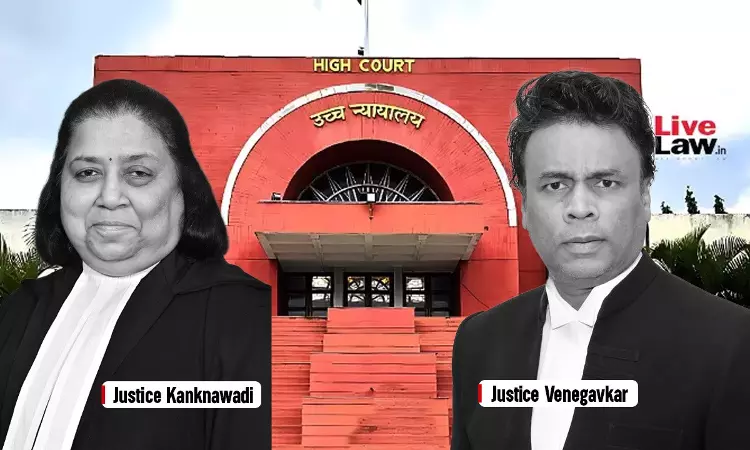
A division bench of Justices Vibha Kankanwadi and Hiten S. Venegavkar was hearing two connected writ petitions filed by retired medical officers of Zilla Parishads who had superannuated on 30 June 2018 and 31 July 2018, respectively. The petitioners had been extended 7th Pay Commission benefits for pay fixation and pension revision, but were denied inclusion of 35% NPA in pension computation. They challenged clause (2) of the Government Resolution dated 14 October 2024, which extended 35% NPA to medical officers with effect from 1 January 2019, contending that since the 7th Pay Commission was implemented from 1 January 2016, NPA ought to be reckoned from that date for all who retired thereafter. They sought modification of the Resolution and revision of the pension with interest.
The Court noted that the petitioner is asking for a judicial modification of a Government Resolution, which would amount to restructuring a policy decision and imposing a retrospective financial liability upon the State and the Zilla Parishad establishments. The Court held that it can examine legality, arbitrariness, perversity and hostile discrimination, but it does not sit as an appellate authority over the wisdom of fiscal choices.
While agreeing that classification must satisfy the twin tests of intelligible differentia and rational nexus, the Court observed:
“… in service jurisprudence, it is equally well established that fixing an effective date for implementing revised benefits often creates two groups, those who fall on one side of the date and those on the other, and such a division is not per se unconstitutional.”
The Court held that acceptance of pay-commission recommendations can be staggered, and there is no constitutional mandate that every allowance must operate from the same date as pay or pension revision.
Rejecting the plea of hostile discrimination, the Court held that retirees prior to the operative date do not acquire any vested or accrued right to demand retrospective extension of a subsequently introduced allowance. It emphasised that judicial review under Article 226 does not extend to rewriting policy decisions or imposing retrospective financial liability in the absence of demonstrated arbitrariness or illegality.
“The subsequent policy extension of 35% NPA from 01.01.2019 cannot be converted into a vested right for earlier retirees merely because they are beneficiaries of some other aspect of the pay commission regime,” the Court observed.
Accordingly, the High Court dismissed both writ petitions.
Case Title: Dr. Jayant v. State of Maharashtra & Ors. [WRIT PETITION NO.56 OF 2026]
Tags