- Home
- /
- High Courts
- /
- Bombay High Court
- /
- Right To Property Under Article...
Right To Property Under Article 300-A Cannot Be Defeated By Erroneous Revenue Entries: Bombay High Court
Saksham Vaishya
9 May 2026 2:20 PM IST
The Bombay High Court has held that the right to property under Article 300-A of the Constitution cannot be defeated on the basis of erroneous revenue entries made during the implementation of a consolidation scheme. The Court observed that where landholders were not issued notice as required under Section 15A of the Maharashtra Prevention of Fragmentation and Consolidation of Holdings Act,...
This is a premium content
Available exclusively to
Our subscribers
Subscribe Premium 
INR 1099+GST
Your support helps us to bring you more content at
an affordable subscription scheme !!!
All payment options available
The Bombay High Court has held that the right to property under Article 300-A of the Constitution cannot be defeated on the basis of erroneous revenue entries made during the implementation of a consolidation scheme. The Court observed that where landholders were not issued notice as required under Section 15A of the Maharashtra Prevention of Fragmentation and Consolidation of Holdings Act, 1947, delay in seeking correction of revenue entries cannot be used to deny restoration of their holdings.
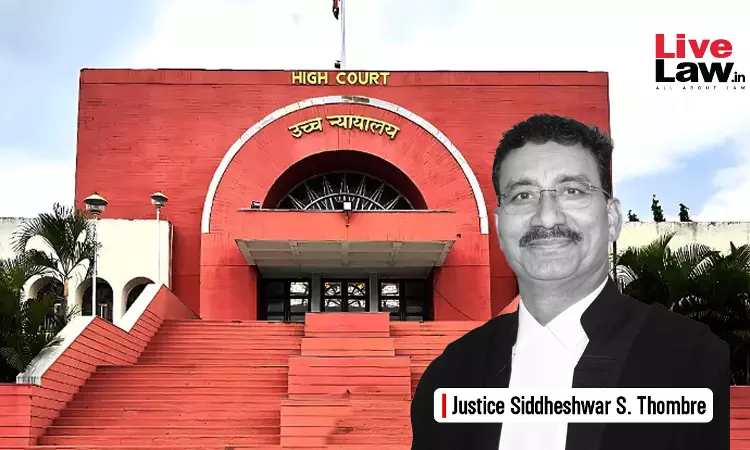
Justice Siddheshwar S. Thombre was hearing a writ petition challenging an order passed by the Minister setting aside an order of the Deputy Director of Land Records directing restoration of the revenue record in favour of the petitioner. The petitioner claimed to have purchased agricultural land by a registered sale deed dated 16 February 1982. According to the petitioner, after implementation of the consolidation scheme, the area recorded in his name was wrongly reduced from 82 R to 28 R in the revenue record.
The Court noted that there was no dispute regarding the execution of the registered sale deed or the decree passed in favour of the petitioner declaring him the owner of the suit property. It further noted that prior to implementation of the consolidation scheme, the petitioner held 82 R land and that after implementation, only 28 R was reflected in his name in the revenue record. The Court observed that the revenue authorities, being custodians of the record, were required to explain how such a reduction occurred and that the petitioner could not be blamed for incorrect entries maintained by the authorities.
The Court observed that the object of the Maharashtra Prevention of Fragmentation and Consolidation of Holdings Act, 1947, is to consolidate holdings for better cultivation and not to reduce or increase the holdings of land owners. Referring to Sections 15A, 20, 21 and 22 of the Act, the Court observed that issuance of notice to landholders and consultation with the village committee are mandatory requirements while preparing a consolidation scheme.
“Merely because the consolidation scheme was implemented earlier the petitioner cannot be deprived of his property, particularly when the reduction in area occurred due to incorrect revenue entries. The right to property under Article 300-A of the Constitution of India cannot be defeated on the basis of erroneous entries,” the Court observed.
On the issue of delay, the Court observed that neither the Act of 1947 nor the Maharashtra Land Revenue Code prescribes any specific limitation period for seeking correction of such entries. The Court held that where landholders were not issued notice and records were prepared without giving notice, they could not be deprived of their property merely on the ground of delay.
The Court further held that under no circumstances can a landholder be deprived of land due to inadvertence and haphazard implementation of the consolidation scheme by authorities. Holding the findings of the Minister to be perverse and unsustainable, the Court quashed and set aside the impugned order.
Accordingly, the writ petition was allowed.
Case Title: Rama S/o Gunda Malkapure v. State of Maharashtra [Writ Petition No. 13712 of 2017]
Citation: 2026 LiveLaw (Bom) 243
Tags