- Home
- /
- High Courts
- /
- Bombay High Court
- /
- Maharashtra Cooperative Societies...
Maharashtra Cooperative Societies Act | Authorised Officer Becomes Functus Officio Once Replaced By Competent Authority: High Court
Saksham Vaishya
6 Dec 2025 11:53 AM IST
The Bombay High Court held that an authorised officer under Section 88 of the Maharashtra Cooperative Societies Act, 1960, becomes functus officio the moment a competent authority replaces him, irrespective of whether the officer had personal knowledge of the substitution. The Court observed that administrative orders take legal effect when issued by the competent authority, not when they...
This is a premium content
Available exclusively to
Our subscribers
Subscribe Premium 
INR 1099+GST
Your support helps us to bring you more content at
an affordable subscription scheme !!!
All payment options available
The Bombay High Court held that an authorised officer under Section 88 of the Maharashtra Cooperative Societies Act, 1960, becomes functus officio the moment a competent authority replaces him, irrespective of whether the officer had personal knowledge of the substitution. The Court observed that administrative orders take legal effect when issued by the competent authority, not when they are communicated or “come to the knowledge” of the concerned officer. Any action taken after cessation of authority is without jurisdiction and void.
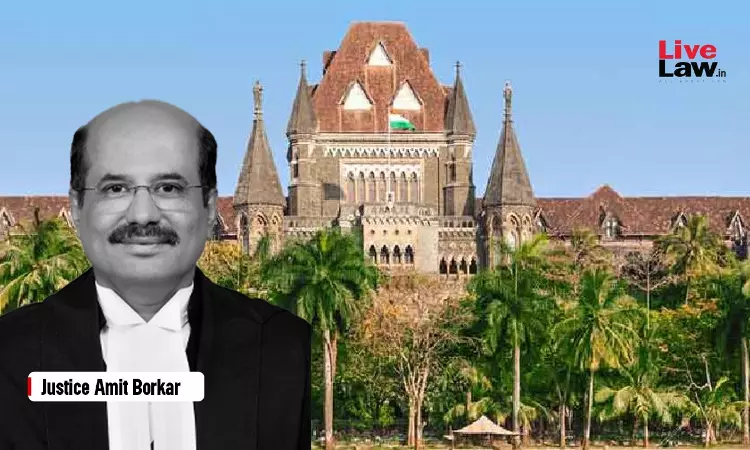
Justice Amit Borkar was hearing challenges to proceedings arising from an inquiry initiated under Sections 83 and 88 of the Act against the managing committee of Amit Darshan Cooperative Housing Society. After Respondent No.6 was authorised to conduct the Section 88 inquiry and issue his report, he framed charges and received replies from the members. However, the Deputy Registrar replaced Respondent No.6 and appointed one Mr. Sunil Khochre as the new authorised officer for completion of the inquiry. Despite this substitution, Respondent No.6 prepared a report and submitted it on 1 March 2022 under Section 88, based on which a recovery certificate under Section 98 was subsequently issued against the petitioners. Revision proceedings filed by the petitioners were later dismissed, leading to the present petitions.
The Court held that the power of an authorised officer exists solely by virtue of the authorising order issued by the Registrar, and ceases instantly once such authorisation is withdrawn or substituted. The officer acts not on personal discretion but only because the statute permits him to do so through the order of appointment. Once that order is replaced, the power ends and cannot be revived by arguing ignorance of the substitution. The Court applied the doctrine of functus officio, noting that after replacement, the former officer becomes legally incompetent to take any further steps in the inquiry. It observed:
“The doctrine of functus officio applies with full force to the facts of the present case. Once the proceedings were closed for submission of the report after completion of the hearing, and once a fresh Authorised Officer was appointed in place of the original officer, the latter became functus officio.”
The Court highlighted that the power to replace the authorised officer is conferred upon the Registrar, and if he deems it appropriate to remove an authorised officer even after closure of the hearing, the Court would generally refrain from interfering.
“If the Registrar, in the exercise of his judgment, considers it appropriate to replace an Authorised Officer even after closure of hearing, that is a matter within his domain, and courts should be slow to interfere unless there is manifest illegality or violation of principles of natural justice,” the Court observed.
The Court refused to accept the argument that the earlier authorised officer did not know about his replacement, observing that ignorance of an order cannot revive a power that has already come to an end, and accepting such a plea would introduce uncertainty into the proceedings.
Accordingly, the Court declared that the report submitted on 28 February 2022 and its submission on 1 March 2022 were without jurisdiction, and that all consequential proceedings, including the recovery certificate dated 13 October 2022 and the revisional orders dated 29 January 2024, were legally unsustainable.
Case Title: Nainesh Sanghvi & Ors. v. State of Maharashtra & Ors. [WRIT PETITION NO.3531 OF 2024]