- Home
- /
- High Courts
- /
- Bombay High Court
- /
- Dalmia Cement Case: Bombay High...
Dalmia Cement Case: Bombay High Court Holds Two-Year Extension Under Mineral Auction Rules Is Mandatory
Saksham Vaishya
3 Jan 2026 5:20 PM IST
The Bombay High Court has held that once the State Government is satisfied that the delay in execution of a mining lease is for reasons beyond the control of the preferred bidder, the extension contemplated under the second proviso to Rule 10(6) of the Mineral (Auction) Rules, 2015 must be for the full period of two years and cannot be curtailed. The Court observed that the provision does...
This is a premium content
Available exclusively to
Our subscribers
Subscribe Premium 
INR 1099+GST
Your support helps us to bring you more content at
an affordable subscription scheme !!!
All payment options available
The Bombay High Court has held that once the State Government is satisfied that the delay in execution of a mining lease is for reasons beyond the control of the preferred bidder, the extension contemplated under the second proviso to Rule 10(6) of the Mineral (Auction) Rules, 2015 must be for the full period of two years and cannot be curtailed. The Court observed that the provision does not confer discretion upon the State to grant an extension of a lesser duration, and any interpretation permitting a shorter extension would defeat the legislative intent and render the proviso redundant.
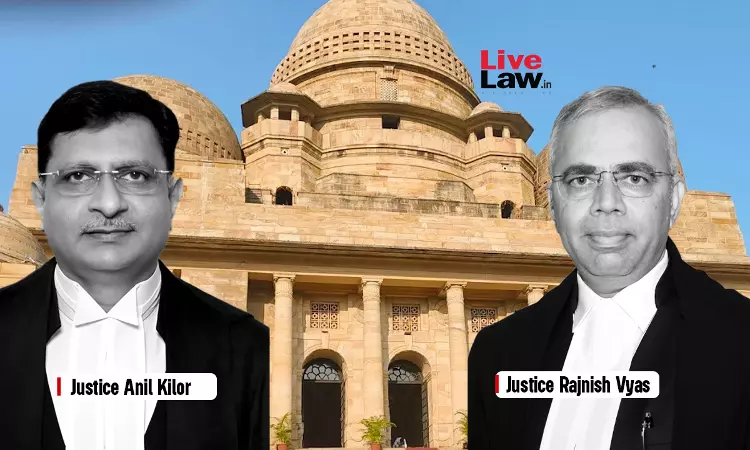
A division bench of Justices Anil S. Kilor and Rajnish R. Vyas was hearing a writ petition filed by Dalmia Cement (Bharat) Limited challenging the letter issued by the State of Maharashtra, by which the petitioner's request for extension of the validity period of the Letter of Intent (LOI) for the Gojoli Limestone Mineral Block in Chandrapur district was rejected beyond 9 September 2025. The petitioner had been declared the preferred bidder pursuant to an auction process initiated in 2019 and was issued an LOI on 10 September 2020 for a period of three years, extendable by two years. Due to delays, the petitioner requested an extension of two years, counting from the date of the extension. However, this was rejected.
The Court noted that although the State eventually accepted that the petitioner was entitled to extension on account of reasons beyond its control, it erroneously granted extension only up to 9 September 2025, effectively providing a period of merely a few months instead of the statutorily prescribed two years. The State justified its action by contending that the overall validity of the LOI could not exceed five consecutive years from the date of issuance. The Court found this interpretation to be contrary to the plain language of Rule 10(6), which mandates a further period of two years once the conditions for extension are satisfied.
Interpreting Rule 10(6) purposively, the Court held that the three-year period and the extendable two-year period are intended to enable the preferred bidder to complete compliance under sub-rules (3) to (5) of Rule 10, including execution of the Mine Development and Production Agreement and obtaining statutory clearances.
The Court emphasised that the second proviso uses the expression “further period of two years” and not “up to two years”, thereby leaving no scope for the State to curtail the duration of extension. Any interpretation allowing a shorter extension, the Court held, would lead to absurd results and frustrate the object of the Rules.
“… once the authority is satisfied that there are reasons for delay which were beyond the control of the Preferred Bidder, the period extendable shall be of two years, and the same cannot be curtailed as the second proviso to sub-rule (6) of Rule 10 of the Rules of 2015 does not use the expression “up to two years”. Hence, no discretion is given to the concerned authority to reduce the extendable period of two years,” the Court observed.
Accordingly, the High Court quashed the impugned letter dated 1 September 2025 and also set aside the earlier communication dated 4 April 2025 to the extent it granted an extension of less than two years.
Case Title: Dalmia Cement (Bharat) Limited v. Union of India & Ors. [WRIT PETITION NO. 5113 OF 2025]
Tags