- Home
- /
- High Courts
- /
- Bombay High Court
- /
- Bombay High Court Refers To Larger...
Bombay High Court Refers To Larger Bench Question On Applicability Of RDB Act To Recovery Proceedings By State Co-operative Banks
Saksham Vaishya
29 Dec 2025 5:50 PM IST
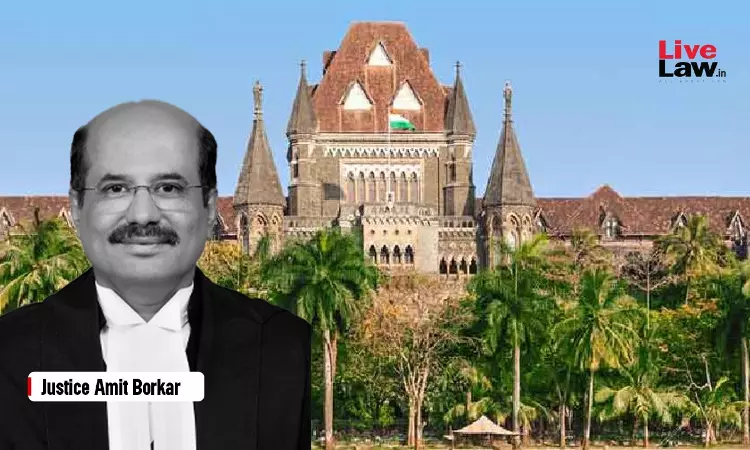
The Bombay High Court has referred for consideration by a larger Bench the question of whether recovery proceedings initiated by State Co-operative Banks are governed by the Recovery of Debts Due to Banks and Financial Institutions Act, 1993 (RDB Act), and whether the jurisdiction of Co-operative Courts under Section 91 of the Maharashtra Co-operative Societies Act, 1960 stands excluded in...
This is a premium content
Available exclusively to
Our subscribers
Subscribe Premium 
INR 1099+GST
Your support helps us to bring you more content at
an affordable subscription scheme !!!
All payment options available
The Bombay High Court has referred for consideration by a larger Bench the question of whether recovery proceedings initiated by State Co-operative Banks are governed by the Recovery of Debts Due to Banks and Financial Institutions Act, 1993 (RDB Act), and whether the jurisdiction of Co-operative Courts under Section 91 of the Maharashtra Co-operative Societies Act, 1960 stands excluded in view of Sections 17, 18 and 34 of the RDB Act.
Justice Amit Borkar was hearing a review petition arising out of a writ petition wherein a money decree passed by the Co-operative Court in favour of TJSB Sahakari Bank Ltd. had been restored. The review petitioner relied upon a subsequent decision of the Nagpur Bench in Washim Urban Co-operative Bank Ltd. v. Girishchandra [Writ Petition No.3783 of 2021], which held that co-operative banks are “banks” within the meaning of the RDB Act and that recovery claims exceeding ₹10 lakhs fall exclusively within the jurisdiction of the Debts Recovery Tribunal (DRT), thereby ousting the jurisdiction of Co-operative Courts under Section 91 of the Maharashtra Cooperative Societies Act, 1960 (MCS Act). The correctness of this view was the issue in the review proceedings.
The Court undertook an extensive analysis of the legal position emerging from the Supreme Court's decisions. While Greater Bombay Co-operative Bank Ltd. v. United Yarn Tex Pvt. Ltd. [(2007) 6 SCC 236] had held that the RDB Act does not apply to co-operative banks, the Constitution Bench in Pandurang Ganpati Chaugule v. Vishwasrao Patil Murgud Sahakari Bank Ltd. [(2020) 9 SCC 215] rejected the foundational reasoning of that decision by holding that co-operative banks are engaged in full-fledged banking activity governed by Entry 45 of List I, and that recovery of dues is an integral part of banking.
The Court noted that Pandurang Ganpati Chaugule was rendered in the context of the SARFAESI Act and did not conclusively determine the applicability of the RDB Act to State co-operative banks. It highlighted that though the RDB Act and the SARFAESI Act both operate in the same field, they do not form a single or uniform code. The Court observed that the decision in Pandurang supports the view that co-operative banks cannot be treated as standing outside the concept of banking under central law, but it does not conclusively establish that State co-operative banks have an automatic right to invoke Section 17 of the RDB Act.
The Court cautioned against deciding jurisdiction based on the definitions alone. It highlighted that Sections 18 & 31 of the RDB Act refer to only multi-State co-operative banks, and not to State co-operative banks, implying that Parliament deliberately included only multi-State co-operative banks within the RDB framework.
On account of this uncertainty, and being a coordinate bench to Wasim Urban, the Court held that it would not be proper for it to disagree with the view taken in Wasim Urban without any authority of a larger Bench. Hence, the Court referred the following question of law to the Hon'ble Chief Justice for placement before a larger Bench:
““Whether, and to what extent, recovery proceedings initiated by State co-operative banks are governed by the Recovery of Debts Due to Banks and Financial Institutions Act, 1993, and whether the jurisdiction of the Co-operative Court under Section 91 of the Maharashtra Co-operative Societies Act, 1960 stands excluded by reason of Sections 17, 18 and 34 of the said Central Act... "
Case Title: Amritlal P. Shah v. The TJSB Sahakari Bank Limited & Ors. [REVIEW PETITION NO.184 OF 2025 IN WRIT PETITION NO.2679 OF 2023]
Tags