- Home
- /
- High Courts
- /
- Bombay High Court
- /
- False Academic Credentials: Bombay...
False Academic Credentials: Bombay High Court Upholds Cancellation Of Admission Despite Students Reaching Final Semester, Securing Placements
Saksham Vaishya
8 Sept 2026 9:00 PM IST
The Bombay High Court has upheld the cancellation of admissions of three students to the two-year full-time MMS Course at Jamnalal Bajaj Institute of Management Studies (JBIMS), after finding that they had secured admission on the basis of materially inflated academic credentials. The Court held that the fact that the students had reached the final semester, appeared for examinations or...
This is a premium content
Available exclusively to
Our subscribers
Subscribe Premium 
INR 1099+GST
Your support helps us to bring you more content at
an affordable subscription scheme !!!
All payment options available
The Bombay High Court has upheld the cancellation of admissions of three students to the two-year full-time MMS Course at Jamnalal Bajaj Institute of Management Studies (JBIMS), after finding that they had secured admission on the basis of materially inflated academic credentials. The Court held that the fact that the students had reached the final semester, appeared for examinations or secured placements could not outweigh the requirement of fair admissions.
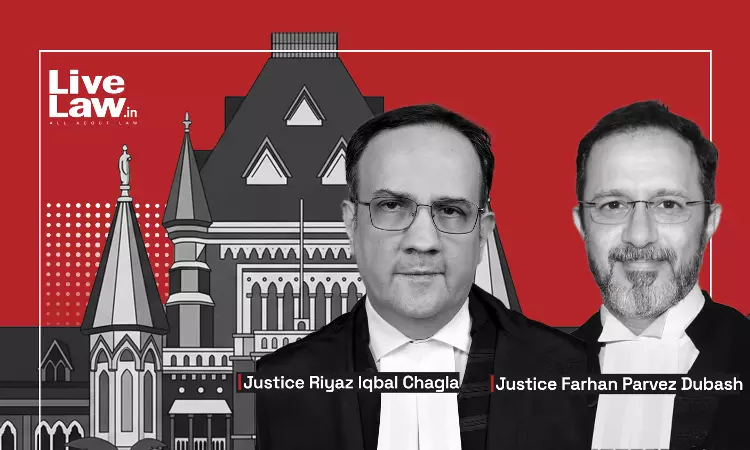
A Division Bench of Justice R.I. Chagla and Justice Farhan P. Dubash was hearing petitions filed challenging JBIMS's decision dated 27 March 2026 cancelling and revoking their admissions. At the time, all three students were in Semester IV and were on the verge of completing the MMS Course. The decision to cancel their admission was founded upon the allegation that the documents submitted by them at the time of admission were forged and/or fabricated.
The matter arose after JBIMS received an anonymous email on 6 March 2026 alleging that certain students had falsified their graduation marks. A First Committee found discrepancies between the actual grades of the petitioners and the ones that they had claimed for securing admission.
The Petitioners contended that the Committee Reports principally compare the genuine academic records with the disputed documents and draw adverse inferences therefrom, but do not identify any independent evidence establishing that the Petitioner prepared or submitted the disputed documents. They further argued that they were not given a hearing before the First Committee, which amounted to a breach of the principles of natural justice.
The Court refuted the contention around natural justice, noting that though no hearing was given before the first committee, a second committee was subsequently constituted for affording the Petitioners an opportunity of being heard.
“The fact that a preliminary fact finding exercise preceded the hearing does not, by itself, establish that the subsequent Committee abdicated its function. What is material is whether the Second Committee independently considered the Petitioners' explanations. On the record before us, we have no hesitation in finding that it did so,” the Court remarked.
The Court also refuted the contention that lack of direct evidence as to the physical alteration of each document renders the finding unsustainable, observing that such knowledge may be inferred from surrounding circumstances.
The Court next considered the institutional responsibility to examine and verify the credentials placed before it. The Court conceded that the discrepancies remaining undetected until March 2026, when the Petitioners were in their final semester, raised legitimate questions concerning the efficacy of the Institute's verification mechanism. However, the Court noted that institutional failure and individual responsibility are not mutually exclusive.
“If a student knowingly secures an admission by relying upon false academic credentials, the fact that the institution failed to detect the falsity at the first instance cannot and does not validate the admission or confer upon the student a right to retain an advantage which he was not otherwise entitled to receive,” the Court observed.
The Court further held that though cancellation at this stage would have relatively severe consequences, the equities generated by the passage of time are not sufficient to outweigh the public interest in maintaining the integrity of the admission process.
“The alleged misconduct… concerns the very basis upon which the Petitioners entered the course… To permit retention of such admissions solely because the Institute discovered the alleged fraud after almost two years would create a perverse incentive. It would mean that the longer an irregular admission remained undetected, the stronger would become the student's claim to retain it. Our conscience does not permit us to accept such a principle,” the Court remarked.
The Court ultimately held that the cancellation of admissions was not so disproportionate to the misconduct established as to warrant interference under Article 226. It observed
“… in matters concerning students and their academic careers, Courts are naturally inclined to take a humane and sympathetic view… At the same time, judicial discretion cannot be exercised in a manner which has the effect of permitting a person to retain an advantage obtained by dishonest or deceitful means.”
The Court cautioned that an unduly lenient approach in such matters would undermine the purity and fairness of the admission process, and cause serious prejudice to candidates who are genuinely eligible and compete for the limited seats available.
The Court further held that the consideration that the Petitioners have completed the entire course and, in at least one case, secured placement, cannot therefore outweigh the overriding requirement that the admission process must remain fair. An advantage obtained on the basis of materially false academic credentials cannot be permitted to crystallize into an enforceable equitable right merely by the passage of time.
Lastly, emphasising the importance of integrity in the admission process, the Court observed:
“… purity of an admission process is not protected merely by acting against the person who is alleged to have benefited from an irregularity. The institutional mechanism through which the irregularity occurred must also be examined and if responsibility is ultimately established against any person connected with the admission process, appropriate action must follow in accordance with law.”
Accordingly, the Court upheld the Institute's decision cancelling and revoking the admissions of all three students and dismissed the writ petitions.
Case Title: Yash Pramod Gaikwad v. State of Maharashtra [Writ Petition (L) Nos. 11936 of 2026] and Connected Matters
Tags