



- Home
- /
- High Courts
- /
- Bombay High Court
- /
- Can Governor Withdraw Bill Sent For...
Can Governor Withdraw Bill Sent For Presidential Assent Before President's Decision? Bombay High Court Asks Maha Govt, Centre
Narsi Benwal
16 Dec 2025 10:28 PM IST
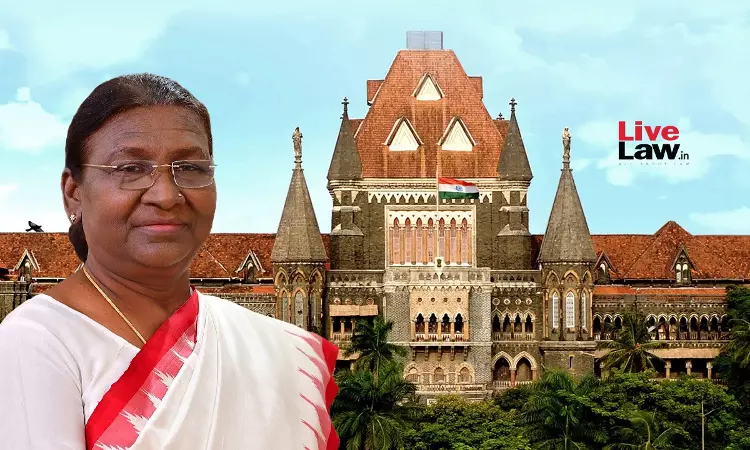
The Bombay High Court on Tuesday sought to know from Maharashtra and also the Union Governments to clarify their stand on the query as to can a Bill sent for Presidential assent by the Governor, can be withdrawn on the aide and advice of the council of ministers even before the President of India takes any decision on the same. A division bench of Justices Manish Pitale and Manjusha...
This is a premium content
Available exclusively to
Our subscribers
Subscribe Premium 
INR 1099+GST
Your support helps us to bring you more content at
an affordable subscription scheme !!!
All payment options available
The Bombay High Court on Tuesday sought to know from Maharashtra and also the Union Governments to clarify their stand on the query as to can a Bill sent for Presidential assent by the Governor, can be withdrawn on the aide and advice of the council of ministers even before the President of India takes any decision on the same.
A division bench of Justices Manish Pitale and Manjusha Deshpande posed the query while noting that the Maharashtra Legislature had in 2018 passed a Bill recommending amendments to the Indian Penal Code (IPC) and also the Criminal Procedure Code (CrPC) for making offence punishable under section 498A of the IPC, compoundable. The judges further noted that in March 2025, the said Bill, reserved for or sent for the assent of President Draupadi Murmu was withdrawn by the Governor on the aide and advice of the council of ministers.
Noting this, the judges opined that the State, in a way, deprived the President of her opportunity to take a decision.
"Legislation by majority passes a law and cabinet says it won't send it to the president assent... Isn't it antithesis to democracy? When the majority of the people's voice has spoken up, how can you withdraw the decision? Are you not taking away the opportunity from the President to decide on this," Justice Pitale orally observed, during the hearing.
However, State's Advocate General Milind Sathe told the judges that the Bill was withdrawn by the Governor only because the State is proposing to bring in a 'comprehensive' law that will take care of both pending and also future cases arising from complaints under section 498A.
"We will make a comprehensive law which will take care of CrPC cases too...Amendments proposed in CrPC, we will make those amendments also in the new law (BNS) and thus we will be coming up with a comprehensive law...Even in BNSS we will consider making amendments..." Sathe submitted.
However, the judges noted that as initially recommended by a coordinate bench of the High Court, the State now plans to bring in a comprehensive law etc but by withdrawing an already proposed Bill reserved for President's assent, the State Cabinet kind of 'trenched' on the authority of the President of India.
"Are you not trenching on the authority of the President that we are withdrawing? Once the Governor sends a bill can he withdraw? Because then it is completely in the arena of the President and her discretion on whether to assent or return the Bill," the bench observed.
However, Sathe urged the bench to adjourn the hearing in the instant case for three months so that the State can by then come up with its proposed amendments. He even cited the recent judgment of the Supreme Court on the Presidential Reference case, wherein it has been held that the Court cannot impose any timelines for decisions of the President and the Governor on granting assent to Bills under Articles 200/201 of the Constitution.
Agreeing with Sathe, the bench said that it has a 'limited role' to play and that it cannot enter the arena of prescribing a timeline for the Governor of the President to grant assent to Bills. However, the bench sought to know if the five-judge bench has given any finding on the issue of whether a Bill reserved for President's assent can be withdrawn by the Governor even before the President takes any decision on the same.
The judges referred to a communication by the Under Secretary of the Government of India, furnished to the bench by Additional Solicitor General (ASG) Anil Singh. The said communication stated that the President has 'returned' the Bill as it is withdrawn by the Governor.
"Can the President return a bill as withdrawn by the Govt? Can a bill reserved for President's consideration be withdrawn in such a manner?" Justice Pitale asked.
At this, advocate Abhimanyu Chandrachud along with advocate Datta Mane pointed out that the Constitution of India only empowers the Governor to recommend or reserve a Bill for President's assent and that there is no mention of power of the Governor to withdraw a Bill already sent for assent.
"Withdrawal is not mentioned in the Constitution.... President has to either assent or return... New judgment (of SC) too says a Bill cannot be kept pending forever... No provision for Governor to withdraw the bill sent by majority of the State Legislature.... Constitution too doesn't say anything on this Milords...when Constitution says it cannot be withdrawn then there is no question on withdrawing the Bill, Milords..." Chandrachud submitted.
The judges noted that in the instant case, Governor exercised his discretion and sent the Bill for the assent but sought to know from the AG if again on the aide and advice of the council of ministers, can the Governor withdraw the Bill. "Is it a one way stream that you cannot come back..." Justice Pitale asked.
To this, the AG responded, "No Milords it isn't like this...If the State is satisfied and it advices the Governor that we don't need the assent now since we are bringing in a new law, then the Governor can exercise discretion and withdraw..."
At this, Justice Pitale orally observed, "The President could have said this that I am not giving assent...She is Mahamahim (Excellency/Honourable)... You cannot deprive the President of the opportunity to take a decision like this."
Further, Chandrachud submitted that already the State Legislature has proposed amendments in IPC and CrPC which the State through Governor withdrew. "When A (amendments to IPC and CrPC) is already enacted and sent Bill was sent for assent then why did you withdraw it? Now only you need to enact B (amendments to BNS and BNSS) too..." Chandrachud submitted.
During the discussion, the bench questioned if even registering the instant case as a Suo Motu PIL would lead to any effective order.
"Can it be a pious hope (that the State would amend the laws)? Only aim of the suo motu PIL? What effective order this court can pass? At the most we can say that let the President take a decision on the initial Bill... What is to happen post that... Or we can just say that the Legislature to bring in amendments but we again have a limited role in that too," the bench explained.
The bench, however, underlined the sufferings of the citizens because of the 'misuse' of section 498A.
"There are so many people who are suffering and even courts are suffering.... Our cause lists get clogged with such matters as we have multiple cases, daily for quashing FIRs lodged under this section," Justice Pitale said.
With this discussion, the bench, adjourned the hearing for two weeks, giving time to the Union Government to place on record the communication of the Under Secretary and also to furnish a copy of the judgment of the Supreme Court in the Presidential Reference Case.
Tags

Narsi Benwal
Narsi Benwal is a Special Correspondent with Live Law covering Bombay High Court and also the Trial Courts across Maharashtra

