- Home
- /
- High Courts
- /
- Bombay High Court
- /
- Delayed Birth Registration Beyond...
Delayed Birth Registration Beyond One Year Can Only Be Ordered By Judicial Magistrate First Class: Bombay High Court
Saksham Vaishya
2 Sept 2026 8:50 PM IST
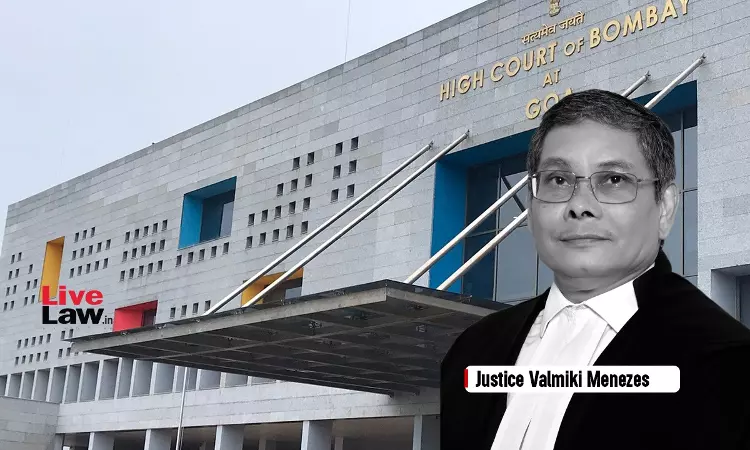
The Bombay High Court has held that a birth which has not been registered within one year of its occurrence can be registered only on an order of a Judicial Magistrate of the First Class under Section 13(3) of the Registration of Births and Deaths Act, 1969. The Court observed that an Executive Magistrate or Mamlatdar cannot exercise jurisdiction for delayed registration beyond one year,...
This is a premium content
Available exclusively to
Our subscribers
Subscribe Premium 
INR 1099+GST
Your support helps us to bring you more content at
an affordable subscription scheme !!!
All payment options available
The Bombay High Court has held that a birth which has not been registered within one year of its occurrence can be registered only on an order of a Judicial Magistrate of the First Class under Section 13(3) of the Registration of Births and Deaths Act, 1969. The Court observed that an Executive Magistrate or Mamlatdar cannot exercise jurisdiction for delayed registration beyond one year, and struck down Rule 9 of the Madhya Pradesh Rules providing for the same.
Justice Valmiki Menezes was considering a writ petition challenging an order dated December 13, 2023, passed by the Commissioner, Corporation of the City of Panaji, cancelling the petitioner's birth registration dated November 22, 1999. The petitioner contended that the Registrar had acted in excess of jurisdiction under Section 15 of the Act and had failed to consider documents produced by the petitioner.
The Court first examined various provisions of the relevant Act, and noted that a combined reading of the provisions of sub section (3) of Section 13 and Section 30 of the Act, with Rule 10 of the 1970 Rules or Rule 9 of the 1999 Rules, indicates that an entry of a birth after a period of one year of the occurrence must be ordered by Judicial Magistrate of the First Class and none else. It further observed that where an entry has been fraudulently or improperly made, the Registrar can take necessary action in the matter.
On the facts, the Court found that the fact of the petitioner's birth being already registered was based upon the material before the Registrar, and could not be termed wholly perverse. It observed noted that the 1999 registration, made when the petitioner was already 24 years old, could not have been made in the absence of an order of a Magistrate of the First Class.
“The Petitioner claims to be born on 11.06.1975 and therefore, his birth could certainly not be registered in the year 1999 in the absence of an order, so to register the same, from a Judicial Magistrate,” the Court remarked.
The petitioner had argued that the registration was made pursuant to an order dated September 11, 1999 of the Mamlatdar of Tiswadi, who was an Executive Magistrate. The Court rejected this contention, holding that Section 13(3) specifically requires an order of a Magistrate of the First Class.
“A Judicial Magistrate of First Class has all the necessary tools… Executive Magistrate is not equipped with such adjudicatory tools including the authority as referred above. Therefore, understandably, legislative intent under section 13(3) was to confer jurisdiction over a Judicial Magistrate of First Class only and not otherwise,” the Court observed.
On the inclusion of Executive Magistrate under the M. P. Registration of Births and Deaths Rules, 1999, framed by the State Government, the Court held:
“… the inclusion of Executive Magistrate in Rule 9 of Rules of 1999 needs to be struck down/read down to the extent that delayed registration of births and deaths can only be verified before the Judicial Magistrate of First Class of the concerned jurisdiction and Executive Magistrate shall not be allowed to exercise the jurisdiction in respect of delayed registration of births and deaths as per section 13(3) of Act of 1969.”
Accordingly, exercising the inherent and extraordinary powers so vested, the Court struck down the authority given to Executive Magistrate as per Rule 9 of Rules of 1999 and confined the jurisdiction to a Judicial Magistrate First class in State of Madhya Pradesh.
The Court accordingly found no case for interference with the impugned order in writ jurisdiction. The writ petition was dismissed.
Case Title: Savio Jose Xavier Viegas v. Dr. Mariano Godinho [Writ Petition No. 408/2024]
Tags