



- Home
- /
- High Courts
- /
- Bombay High Court
- /
- Bombay High Court Upholds Land...
Bombay High Court Upholds Land Acquisition For Dr BR Ambedkar's Mural Construction, Calls It 'Public Purpose'
LIVELAW NEWS NETWORK
3 Sept 2026 1:05 PM IST
The Bombay High Court has held that acquisition of land for constructing a mural depicting the life of Dr. Babasaheb Ambedkar and beautification of the area surrounding his statue constitutes a “public purpose” under the Right to Fair Compensation and Transparency in Land Acquisition, Rehabilitation and Resettlement Act, 2013. The Court observed that such a mural is an investment in...
This is a premium content
Available exclusively to
Our subscribers
Subscribe Premium 
INR 1099+GST
Your support helps us to bring you more content at
an affordable subscription scheme !!!
All payment options available
The Bombay High Court has held that acquisition of land for constructing a mural depicting the life of Dr. Babasaheb Ambedkar and beautification of the area surrounding his statue constitutes a “public purpose” under the Right to Fair Compensation and Transparency in Land Acquisition, Rehabilitation and Resettlement Act, 2013. The Court observed that such a mural is an investment in the intellectual and moral foundations of our future generations, highlighting that Dr. Ambedkar's contributions to the nation are the foundation of the Indian constitutional framework.
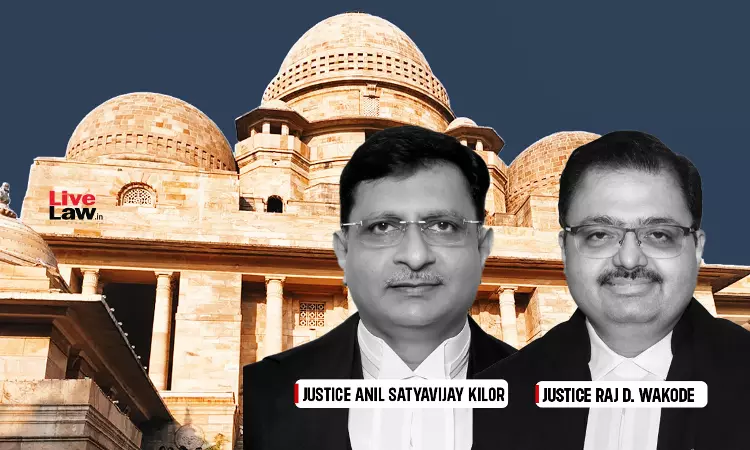
A Division Bench of Justice Anil S. Kilor and Justice Raj D. Wakode was hearing a writ petition challenging the acquisition of the petitioner's land. The land was proposed to be acquired for beautification and development of the area surrounding the statue of Dr Babasaheb Ambedkar situated at Irvin Square. The Petitioner contended that the action is in gross violation of Article 14 and 300A of the Constitution of India and also of the provisions of the Right to Fair Compensation and Transparency in Acquisition, Rehabilitation and Resettlement Act, 2013 (hereinafter referred to as “the Act of 2013”).
The State opposed the petition, submitting that the proposed mural was not merely an ornamental addition or beautification but would open doors of knowledge for future generations and therefore fell within “public purpose”.
The Court noted that the construction of structures, statues or murals to represent history, culture or achievements of eminent leaders who contributed immensely to the nation stands as lasting symbols of values and is of great significance. It observed that the proposed mural of Dr. Ambedkar was not a mere addition of aesthetic value to the existing statue but would serve a deeper purpose by opening doors of knowledge for future generations.
“A mural depicting Dr. Ambedkar will perform the crucial function of propagating his ideas in public and in an enduring manner… The creation of such a mural undeniably advances the general welfare of the community by giving inspiration to the present and the future generations. It, thus, satisfies the essential requirement of 'public purpose',” the Court remarked.
The Court further emphasized that great thinkers, leaders, reformers, scientists, writers and philosophers create ideas that can guide humanity long after they are gone, and that society risks losing its direction if these ideas are not communicated, preserved and nurtured.
The Court then considered the petitioner's contention regarding the lapse of the Ordinance which had inserted Section 10A into the Act of 2013. It held that in the present case the rights, privileges, obligations or liabilities would survive despite the lapse of the Ordinance, as the land was being acquired for a “public purpose”.
The Court further held that even if it were assumed that the rights, privileges, obligations or liabilities did not survive the lapse of the Ordinance, the acquisition proceedings would not, in any event, lapse. It noted that none of the contingencies under the 2013 Act for holding an acquisition to have lapsed was present in the case.
The Court also examined whether the acquisition would fail if Chapters II and III of the Act were held to apply, holding that the application or non-application of the chapters will not make any difference to the conclusion of the case.
The Court accordingly dismissed the writ petition.
Case Title: Dr. Chandrashekhar S/o. Madanlal Gattani v. State of Maharashtra [Writ Petition No. 3488 of 2016]
Tags


