



- Home
- /
- High Courts
- /
- Bombay High Court
- /
- Even Short-Term Engagement As...
Even Short-Term Engagement As Driver Sufficient For Claim Under Employees' Compensation Act: Bombay High Court
Narsi Benwal
23 Feb 2026 8:42 PM IST
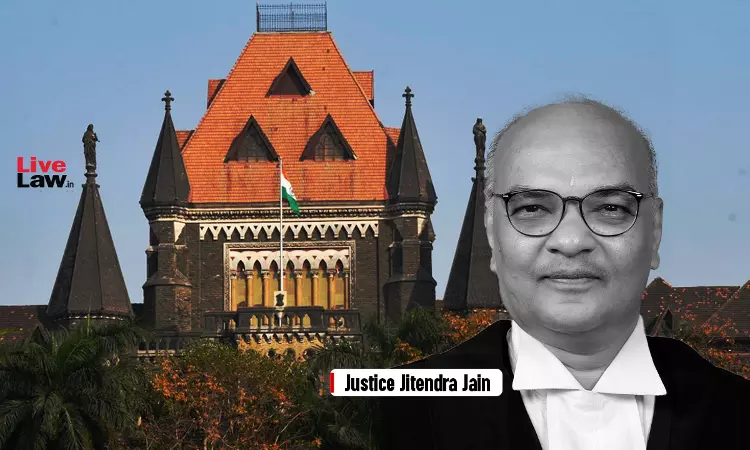
Hiring a person even for a short period would bring in an 'employee-employer' relationship under the Employees' Compensation Act, held the Bombay High Court recently. Single-judge Justice Jitendra Jain therefore ordered a Labour Commissioner to compensate the family of one Tilakdhari Gupta, who was 'hired' by Jawahar Gupta for a period of two months, to drive his car from Thane to...
This is a premium content
Available exclusively to
Our subscribers
Subscribe Premium 
INR 1099+GST
Your support helps us to bring you more content at
an affordable subscription scheme !!!
All payment options available
Hiring a person even for a short period would bring in an 'employee-employer' relationship under the Employees' Compensation Act, held the Bombay High Court recently.
Single-judge Justice Jitendra Jain therefore ordered a Labour Commissioner to compensate the family of one Tilakdhari Gupta, who was 'hired' by Jawahar Gupta for a period of two months, to drive his car from Thane to Rajasthan, where Jawahar's brother's funeral was scheduled. One their way to Rajasthan i.e. on March 29, 2009, the car met an accident and Tilakdhari died while Jawahar and other passengers in the car sustained injuries.
Justice Jain noted that even in the FIR Jawahar had told the police that Tilakdhari was his 'driver' however, in the initial plea by the latter's family members seeking compensation, the former claimed that Tilakdhari was not a full time employee as such and was only 'asked' by him to drive the vehicle on the fateful day.
The judge referred to section 2 (dd) of the Employees' Compensation Act, which defines 'employee' to mean a person who is recruited as driver, helper, mechanic, cleaner or in any other capacity in connection with a motor vehicle.
"In the instant case, opponent no.1 (Jawahar) in the FIR has stated that the deceased (Tilakdhari) was the driver hired by him, which in my view, would amount to employing deceased for work of driving by opponent no.1. The definition emphasis the act of employment/recruitment and not the duration for which a person is employed or recruited," Justice Jain said in the order passed on February 18.
The expression “employed” has at least two known connotations but as used in the definition, the context would indicate that it is used in the sense of a relationship brought about by express or implied contract of service in which the employee renders service for which he is engaged by the employer and the latter agrees to pay him in cash or kind as agreed between them or statutorily prescribed. It discloses a relationship of command and obedience, the judge explained.
"Looking at the objective of the Employees' Compensation Act and when read with definition of employee, in my view, employer would include a person who hires a driver, even for a shorter duration, to drive his vehicle. In the facts of the present case, when opponent no.1 addressed deceased as 'driver' in FIR, no reply to legal notice and after perusing the contents of FIR, in my view, opponent no.1 is an employer for the purposes of the present Act. Section 2(e) does give clue that even temporary letting on hire by one person to another would treat the other person as employer. Therefore, if a person hires a driver for short period certainly person hiring would be an employer," Justice Jain held.
The judge further said that it is well established that an individual is entirely free to work or not, and owes no contractual obligation to the person for whom the work is performed when not working, does not preclude a finding that the individual is a worker, or indeed an employee, at the time when he or she is working.
"Many casual workers will periodically work for the same employer but often neither party has any obligations to the other in the gaps or intervals between engagements. There is no reason in logic or justice why the lack of employee status in the gaps should have any bearing on the status when working. There may be no overarching or umbrella contract, and therefore no employment status in the gaps, but that does not preclude such a status during the period of work," the judge explained.
With these observations, the judge quashed and set aside the Labour Commissioner's order denying compensation to the applicants and ordered him to grant compensation within eight weeks.
Appearance:
Advocates Varsha Nichani and Roshil Nichani appeared for the Applicants.
Advocate Sanjay Krishnan instructed by Leges Consultus represented the Respondents.
Case Title: Shakuntala Tilakdhari Gupta vs Jawaharlal R Gupta (First Appeal 1628 of 2012)
Citation: 2026 LiveLaw (Bom) 77

Narsi Benwal
Narsi Benwal is a Special Correspondent with Live Law covering Bombay High Court and also the Trial Courts across Maharashtra

