



- Home
- /
- High Courts
- /
- Bombay High Court
- /
- No Govt Can Choose 'Politically...
No Govt Can Choose 'Politically Convenient' Date For Elections: Bombay High Court Frames Timeline For 11 Goa Municipal Council Polls
Narsi Benwal
27 Aug 2026 10:20 AM IST
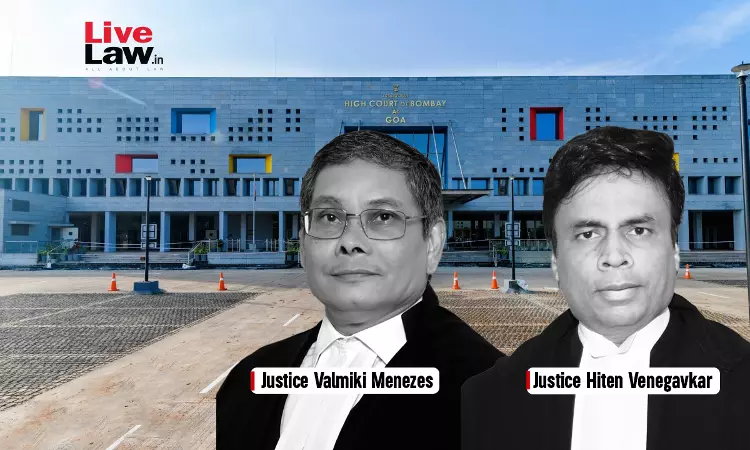
No Government has an entitlement to chose a politically convenient date of an election whose periodicity has been fixed by the Constitution of India, held the Bombay High Court while upholding the validity of the Goa Municipalities (Amendment) Ordinance, 2026, which has now paved way for elections of 11 Municipal Councils in Goa.A division bench of Justice Valmiki Menezes and Justice...
This is a premium content
Available exclusively to
Our subscribers
Subscribe Premium 
INR 1099+GST
Your support helps us to bring you more content at
an affordable subscription scheme !!!
All payment options available
No Government has an entitlement to chose a politically convenient date of an election whose periodicity has been fixed by the Constitution of India, held the Bombay High Court while upholding the validity of the Goa Municipalities (Amendment) Ordinance, 2026, which has now paved way for elections of 11 Municipal Councils in Goa.
A division bench of Justice Valmiki Menezes and Justice Hiten Venegavkar has ordered the Goa State Election Commission (GSEC) to ensure that the elections to the 11 Councils are completed latest by January 2, 2027.
"No Government has a constitutional entitlement to choose a politically convenient date for an election whose periodicity is fixed by the Constitution. No Legislature can proceed on the assumption that enactment of a new electoral requirement automatically supplies additional constitutional time for its implementation. No State Election Commission can surrender the electoral calendar to the pace at which another authority chooses to act. Each must exercise its powers so that the Constitution, rather than institutional convenience, determines when democratic authority returns to the electorate," the bench held on August 25.
The judges were hearing a batch of petitions challenging the validity of the Ordinance, which was introduced in April 2026 and substantially changed the process of delimitation and reservation of municipal wards etc. This Ordinance was brought in a time when the GSEC had already commenced its preparations for conducting elections to the 11 civic bodies as per the provisions of Article 243U of the Constitution of India.
Notably, Article 243U provides for conducting elections to the civic councils before the expiry of the existing municipality's term. The petitioners pointed out that existing municipalities terms were to expire in March and May 2026.
It was pointed out that the the GSEC had also commenced preparations like reservations, delimitation of wards etc for conducting the elections but the Ordinance passed by the State, resulted it re-starting the entire process and further delaying the entire election process. It was argued that the elections cannot be held as per the Ordinance and rather the mandate of Article 243U will have to be followed.
While the GSEC stated that it could not proceed with the election process without proper consultations (with regards to delimitations etc) with the State, the government on the other hand argued that Article 243U does not freeze the State's powers to amend the election laws.
The bench, however, upheld the validity of the Ordinance and held that it would remain operative for holding the elections but made it clear to the State and GSEC that the provisions of Article 243U will have to followed scrupulously.
"The Commission was constitutionally obliged, once the Ordinance intervened, to ensure that the transition from the old regime to the new one caused the least possible additional loss of time. A valid change in the statutory foundation justified such repetition as the new law genuinely required; it did not justify treating every prior act as wasted work or commencing each consequential administrative exercise sequentially from the beginning where parallel or adapted performance remained legally possible. The State Election Commission is neither a department of the Government nor an adversary of the Government. It occupies an independent constitutional position. That independence requires constitutional distance from executive convenience, but it equally requires cooperation where the statute legitimately assigns interdependent functions to different authorities. The Commission must therefore cooperate with the State without becoming dependent upon its pace and must implement State legislation without surrendering its independent obligation under Article 243U," the bench underscored.
The 232-page judgment, authored by Justice Venegavkar, states that neither the State nor the Commission can invoke the statutory change as a complete answer to the constitutional default and that the State cannot say that because a valid law was enacted, the time consumed by its implementation is constitutionally irrelevant.
"The Commission cannot say that because the statute requires consultation, empirical data or other action by different authorities, its constitutional obligation remains suspended until those authorities act. Each institution must perform its own function and, where functions overlap, must cause them to proceed with the degree of simultaneity which the law permits," the bench said.
Further, the judges emphasised on that Article 243U operates through several institutions such as the State Legislature, which frames the governing law; the State Government that performs statutory and administrative functions and provides the machinery necessary for elections; the State Election Commission, which exercises constitutional superintendence, direction and control over the electoral process; and specialised bodies may perform antecedent functions concerning reservation or empirical inquiry.
"Their functions are distinct, but the constitutional result is indivisible: an elected Municipality must be democratically reconstituted within the period prescribed by the Constitution. No authority can therefore treat compliance with Article 243U as the responsibility of another.... Once the Constitution fixes the duration of an elected institution and the date by which democratic renewal must occur, that date cannot be treated as an adjustable governmental variable. Administrative convenience, belated institutional action or the introduction of a new statutory process cannot, by themselves, convert the constitutional terminal date into a moving date dependent upon completion of successive governmental exercises," the bench said.
Further, the judges dealt with the apprehension of the GSEC and also some of the petitioners that the State introduced the Ordinance only to hold these civic elections with the State Legislative Assembly polls, However, the bench clarified that the election procedure of these 11 bodies must be finished by January 2 and that no further delay must be caused even if the Legislative Assembly elections are to be held.
"If additional personnel, vehicles, security arrangements or other resources are required to ensure that the municipal process is completed before the Assembly election machinery becomes fully engaged, it is for the State Government to make those arrangements. An anticipated future demand upon the same administrative machinery cannot legitimise continuation of an existing breach of Article 243U. We accordingly hold that proximity to the Legislative Assembly elections shall not constitute a ground for enlargement of any period fixed by this judgment. On the contrary, the State Government and the State Election Commission shall organise the remaining process so that the municipal elections are brought to their lawful conclusion without their being allowed to drift into avoidable conflict with the Assembly election process," the bench made it clear.
With these observations, the judges disposed of the petitions.
Appearance:
Advocate Gaurish Agni, Yash Naik, Kishan Kavlekar, Madhav Cuncoliencar, Ruchika Mishra, L Correia, Priyadarshani B, Siddharth Nunes, Abhijit Gosavi, Krupa Naik, Gaurang Kerkar, Chaitanya Padgaonkar, Anushri Naik Dessai, Shlok Rai, Shivan Desai and Riya Amonkar appeared for the Petitioners.
Advocate General Devidas Pangam assisted by Additional Government Advocates Deep Shirodkar, Maria Simone Judith Correia and Neehal Vernekar represented the State.
Advocates Somnath Karpe, Anand Shirodkar, Samiksha Vaigankar, Sonali Gaonkar, Riddhi Shirodkar and Siddhi Parodkar represented the Goa State Election Commission.
Advocates Hanumant Naik, Divya Naik and Dipti Kambli represented the Goa State Commission For Backward Classes.
Case Title: Nimesia Faleiro vs State of Goa (Writ Petition 300 of 2026)
Citation: 2026 LiveLaw (Bom) 405
Tags

Narsi Benwal
Narsi Benwal is a Special Correspondent with Live Law covering Bombay High Court and also the Trial Courts across Maharashtra

