[BMC Rules] Is Preliminary Enquiry Mandatory Before Suspension? Bombay High Refers Issue To Larger Bench
Saksham Vaishya
3 Nov 2026 1:50 PM IST
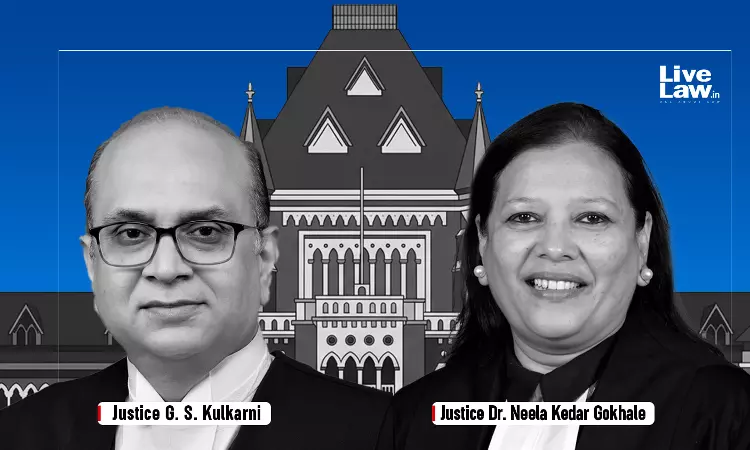
The Bombay High Court has disagreed with a coordinate Bench's ruling that a preliminary enquiry is mandatory before suspending an employee under the Brihan Mumbai Municipal Corporation Services (Discipline and Appeal) Rules, 2015, and referred the issue to a Larger Bench. The Division Bench prima facie held that Rules 4(A) and 4(B) operate independently and that suspension under Rule 4(A) does not necessarily require a prior preliminary enquiry.
A Division Bench of Justice G.S. Kulkarni and Justice Dr. Neela Gokhale was hearing two petitions challenging suspension orders issued against employees of the Brihanmumbai Municipal Corporation (BMC).
The petitioners' counsel submitted that Rule 4(A), which deals with suspension, must be read along with Rule 4(B), which provides for a preliminary enquiry before a full-fledged departmental enquiry. He relied on a coordinate Bench decision in Dr. Shailendra Dattatray Gujar v. State of Maharashtra & Anr., which held that a preliminary enquiry under Rule 4(B) was necessary before an employee could be suspended.


The present Bench, however, expressed a prima facie view that Rules 4(A) and 4(B) are distinct provisions operating independently. It observed that Rule 4(A) does not indicate that its operation is dependent on Rule 4(B), and that where sufficient material exists to suspend an employee, the Rules do not require a preliminary enquiry to be conducted first.
“Rule 4A does not in any manner indicate that it is dependent on the effect and operation of Rule 4B. This more particularly considering the fact that if there is sufficient material to suspend an employee, there is no requirement under the said Rule to first have a preliminary enquiry to suspend an employee,” the Court remarked.
The Court also noted that Rule 4(A)(1) sets out three independent grounds for suspension, separated by the word “or”. In particular, Rule 4(A)(1)(b) permits suspension where, in the opinion of the competent authority, an employee has engaged in activities prejudicial to the interests of the Corporation. The Bench agreed with the BMC's submission that the rule-making authority could have expressly made Rule 4(A) subject to Rule 4(B), but had not done so.
“… clauses (a), (b) and (c), which also are independent, being separated by the use of word “or”, each of these clauses would be required to be given a separate and/or independent effect. Consequently, the operation of Rule 4(A)(1)(b) would not depend upon the holding of a preliminary enquiry,” the Court observed.
Accordingly, the Bench stated that it was respectfully unable to agree with the interpretation adopted in Dr. Shailendra Dattatray Gujar and considered that the correct interpretation of Rules 4(A) and 4(B) required determination by a Larger Bench.
The Court framed two questions for consideration by the Larger Bench:
- Whether Rule 4(A), which provides for suspension, is a standalone provision or whether its operation is dependent upon Rule 4(B), which deals with preliminary enquiry as a requirement for initiating departmental proceedings?
- Whether suspension contemplated under Rule 4(A), particularly Rule 4(A)(1)(b), falls within the ambit of Rule 4(B)(5)(b)?
The papers and proceedings were directed to be placed before the Chief Justice for constitution of a Larger Bench.
Case Title: Pradip Pralhadrao Kashale v. Municipal Corporation of Greater Mumbai [Writ Petition No. 1963 of 2026] and Dr. Sanjay Dattatraya Funde v. Municipal Corporation of Greater Mumbai [Writ Petition No. 2233 of 2026]