



- Home
- /
- High Courts
- /
- Bombay High Court
- /
- Bombay High Court Gives Centre Till...
Bombay High Court Gives Centre Till July 29 To Respond To Kunal Kamra's Challenge To Sahyog Portal, IT Rules Amendment On Content Blocking
Narsi Benwal
16 July 2026 11:37 AM IST
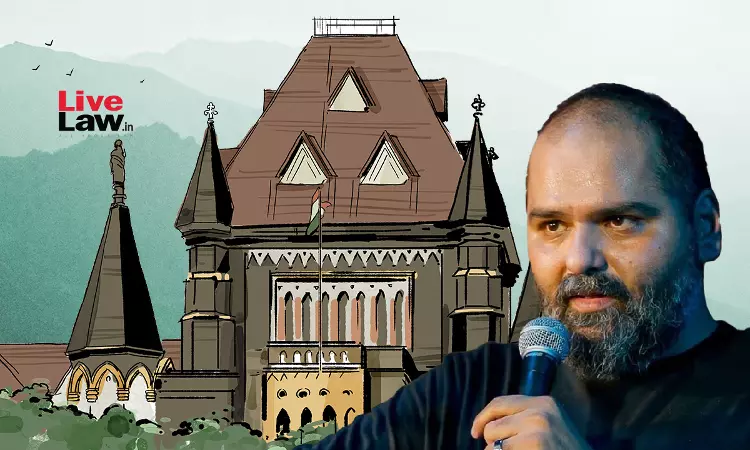
Matter relates to free speech, yet Centre has not filed its reply, Kamra told Court.
The Bombay High Court has directed the Centre to file its reply by July 29 in a plea filed by stand-up comedian Kunal Kamra challenging the constitutional validity of the 'Sahyog Portal' and the 2025 amendment to Rule 3(1)(d) of the Information Technology (Intermediary Guidelines and Digital Media Ethics Code) Rules, 2021, which he claims enables online content takedowns without...
This is a premium content
Available exclusively to
Our subscribers
Subscribe Premium 
INR 1099+GST
Your support helps us to bring you more content at
an affordable subscription scheme !!!
All payment options available
The Bombay High Court has directed the Centre to file its reply by July 29 in a plea filed by stand-up comedian Kunal Kamra challenging the constitutional validity of the 'Sahyog Portal' and the 2025 amendment to Rule 3(1)(d) of the Information Technology (Intermediary Guidelines and Digital Media Ethics Code) Rules, 2021, which he claims enables online content takedowns without adequate safeguards.
A division bench of Acting Chief Justice Ravindra Ghuge and Justice Gautam Ankhad fixed the matter for hearing on August 14 at 3 PM, while granting Kamra time till August 6 to file his rejoinder.
The petition was mentioned by Senior Advocate Navroz Seervai, appearing for Kamra, who highlighted that despite several opportunities, the Union Government had not yet filed its affidavit responding to the challenge.
“This is such an important matter. It pertains to Article 19(1)(a) of the Constitution of India. I do not want to say much about what the Supreme Court has said since decades now about freedom of speech and expression. It is one of the most important fundamental rights. This matter relates to such a fundamental right, yet the Union has not filed its affidavit,” Seervai submitted.
Additional Solicitor General Anil Singh, appearing for the Centre, sought time till August to place the government's response on record. Seervai however, strongly opposed the request and pressed for an early hearing.
The bench thereafter directed the Centre to file its affidavit by July 29 and granted Kamra time till August 6 to file his rejoinder.
Though Seervai urged the Court to record that the extension would be the government's “last chance” to file its response, Acting Chief Justice Ghuge declined the request.
Kamra moved the High Court earlier this year challenging the constitutional validity of the Sahyog Portal and the 2025 amendment to Rule 3(1)(d) of the Information Technology (Intermediary Guidelines and Digital Media Ethics Code) Rules, 2021.
The challenge is directed against provisions that facilitate the blocking of content posted on social media intermediaries. Earlier, the Karnataka High Court, while deciding a challenge mounted by X Corp, had held that the Sahyog Portal is not an instrument of censorship but merely ensures cooperation between social media intermediaries and government agencies.
Kamra has contended that the impugned mechanism creates a parallel content-blocking framework that circumvents the procedural safeguards prescribed under Section 69A of the Information Technology Act, 2000.
The petition argues that the Sahyog Portal permits blocking of online content without prior notice to users, thereby violating principles of natural justice as well as the guarantee of free speech under Article 19(1)(a) of the Constitution.
It is further contended that Rule 3(1)(d) and the Sahyog Portal are ultra vires the Information Technology Act and contrary to the Supreme Court's ruling in *Shreya Singhal v. Union of India* (2015).
According to the plea, Rule 3(1)(d) and the Sahyog Portal cannot derive legitimacy from Section 79(3)(b) of the IT Act, as Section 79 merely provides exemptions to intermediaries and does not authorise the creation of an independent takedown regime.
The petition also contends that the impugned provisions create a content-blocking framework parallel to Section 69A and the Blocking Rules without incorporating the safeguards mandated by law, rendering them manifestly arbitrary and violative of Articles 19(1)(a) and 19(1)(g) of the Constitution.
Kamra has additionally challenged the delegation of powers to State Governments and departments to issue information-blocking directions, contending that such powers fall within the Union's exclusive legislative domain under List I of the Seventh Schedule to the Constitution.
Case details: Kunal Kamra v. Union of India [WP (L) No. 4061 of 2026] and Haresh Jagtiani v. Union of India [WP (L) No. 4044 of 2025]

Narsi Benwal
Narsi Benwal is a Special Correspondent with Live Law covering Bombay High Court and also the Trial Courts across Maharashtra

