



- Home
- /
- High Courts
- /
- Bombay High Court
- /
- Minor Sexual Assault Victim's...
Minor Sexual Assault Victim's Inability To Describe Sexual Act Is No Ground To Discard Her Testimony: Bombay High Court Reverses Acquittal
Narsi Benwal
12 Aug 2026 10:00 AM IST
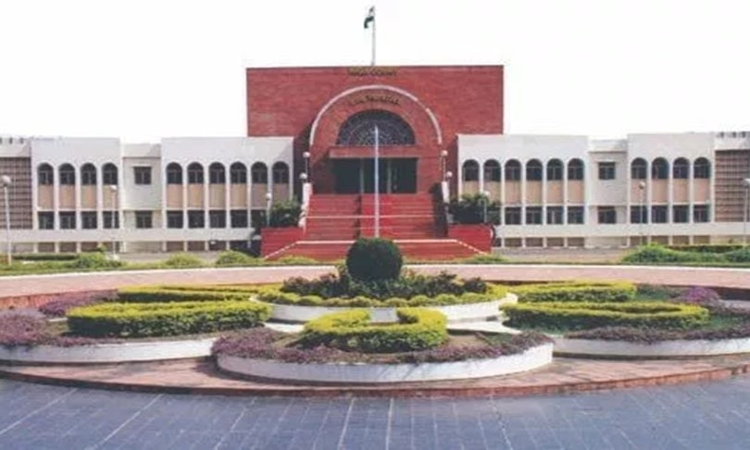
The Bombay High Court recently held that a minor rape victim's testimony cannot be discarded just because she could not properly describe the sexual act to which she was subjected to. The High Court therefore, reversed a trial court's judgment and convicted a man for raping a minor girl in a 2012 case. Sitting at the Aurangabad seat, a division bench of Justice Sandipkumar More and...
This is a premium content
Available exclusively to
Our subscribers
Subscribe Premium 
INR 1099+GST
Your support helps us to bring you more content at
an affordable subscription scheme !!!
All payment options available
The Bombay High Court recently held that a minor rape victim's testimony cannot be discarded just because she could not properly describe the sexual act to which she was subjected to. The High Court therefore, reversed a trial court's judgment and convicted a man for raping a minor girl in a 2012 case.
Sitting at the Aurangabad seat, a division bench of Justice Sandipkumar More and Justice Vaishali Patil-Jadhav noted that the trial court by its April 19, 2017 judgment acquitted the accused - Anil Gaikwad from a kidnapping and rape case particularly on the ground that the victim, a six year old girl, could not properly describe the sexual act that she was subjected to.
"The victim in the present case was a child of tender age, 6 years old at the time of the incident. A child of such tender age cannot be expected to narrate the act of rape with precision. A child victim of sexual assault is often traumatized and unable to state the details of the sexual act. The inability of a minor victim to describe the sexual act in clear terms cannot be a ground to discard her testimony, especially due to tender age when she is not capable of understanding the same," the bench held.
In the August 10 judgment, authored by Justice Patil-Jadhav, the court noted that the trial court treated the victim as a child witness and her evidence was recorded in question and answer form on May 4, 2012 and that her examination-in-chief was conducted on February 12, 2017. The judges noted that even after a lapse of nearly five years, the victim specifically stated that she was watching TV at the house of her sister-in-law and that the accused referred to as Anya came there and asked her to accompany with him upto the flour mill.
Further, the minor girl testified that thereafter the accused tied her eyes and lifted her and took her towards the dam and removed her Chaddi (undergarment) and sat on her person. She also recounted that the accused slapped her. She also identified the accused who was produced through video conference and stated that post the incident she experienced severe pain in her 'Oti' (Uterus).
"Her cross- examination has remained unshaken. Perusal of her examination-in-chief and cross shows that the victim is consistent with the statement even after four and a half years of the incident. This testimony coming from a child cannot be lightly brushed aside. In her evidence, she specifically takes the name of the accused and describes the incident as per her understanding as a child. A child of such tender age cannot be expected to have any motive to falsely implicate the accused. A child victim's testimony is not to be tested on the same parameters as that of an adult witness," the judges said.
The incident dates back to May 3, 2012 even before the stringent POCO Act was enacted. The victim was found unconscious under a tamarind tree and her mother and other family members saw her lying there with blood oozing out from her private part. She upon regaining conscious told her parents about how Anya took her there and accordingly a FIR was lodged against the accused. However, the trial court acquitted the accused.
But the High Court bench, which was considering an appeal filed by the State, reversed the findings of the trial court and convicted the accused for kidnaping and rape.
"We are of the considered view that the findings of the Trial Court reflect a complete misreading of the evidence on record. The Trial Court has failed to appreciate the credibility and trustworthiness of the victim's testimony and has given undue importance to minor discrepancies which are not fatal to the prosecution case. The approach of the Trial Court is perverse and the findings recorded are contrary to the evidence on record," the bench observed while convicting the accused.
For sentencing, the bench noted that during the trial, the accused already spent five years in prison and noted that at the time of the incident he was 22 years old and today he is 36. It noted that the accused during this period has got married and even the victim has married with someone else and is settled in her life.
"In view of the same, though Section 376 of IPC provides punishment of imprisonment which may extend to life, we are of the opinion that the minimum sentence as provided in the then Section 376 at the time of incident, of seven years, may be imposed on him along with certain fine. We have also considered the question of granting compensation to the victim. However, we refrain from awarding the same, for the reason that the victim, who was only 6 years of age at the time of the incident in 2012, is now approximately 20 years old. She is married and settled in life with two children. Any requirement on her part to approach the Court for claiming compensation would compel her to revisit the traumatic incident of her childhood, thereby disturbing her present settled life, which we wish to avoid," the judges opined.
The bench therefore, ordered the accused to surrender before the police to undergo his remaining sentence of nearly two years.
Appearance:
Additional Public Prosecutor US Bhosale represented the State
Advocate Harsha Lomte was appointed to represent the Accused.
Case Title: State of Maharashtra vs Anil Shridhar Gaikwad (Criminal Appeal 993 of 2019)
Citation: 2026 LiveLaw (Bom) 372

Narsi Benwal
Narsi Benwal is a Special Correspondent with Live Law covering Bombay High Court and also the Trial Courts across Maharashtra

