



- Home
- /
- High Courts
- /
- Bombay High Court
- /
- 'Need Civic Sense Like Japanese...
'Need Civic Sense Like Japanese People': Bombay High Court While Granting Compensation In Mumbai Local Train Death Case
Narsi Benwal
7 April 2026 8:55 PM IST
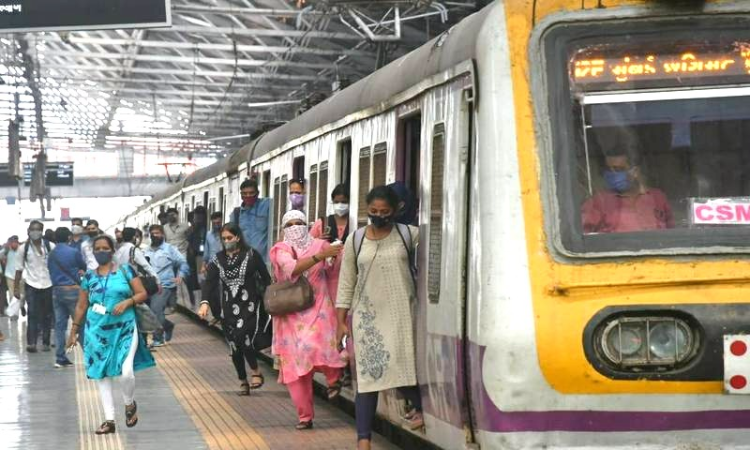
While holding that standing near the door in a moving local train or standing on the edge of the platform cannot be considered as 'negligence', the Bombay High Court recently called for inculcating 'civic sense' in Mumbaikars, especially those travelling in local trains just like that amongst the citizens of Japan.Single-judge Justice Jitendra Jain observed that citizens using local trains...
This is a premium content
Available exclusively to
Our subscribers
Subscribe Premium 
INR 1099+GST
Your support helps us to bring you more content at
an affordable subscription scheme !!!
All payment options available
While holding that standing near the door in a moving local train or standing on the edge of the platform cannot be considered as 'negligence', the Bombay High Court recently called for inculcating 'civic sense' in Mumbaikars, especially those travelling in local trains just like that amongst the citizens of Japan.
Single-judge Justice Jitendra Jain observed that citizens using local trains to commute need to be educated and made aware of the danger of standing on the edge of the platform. He further stressed that citizens must also adhere to the norms for their own safety and interest.
"As a responsible passenger there is a need to inculcate civic sense amongst ourselves like civic sense amongst Japanese people. Generally, when a fast train is moving or crossing a railway station which does not have a halt, an announcement is made for the passengers on that platform to be away from the edge of the platform. However, same is not the position when the train is approaching the railway station which has a halt. Therefore, appropriate remedial measures are to be taken to avoid any such incidents," Justice Jain observed in the order pronounced on April 2.
Further, the judge noted that there is a 'yellow' coloured strip on all the platforms in Mumbai, which 'cautions' passengers that they should not cross the strip and instead must stand behind the said strip.
"The yellow strip is there, but nowhere it's purpose is stated and also there is no announcement or indication on the platform which cautions the passengers that this yellow strip is meant for passengers not to cross or not to enter the danger zone. The authorities should take measures like public announcements or the police authorities on duty at the platform should ensure that the passengers do not cross the yellow strip on the platform," the judge opined.
The judge also said that most of the times the yellow coloured strip is not visible and gets faded and yet it's not not painted regularly just like Zebra crossings are painted. The judge also suggested changing the colour from yellow to red.
"Also, authorities should consider 'RED' colour which would indicate that passengers crossing the laxman rekha is entering danger zone," Justice Jain remarked.
These observations were made while dealing with a First Appeal which challenged a April 30, 2019 order of a Railway Claims Tribunal dismissing the plea for compensation filed by the family members of one Balkrishna Bhandari, who died on January 29, 2012 after he met an accident while travelling from Kalyan station to Dombivli station on Mumbai's Central Railway Line.
In this very case, there were several 'contradictory' reports. While the Station Manager's report stated that Bhandari was standing on the edge of the station and was knocked down by a moving train. The same was the contention in the Government Railway Police (GRP) report. Another report by the Divisional Railway Manager (DRM) stated that the deceased was standing at the door and ought to have sat inside on the seats. Similar was the report by the Railway Police Force (RPF) which too recommended against providing compensation to the Bhandari family. Another report by the Executive Magistrate concluded that Bhandari died by falling from a moving train.
The judge 'failed to understand' how all the authorities could give 'contradictory reports' especially when there was no eyewitness in the incident. The judge raised doubts even on the Station Manager's report as there was again no eye witness to have seen Bhandari standing on the edge and that the author of the report himself was not an eye witness to the said accident.
"I am confronted with contradictory reports. It is important to note that the first report prepared after the 'untoward incident' is the Station Manager's Report and if that be so, then I fail to understand why the subsequent reports did not adopt the same reasoning of 'untoward incident' as recorded in the first report," the judge questioned.
Therefore, the judge in the absence of any evidence being brought on record by the Railway Authorities and in the light of contradictory findings by various government authorities, said, he has no option but to accept that the deceased died by falling down from a moving train, which constitutes “untoward incident.”
"In Mumbai local, seldom the seats are vacant to be occupied when a passenger boards train at station other than starting point and even at starting point, people have to jump to occupy seat. Therefore, standing near the door cannot be treated as negligence while considering travelling in Mumbai locals, moreso, on Central Railway line," the judge explained.
With these observations, the judge ordered the Bhandari family members to make an application for compensation before the railway authorities, which has been asked to pay the amount not more than Rs 8 lakh, within 12 weeks.
Appearance:
Advocate Mohan Rao appeared for the Applicants.
Advocates TJ Pandian, Gautam Modanwal and Prasad Sawant represented the Railways.
Case Title: Ashrappa Yellappa Bhandari vs Union of India (First Appeal 358 of 2020)
Citation: 2026 LiveLaw (Bom) 165

Narsi Benwal
Narsi Benwal is a Special Correspondent with Live Law covering Bombay High Court and also the Trial Courts across Maharashtra

