



- Home
- /
- High Courts
- /
- Bombay High Court
- /
- PMLA | Arrest Is 'Drastic Action',...
PMLA | Arrest Is 'Drastic Action', ED Can't Abandon S.50 Interrogation And Arrest Accused On Same Material: Bombay High Court
Narsi Benwal
23 Sept 2026 10:30 AM IST
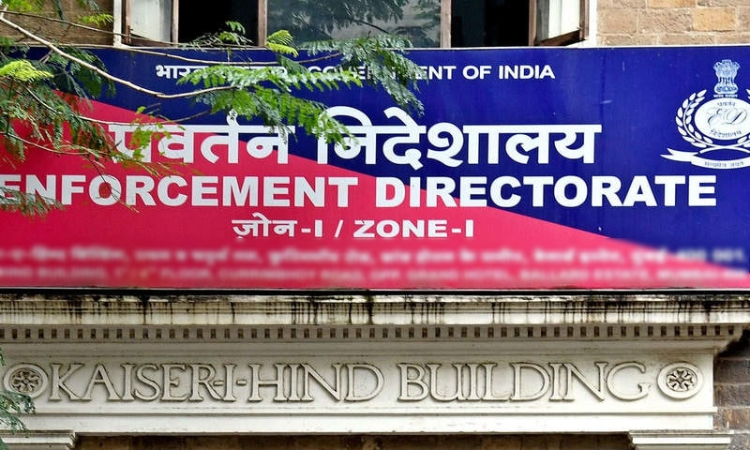
Observing that the power to arrest is a 'drastic action', the Bombay High Court has made it clear to the Enforcement Directorate (ED) sleuths that once they invoke powers under section 50 of the Prevention of Money Laundering Act (PMLA) to record statements, summon an individual etc, they must first satisfy the said provision and subsequently proceed to invoke powers to arrest under section...
This is a premium content
Available exclusively to
Our subscribers
Subscribe Premium 
INR 1099+GST
Your support helps us to bring you more content at
an affordable subscription scheme !!!
All payment options available
Observing that the power to arrest is a 'drastic action', the Bombay High Court has made it clear to the Enforcement Directorate (ED) sleuths that once they invoke powers under section 50 of the Prevention of Money Laundering Act (PMLA) to record statements, summon an individual etc, they must first satisfy the said provision and subsequently proceed to invoke powers to arrest under section 19.
Single-judge Justice Milind Jadhav held that if the ED invokes section 50 powers and without satisfying the same proceeds to arrest an individual, the said arrest would be illegal and with these observations, the court granted bail to a businessman booked under the PMLA law.
The judge noted that Rajendra Lodha was arrested in September 2025 after a predicate offence was lodged against him with the Mumbai Police and subsequently the ED lodged a separate ECIR against him and conducted his house inspection on November 12, 2025 and filed its chargesheet in the case in December 2025. The case also involves other accused.
On January 29, 2026, the ED filed an application under section 50 of the PMLA to confront Lodha with certain documents and also to record his statements and the said plea was allowed by a special court on January 30, 2026. However, the ED did not take any steps to record his statements till February 5, 2026 when Lodha was given interim bail to visit his ailing mother.
Lodha surrendered before the authorities on February 11, 2026 and was produced before the special court on February 12, 2026 and it is on this very day the ED filed an application seeking to arrest him under section 19 of the PMLA, which was allowed and on the subsequent day, the anti-money laundering agency arrested Lodha.
The judge noted that between January 29, 2026 and February 13, 2026 (when Petitioner was arrested), there was no new, incriminating, or extraneous material or development which was unearthed by the ED on the basis of which Lodha came to be arrested.
The bench refused to consider the submission made by the ED through Additional Solicitor General Anil Singh, who argued that power under Section 19 is such that once there is satisfaction of the Authorised Officer at any stage and he has reason to believe that any person is guilty of an offence, he can arrest such person by following the procedure prescribed therein, notwithstanding the fact that, at the time of arrest any other procedural requirement invoked by the Authorised Officer may have remained pending.
"I respectfully disagree with the said submission made by the ASG for the simple reason that power to arrest is a very drastic action. In fact, sub-section (1) of Section 19 specifically uses the word 'may arrest' which is again discretionary. Further power to investigate, summon and confront exercised under Section 50(2) and (3) is a statutory power which if invoked cannot be simply wished away, since invoking this power, the Authorised Officer is making up his mind to investigate and question the accused person on the basis of the very same material in his possession and custody. However, in the present case, a very valuable statutory power having been invoked by the ED under Section 50, then it cannot be open to the agency to now state that notwithstanding completion of that action, it can still invoke Section 19 to arrest the Petitioner unless very strong and fresh material incriminating the Petitioner is placed on the record of the Court and the Court feels that arrest is absolutely imminent on the basis of such material," Justice Jadhav held.
Once the ED Officer records a satisfaction through its application under section 50 to confront the petitioner with incriminating material, unless and until there is prima facie fresh incriminatory material or such supervening circumstances which were not there before the Authorised Officer earlier and which has come to the knowledge of the ED, the agency cannot abandon the said exercise which has been permitted by the Court and invoke the provisions of Section 19 to arrest the Petitioner by furnishing him the ground of arrest on the basis of the very same material which was already in possession of the agency, the judge made it clear.
"Power to arrest can and should wait and the power in terms of Section 19(1) of the PMLA can be exercised only when the material with the designated officer enables him to form an opinion by recording reasons in writing that the arrestee is guilty. In the present case, when the designated officer has himself filed the Application, wherein he himself, calls upon the Court to allow him to examine, confront the Petitioner with the material in his possession and record his statement on the basis of the submissions made in the said Application, then in such a case, by foregoing the exercise of recording the statements, the agency cannot arrest the Petitioner. Such exercise of power of arrest shall amount to a colourable exercise of power on the part of the ED," Justice Jadhav emphasised.
With these observations, the bench granted bail to the accused Lodha on a surety of Rs 5 lakh.
Appearance:
Senior Advocate Aabad Ponda along with Advocates Advait Helekar, Veertej Patil, Ananya Tambe and Adithya Iyer appeared for the Petitioner.
Additional Solicitor General Anil Singh along with Advocates CK Pendse, Aditya Thakker, Sandeep Karnik, Krishnakant Deshmukh and Adarsh Vyas represented the ED.
Case Title: Rajendra Narpatmal Lodha vs Directorate of Enforcement (Writ Petition 1910 of 2026)

Narsi Benwal
Narsi Benwal is a Special Correspondent with Live Law covering Bombay High Court and also the Trial Courts across Maharashtra

