



- Home
- /
- High Courts
- /
- Bombay High Court
- /
- Right To Liberty Not Absolute, Bail...
Right To Liberty Not Absolute, Bail Cannot Be Granted If Accused Has Serious Criminal Antecedents: Bombay High Court
Narsi Benwal
12 Jun 2026 9:29 PM IST
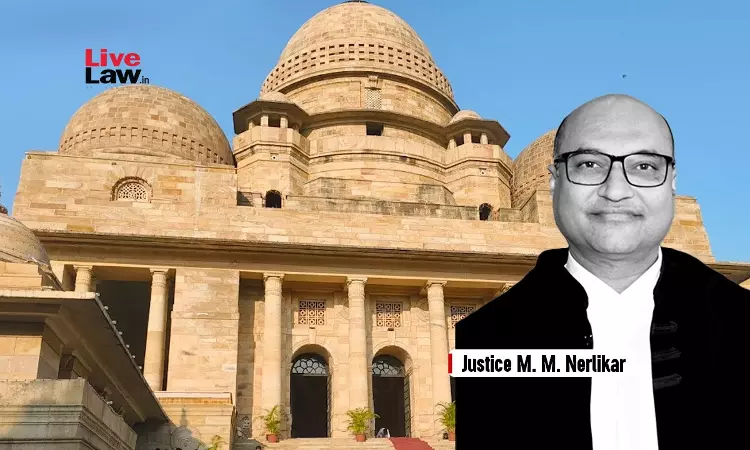
The Bombay High Court has held that the fundamental right to liberty guaranteed under Article 21 of the Constitution of India is not an absolute right and a person having serious criminal antecedents cannot be granted bail solely on the ground of long incarceration. Sitting at the Nagpur bench, Justice Mahendra Nerlikar denied bail to one Swapnil Kashikar, booked for murdering a former...
This is a premium content
Available exclusively to
Our subscribers
Subscribe Premium 
INR 1099+GST
Your support helps us to bring you more content at
an affordable subscription scheme !!!
All payment options available
The Bombay High Court has held that the fundamental right to liberty guaranteed under Article 21 of the Constitution of India is not an absolute right and a person having serious criminal antecedents cannot be granted bail solely on the ground of long incarceration.
Sitting at the Nagpur bench, Justice Mahendra Nerlikar denied bail to one Swapnil Kashikar, booked for murdering a former employee over a dispute pertaining to the payment of EMIs of a bike he purchased on loan.
While Kashikar sought bail citing that he has been behind the bars since January 26, 2024, the prosecution furnished a chart before the court, highlighting at least 10 cases, wherein he was booked in serious charges of murder, attempt to murder, dacoity, kidnapping etc.
Justice Nerlikar noted that Kashikar was in jail since January 26, 2024 and till today the charges are not framed. The judge emphasised that while balancing the rights of an accused it is also necessary to see other parameters including criminal antecedents as it is well recognised that bail granted without due application of mind to relevant factors such as the conduct and antecedents of the accused is arbitrary.
"The chart of criminal antecedents shows that the applicant is involved in various bodily offences including attempt to murder, kidnapping, grievous hurt, dacoity, etc., which are serious in nature. The right guaranteed under Article 21 of the Constitution of India is not an absolute right. When the applicant is a history sheeter having serious criminal antecedents then in such circumstances Article 21 would not come to the rescue of such accused. Although personal liberty is a cherished constitutional value, it is not absolute. Liberty must give way when it threatens the collective interests of society. No individual can assert a freedom that imperils the life or liberty of others," Justice Nerlikar observed in the order passed on June 11.
The judge opined that considering Kashikar's long standing criminal history and his involvement in the serious offences, Article 21 of the Constitution of India will not come to his rescue.
"Though perusal of the above chart depicts that the applicant has been acquitted in four crimes however, the fact remains that other six crimes are also serious bodily offences. Not only that time and again, the applicant was granted bail, however, he has committed the offences continuously and therefore, he has misused the liberty granted by the Court, which shows that he is not a law abiding person. I am conscious of the catena of judgments delivered by the Supreme Court thereby granting bail on the ground of delay in trial, however I am only rejecting this application due to serious criminal antecedents of the applicant as the applicant is a menace to the society. Hence, in this view of the matter, the application stands rejected," Justice Nerlikar opined.
With these observations, the judge denied bail to Kashikar and dismissed his bail application.
Appearance:
Advocate SA Mohta appeared for the Applicant.
Additional Public Prosecutor AM Kadukar represented the State.
Case Title: Swapnil Chandrakant Kashikar vs State of Maharashtra (Criminal Application 581 of 2026)
Citation: 2026 LiveLaw (Bom) 277
Tags

Narsi Benwal
Narsi Benwal is a Special Correspondent with Live Law covering Bombay High Court and also the Trial Courts across Maharashtra

