




Calcutta High Court
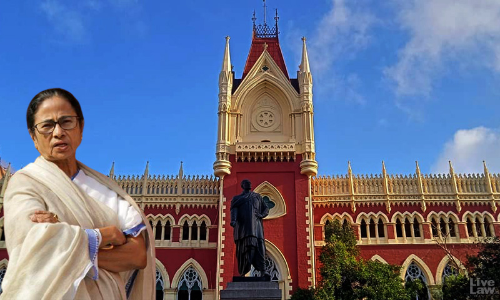
Calcutta High Court Permits TMC Meeting Instead Of Rally Led By Mamata Banerjee, Caps Attendance At 2,000
The Calcutta High Court has permitted the Trinamool Congress (TMC) to hold a meeting to be led by former West Bengal Chief Minister Mamata Banerjee, instead of a proposed rally, after taking note of concerns regarding traffic congestion and inconvenience to local residents.Justice Saugata Bhattacharya permitted the meeting to be held between 1 PM and 3 PM with a maximum of 2,000...
Calcutta High Court Grants Bail To Man Accused Of Extorting Over ₹21 Crore By Posing As ED Officer
The Calcutta High Court has granted bail to Sk. Jinnar Ali, who is accused of extorting money from individuals by impersonating an Enforcement Directorate officer, observing that his prolonged incarceration and the pendency of the investigation into the predicate offences were mitigating circumstances.Justice Jay Sengupta passed the order in a bail application arising out of a money...

Justice Ravindra Vithalrao Ghuge Sworn-In As Chief Justice Of Calcutta High Court
Justice Ravindra Vithalrao Ghuge has been sworn-in as Chief Justice of the Calcutta High Court on Wednesday. The oath of office was administered by the Governor of West Bengal RN Ravi.Justice Ghuge had been serving as the Acting Chief Justice of Bombay High Court, and was recommended to take office as the Chief Justice of the Calcutta High Court by the Supreme Court Collegium,...
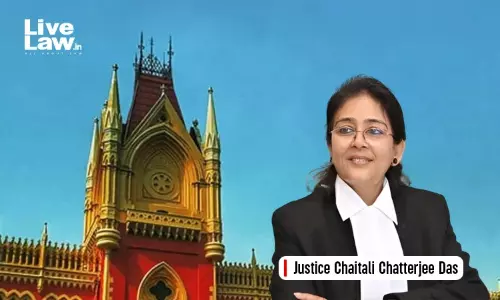
'Low Fat Content Alone Not Sufficient To Hold Curd Adulterated': Calcutta HC Sets Aside 26-Year-Old Conviction
The Calcutta High Court has set aside the conviction of a sweetmeat shop owner in a 26-year-old food adulteration case, holding that the mere finding of “low fat content” in a sample of curd was insufficient to establish that the food was adulterated under the Prevention of Food Adulteration Act, 1954.Justice Chaitali Chatterjee (Das) allowed the criminal revision petition filed by...
'No Injunction In Defamation Suits Unless Defence Of Truth Is Certain To Fail At Trial': Calcutta High Court
The Calcutta High Court has set aside an interim injunction restraining two defendants from sending emails to third parties containing allegations against the plaintiff concerning the management of a company, holding that courts must apply the “Bonnard Principle” with particular caution while considering interim injunctions in defamation suits. A Division Bench comprising Justice...
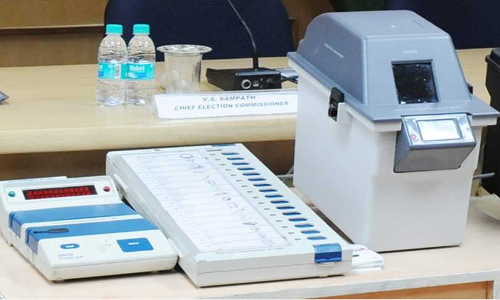
Pendency Of Election Petition Cannot Justify Retention Of Every EVM/VVPAT Machine In District: Calcutta High Court
The Calcutta High Court has held that the mere pendency of an election petition cannot justify the blanket retention of every EVM and VVPAT stored within a district, observing that preservation must be confined to electoral material specifically connected with the election or proceeding for which preservation is required.Justice Ananya Bandyopadhyay made the observation while permitting...
Calcutta High Court Upholds Conviction Of Developer, Owner For Illegal G+3 Building, Says Actual Collapse Not Needed To Prove Hazard
The Calcutta High Court has upheld the conviction of a developer and a property owner for raising an unauthorised four-storeyed building in a congested Kolkata lane, holding that actual structural collapse or post-facto forensic evidence is not necessary to establish an offence under Section 401A of the Kolkata Municipal Corporation Act, 1980.Justice Uday Kumar dismissed the criminal...
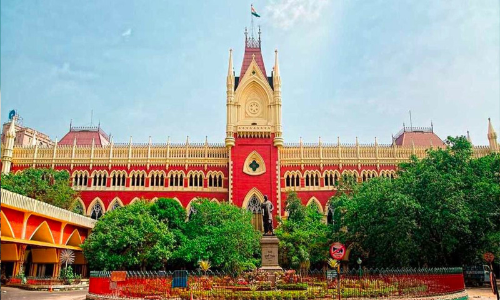
Dismissal Solely On Admission Of Guilt In Preliminary Enquiry Without Regular Charge-Sheet Is Arbitrary: Calcutta High Court
A Division Bench of the Calcutta High Court comprising Justice Shampa Sarkar and Justice Ajay Kumar Gupta held that an employee's confession in preliminary enquiry report cannot justify dismissal from service without issuing a charge sheet and conducting a regular disciplinary proceeding. Background Facts The appellant was working as the Head Assistant of IFU, SWM-I, Br.-VIII at...

Calcutta High Court Weekly Round-Up: August 31 To September 6, 2026
Calcutta High Court Rejects Trial Court's Reliance On 'Vedic Marriage Mantras' To Award Death Penalty To Man For Killing Wife, Commutes SentenceCase: State of West Bengal vs. Sujit Dey BhowmikCitation: 2026 LiveLaw (Cal) 360The Calcutta High Court took exception to the trial court's reasoning that the murder of the appellant's wife amounted to a “rarest of rare” case because he had...

Calcutta High Court Transfers Hate Speech Case Against TMC MP Mahua Moitra To MP/MLA Court
The Calcutta High Court has set transferred a hate speech complaint case against Trinamool Congress MP Mahua Moitra whose cognisance had been taken by a Krishnagar Magistrate, to the designated Special Court dealing with cases against MPs and MLAs at Bidhannagar, North 24-Parganas, who would deal with the case afresh.A Division Bench of Justice Debangsu Basak and Justice Aryak Dutt passed...

'OBC-A Category Struck Down': Calcutta High Court Denies Relief To SLST Aspirants Seeking Reservation Benefits
The Calcutta High Court has dismissed two writ petitions filed by candidates participating in the Second State Level Selection Test (SLST), 2025, holding that they could not claim OBC-A/reserved category status after the Court had struck down the relevant OBC classifications before the recruitment process commenced.Justice Aniruddha Roy held that the petitioners had no enforceable legal right...
SLST Aspirant Cannot Switch From General To EWS Category After Missing Cut-Off Date: Calcutta High Court
The Calcutta High Court has held that an aspirant who participated in the Second SLST, 2025 selection process under the general category cannot subsequently seek conversion to the EWS category, particularly when the candidate did not possess an EWS certificate even within the cut-off date prescribed by the School Service Commission for switching categories.Justice Aniruddha Roy dismissed a...