14 Years Of Separation, Husband's Indifference Towards Wife & Son Amount To Cruelty: Calcutta High Court Upholds Divorce
Srinjoy Das
16 Oct 2026 1:15 PM IST
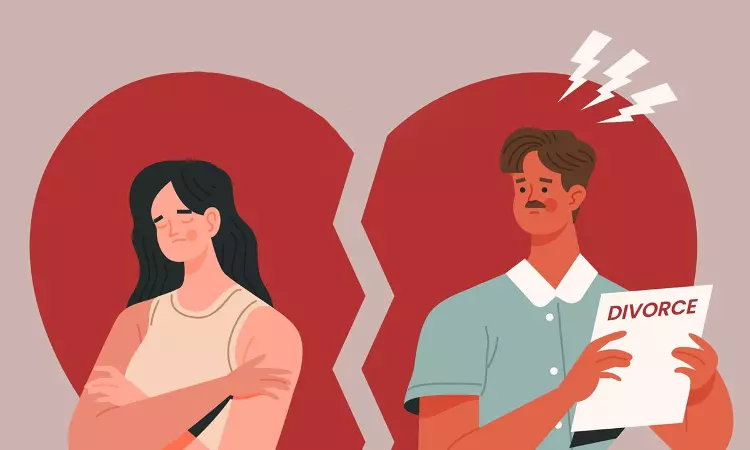
The Calcutta High Court has upheld a divorce decree granted to a woman on the ground of cruelty, observing that the husband's indifference towards his wife and son, coupled with their separation for over 14 years, demonstrated the deterioration of their marital relationship to an extent that they could not live together.
A Division Bench of Justice Madhuresh Prasad and Justice Partha Pratim Roy held that although irretrievable breakdown of marriage is not an independent ground for divorce under the Hindu Marriage Act, 1955, the continuation of a bitter and acrimonious marital relationship may itself amount to cruelty under Section 13(1)(ia) of the Act.
“Thus, we are of the firm opinion that the relationship between the parties has deteriorated to an extent that both cannot stay together,” the Bench observed.
The Court was hearing an appeal filed by Arup Kumar Sur challenging a judgment dated October 12, 2023, by which a trial court had granted his wife, Anandamoyee Sur, a decree of divorce on the ground of cruelty.
The couple married in July 2010 and had a son in July 2011. According to the wife, soon after the child's birth, her husband began pressuring her to bring money from her parental home. She alleged that, as her father was financially unable to meet the demand, her husband subjected her to physical and mental torture, often returned home in an intoxicated condition, and denied her medical treatment when she fell ill.


She further alleged that she was eventually driven out of the matrimonial home along with their son. According to her, the husband neither attempted to bring them back nor provided maintenance for her or their child.
The husband contested the divorce proceedings, denying the allegations of torture and monetary demands. He claimed that his wife was unwilling to return to the matrimonial home despite his visits to her parental house.
Before the High Court, the husband's counsel argued that the wife had failed to establish cruelty. Reliance was placed on her admission during cross-examination that she had not lodged any complaint with the police or the Panchayat regarding the alleged torture or monetary demands.
It was further argued that prolonged separation could not, by itself, justify divorce on the ground of irretrievable breakdown of marriage, which is not an independent statutory ground under the Hindu Marriage Act.
Opposing the appeal, the wife's counsel argued that the husband had made evasive denials in his written statement and had failed to challenge material allegations during cross-examination. The counsel also pointed to the husband's admissions that he did not know the details of his son's schooling and had taken no steps to support the child's education.
**Findings of the Court**
The High Court observed that the husband's testimony revealed that he did not know the present whereabouts of his wife, despite her parental home being situated in an adjacent village. He was also unaware of his son's academic activities and the name of his school.
The Bench held that these admissions demonstrated the husband's lack of intention to live with his wife or discharge his responsibilities towards his family.
The Court also noted that the husband had not questioned the wife's testimony during cross-examination regarding her alleged forceful eviction from the matrimonial home. Nor was there any evidence to show that he had attempted to restore the marital relationship.
In this regard, the Bench relied on the Calcutta High Court's decision in *A.E.G. Carapiet v. A.Y. Derderia*, reported in AIR 1961 Cal 359, which held that a party's failure to put its essential case to the opposing witness during cross-examination could amount to acceptance of that witness's account.
The Bench further referred to the Supreme Court's decision in *Samar Ghosh v. Jaya Ghosh*, (2007) 4 SCC 511, which recognised that prolonged separation may indicate that a matrimonial bond has become irreparable and that refusing to sever the legal tie in such circumstances may cause mental cruelty.
The Court also relied on the Supreme Court's judgment in *Rakesh Raman v. Kavita*, reported in (2023) 17 SCC 433, which held that although irretrievable breakdown of marriage is not a ground for divorce under the Hindu Marriage Act, a marriage that has become bitter and acrimonious over the years may amount to cruelty to both parties.
Applying these principles, the Bench observed that the parties had been living separately for more than 14 years and that the evidence showed the husband had no care or concern for his wife or their son.
The Court concluded that the trial court had correctly assessed the evidence and granted divorce on the ground of cruelty.
Case: Arup Kumar Sur Vs. Anandamoyee Sur