



- Home
- /
- High Courts
- /
- Calcutta High Court
- /
- Arbitration Clause In Expired Lease...
Arbitration Clause In Expired Lease Cannot Be Invoked In Dispute Over Alleged Fresh Contract: Calcutta High Court Dismisses HDFC's Plea
Srinjoy Das
26 Dec 2025 2:10 PM IST
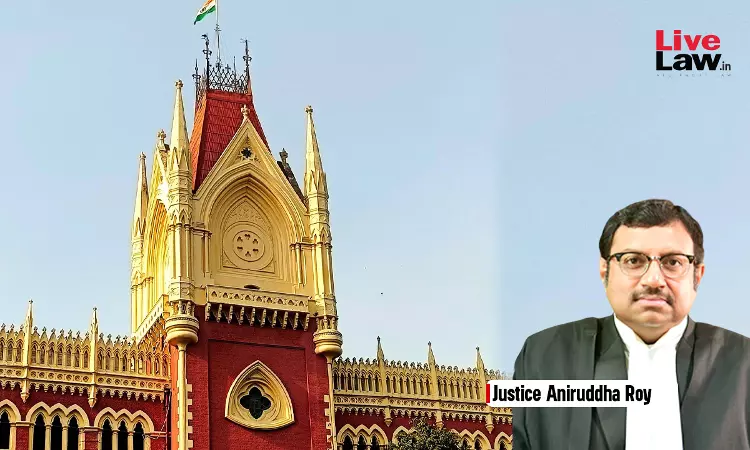
The Calcutta High Court has held that once a lease stands expired, disputes arising out of an alleged fresh or independent contract cannot be referred to arbitration by relying on an arbitration clause contained in the expired lease deed.Justice Aniruddha Roy, while dismissing an application filed by HDFC Bank Limited under Section 8 of the Arbitration and Conciliation Act, 1996, held that...
This is a premium content
Available exclusively to
Our subscribers
Subscribe Premium 
INR 1099+GST
Your support helps us to bring you more content at
an affordable subscription scheme !!!
All payment options available
The Calcutta High Court has held that once a lease stands expired, disputes arising out of an alleged fresh or independent contract cannot be referred to arbitration by relying on an arbitration clause contained in the expired lease deed.
Justice Aniruddha Roy, while dismissing an application filed by HDFC Bank Limited under Section 8 of the Arbitration and Conciliation Act, 1996, held that the commercial suit instituted by The New India Assurance Company Limited was not founded on any right flowing from the parent lease, but on an alleged concluded contract arising from exchange of correspondence prior to expiry of the lease.
The dispute pertains to a commercial premises originally owned by Williamson Magor, which was leased to New India Assurance under a lease deed dated 24 September 2014 for a period of nine years, expiring on 31 March 2023. Ownership later vested in HDFC Limited, which merged with HDFC Bank Limited in March 2023.
Although the lease admittedly expired on 31 March 2023, New India Assurance continued in occupation. The insurer claimed that before expiry, the parties exchanged correspondence dated 12 May, 19 May and 26 May 2022, which culminated in a concluded contract for execution of a fresh lease for ten years. It was asserted that acting upon this understanding, HDFC Bank permitted continued occupation and accepted rent even after expiry.
Following eviction notices issued by HDFC Bank in September and November 2023, citing statutory requirements including the Banking Regulation Act, New India Assurance instituted a commercial suit seeking specific performance of the concluded contract, execution and registration of a fresh lease with effect from 1 April 2023, and consequential injunctions.
HDFC Bank moved a Section 8 application relying on Clause 7 of the parent lease, which contained a wide arbitration agreement covering disputes “touching” the lease or arising “otherwise howsoever in relation to the demised premises”. It was argued that the plaintiff's possession and claim for continuation flowed from the original lease and that disputes concerning renewal or execution of a further lease were squarely covered by the arbitration clause.
The defendant also relied on Clause 6 of the lease, which stipulated that if no fresh lease was executed before expiry, the lessee was obliged to vacate the premises on 31 March 2023, contending that no concluded contract had come into existence.
Opposing the application, Senior Advocate Sabyasachi Choudhury for New India Assurance submitted that the plaint was narrowly framed and entirely based on a fresh contract de hors the expired lease. It was argued that arbitration clauses do not automatically travel into subsequent contracts merely because commercial terms are similar, unless expressly incorporated. Reliance was placed on M.R. Engineers & Contractors Pvt. Ltd. v. Som Datt Builders Ltd..
Justice Aniruddha Roy reiterated that while Section 8 mandates reference to arbitration where the subject matter of the action is covered by an arbitration agreement, the Court must first ascertain such coverage by reading the plaint as a whole and accepting its averments at face value.
On such reading, the Court noted that the lease had admittedly expired on 31 March 2023 and that the plaintiff was not seeking enforcement of any right under the parent lease. The Court emphatically observed that once a lease expires, the question of renewal does not arise in law, and the parties can only enter into a fresh lease if willing to do so.
Rejecting the defendant's contention that the suit was essentially one for renewal, the Court held that the prayers clearly disclosed a claim for specific performance of a contract for execution of a fresh lease based on the 2022 correspondence.
The Court further held that such a claim could not be said to arise “in relation to” the expired lease so as to attract the arbitration clause contained therein. The wide expression used in the arbitration clause, the Court clarified, cannot be stretched to cover disputes founded on a separate and independent cause of action after the lease had ceased to exist.
The Court also clarified that at the Section 8 stage, it was not required to examine the merits of the plaintiff's claim or the validity of the eviction notices.
Holding that the subject matter of the suit was not covered by the arbitration agreement, the Court dismissed HDFC Bank's Section 8 application without any order as to costs.
Case: THE NEW INDIA ASSURANCE COMPANY LIMITED VS HDFC BANK LIMITED
Case No: IA No. GA-COM/2/202

Srinjoy Das
Srinjoy Das is a Principal Correspondent with LiveLaw, covering the Calcutta High Court

