Calcutta High Court Declines APDR's Plea For Stall At Kolkata Book Fair, Says It Is Not A 'Public Function'
Srinjoy Das
9 Oct 2026 10:41 AM IST
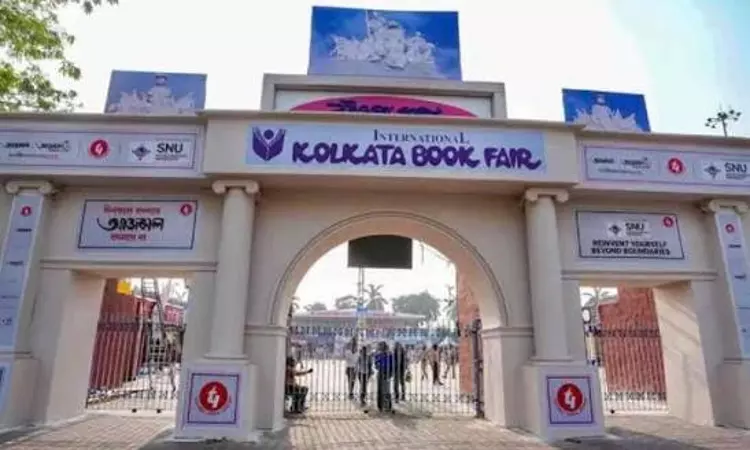
The Calcutta High Court has held that the Publishers and Booksellers Guild does not perform a “public function” or owe any “public duty” while organising the International Kolkata Book Fair. The Court ruled that a writ petition under Article 226 of the Constitution cannot be maintained against the Guild over its decision to deny a stall at the fair.
A Division Bench of Justice Sabyasachi Bhattacharyya and Justice Sandip Kumar De dismissed an appeal filed by the Association for Protection of Democratic Rights (APDR) and another appellant, upholding a single judge's order that had dismissed their writ petition as not maintainable.
The Bench observed that organising a book fair cannot be equated with imparting education, which has been recognised as a public function in judicial precedents. It held that the Guild's stated objective of promoting literacy and education was benevolent and philanthropic in nature and did not, by itself, establish a public duty enforceable through writ jurisdiction.
“The Guild, therefore, while conducting and/or organizing, the book fair, does not owe any 'public duty' to anyone,” the Court held.


The Bench further observed that a book fair is a platform where books across multiple disciplines are exhibited and sold on a commercial basis, and such an activity cannot, by itself, be treated as imparting education.
The Court also clarified that the State's patronage of the event, given its cultural significance and contribution to the city's reputation, could not be equated with transferring an essential State function to the Guild.
“The organizing and/or conducting of book fair by the Guild is, therefore, not a 'public function',” the Court held.
The Court was hearing an appeal against a January 10, 2025 order passed by a single judge dismissing the writ petition filed after the Guild refused to allot a stall to APDR for the 48th edition of the International Kolkata Book Fair.
Senior Advocate Kaushik Gupta, along with advocates Jhuma Sen and Asmita De, appeared for the appellants. Advocate Raj Mohan Chattoraj represented the State, while advocates S.R. Saha, Suman Kumar Mukherjee, Rishita Saha, Smriti Maulik and Sagar Kanojiya appeared for the Guild.
Background
APDR, an organisation engaged in social activities, had been participating in the Kolkata Book Fair for a long time. However, the Guild refused to allot it a stall for the 48th edition, prompting the organisation to approach the High Court.
The single judge dismissed the writ petition, holding that the Guild was a private body and did not perform a public duty or public work by conducting the fair. APDR challenged that decision, arguing that the fair served a broader public purpose by facilitating access to literature, promoting literacy and disseminating knowledge.
Before the Division Bench, the appellants contended that Article 226 has a wider scope than Article 32 and allows writ jurisdiction to be exercised against private bodies performing public functions. They relied on Supreme Court decisions, including Board of Control for Cricket in India v. Cricket Association of Bihar and Andi Mukta Sadguru Shree Muktajee Vandas Swami Suvarna Jayanti Mahotsav Smarak Trust v. V.R. Rudani.
The appellants also pointed to the Guild's Memorandum of Association, which lists encouraging the spread of literacy and education in India and throughout the world among its objectives. They argued that the fair's use of public land and State support, including infrastructure and police deployment, reinforced its public character.
The State and the Guild opposed the appeal, submitting that the Guild was a private society acting independently of government control. They argued that stall allotment was a matter within the Guild's private domain and that the organisation was not under any statutory obligation to organise the fair or allot stalls to particular participants.
Court's Findings
The Bench held that a private body can be brought within the scope of Article 226 when it performs a public function or owes a public duty involving a public law element. However, the existence of such a duty must be assessed in the context of the activity in question and the corresponding rights of the person seeking relief.
Distinguishing the present case from decisions concerning educational institutions, the Court observed that the Guild had neither established nor operated a permanent institution for imparting education. Its activities in organising the fair could not be brought within the constitutional right to impart education merely because the event promoted literacy and the dissemination of knowledge.
The Bench also distinguished the Supreme Court's decision concerning the Board of Control for Cricket in India, noting that the BCCI exercised extensive control over cricket in India, whereas the Guild did not enjoy a monopoly over the organisation of book fairs. Other bodies and individuals also organised book fairs across the State and the country.
Rejecting reliance on a Madras High Court decision concerning the public character of a book fair, the Bench held that the ruling in Kalachuvadu Publications v. Director, Directorate of Public Libraries was not good law and could not be treated as binding or persuasive.
The Court concluded that the Guild did not owe any public duty to the appellants and that organising the Kolkata Book Fair was a private activity outside the scope of writ jurisdiction.
Since the appellants had not received a stall at the 48th edition and the event had already concluded, the Bench declined to examine the separate question concerning judicial review of stall allotments.
Case: Association for Protection of Democratic Rights and another Vs. State of West Bengal and others